












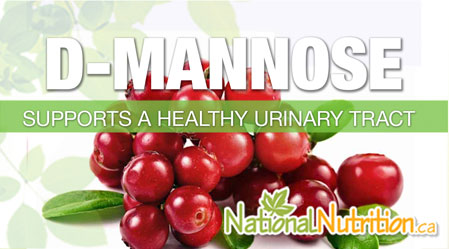
Cranberries are a natural source of D-Mannose, which supports a healthy urinary tract
D-Mannose: Natural Urinary Tract Support
Updated Feb. 29th, 2024 | Read Time: 3 Minutes | What You Will Learn:
- The Exceptional Health Benefits of D-Mannose
- What Causes UTI's?
- How Does D-Mannose Work In The Body?
- How To Take D-Mannose Supplements For UTI Support
- Potential Side Effects & Final Considerations
D-mannose is a member of the sugar family, so many people may find it odd that it is packed with nutrients that offer great health benefits in terms of preventing and managing symptoms of urinary tract infections (UTIs). It is mildly sweet and occurs naturally in certain fruits, such as cranberries, peaches and apples. D-Mannose has, based on some research, performed equally as well as or better than antibiotics in treating UTIs.
The Exceptional Health Benefits of D-Mannose
UTIs or Bladder infections are a common problem, especially among women. They are the most common complication of pregnancy and are also common in men with prostate enlargement, as these conditions can prevent the bladder from emptying.
When urine is left stagnate in the bladder there is a higher risk of infection. Urine is normally quite sterile, but bacteria, viruses, and fungi can enter the urethra and travel up into the bladder.
What Causes UTIs?
Over 90% of UTIs are caused by a specific bacteria called E-coli, which is naturally present in other areas of the body, such as the digestive tract and colon, but does not belong in the urinary tract. Your body will try to flush the E-coli out with urine, but these clever bacteria have evolved, and have developed a binding mechanism, to adhere to residues (of mannose) on the wall of the bladder and save themselves from being flushed away. This is where D-Mannose comes in.
How Does D-Mannose Work In The Body?
D-Mannose when present in the urinary tract, acts as a decoy. Bacteria bind to it, instead of the bladder epithelium and are then much more easily removed from the urinary tract, both treating and preventing (in cases of recurring infection) UTIs from developing or spreading to the kidney, which can be a much more serious problem.
How To Take D-Mannose Supplements For UTI Support
D-Mannose is available in both tablet and powder options. The powder can be mixed with water or pure cranberry juice for a double kick (to help increase fluids, which is also recommended during UTI). Whether in powder or capsule form, 1-2 g every 3-4 hours is the typical recommended dosage for acute treatment of UTI. A lesser dosage may be recommended for prevention.
Potential Side Effects & Final Considerations
It is important to remember that although it is the most common cause, not all UTIs are caused by E-coli and therefore there are some UTIs that D-Mannose will not be effective in treating.
D-Mannose has an excellent safety profile and can be used during both pregnancy and breastfeeding. It will not affect blood sugar in individuals with diabetes. However, if you're lactose intolerant or allergic to dairy, make sure that your supplement doesn't contain these enzymes. Lastly, if your symptoms persist, you should see your healthcare practitioner to make sure your UTI doesn't travel to your kidneys.






My dad's urologist told him never to use antibiotics for a kidney, bladder or UTI infections, but to use D'Mannose!!! He said works better, with no side effects. Also said to use a probiotic with it for even better results. It works!!!
I am currently taking a cranberry supplement and I'm not sure that it's working that well to help treat my UTI. I am only taking 1 capsule daily. Is it recommended to increase the dosage of the cranberry supplement to more per day to help treat UTI's? As mentioned in the article cranberries do contain D-Mannose, however should I be taking a "D-Mannose" supplement instead of the cranberry supplement for a stronger response? Any feedback would be appreciated, thanks!
Hello,
Thank you for your comment and question. D-Mannose is the active component in cranberries that gives them its healing properties; therefore, D-Mannose is more concentrated and potent, think turmeric vs. curcumin supplements. D-Mannose is why some people find bladder support from cranberry.
https://www.nationalnutrition.ca/catalogsearch/result/?q=d+mannose
Stay healthy & well!
Have there been any studies to evaluate whether D-Mannose is safe for breastfeeding mothers? In other words, will it harm the baby?
Hello, Lucia,
Thank you for your question. Most of the time, natural health supplements advise that you speak to your health care practitioner if you're pregnant or breast feeding, we would advise for you to do the same before consuming.
Have a healthy day!