

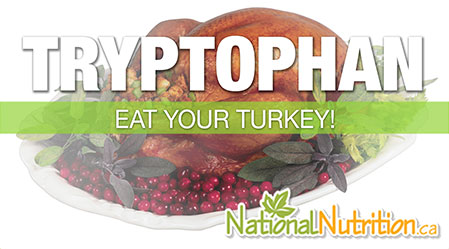
EAT TURKEY!! Tryptophan in turkey increases 'feel good' hormones serotonin and melatonin
Tryptophan: Unraveling the Benefits Beyond Turkey
Updated Mar. 02nd, 2026 | Read Time: 4 Minutes | What You Will Learn:
- Foods Rich in Tryptophan
- Benefits & Uses of Tryptophan
- Supports Mood & Emotional Balance
- Promotes Restful Sleep
- Helps Regulate Appetite
- Supports Cognitive Function
- Contributes to Overall Wellness
- How Does the Tryptophan in Turkey Work?
- Finding Quality Supplements
- Nutritional Information
- Reader Comments (2)
Ever wonder why you feel sleepy after a big Thanksgiving dinner? Tryptophan often gets the blame thanks to its presence in turkey, but there's more to this fascinating amino acid than post-feast naps.
Tryptophan is an essential nutrient your body can't produce on its own, yet it plays a powerful role in mood, sleep, and overall well-being. From supporting serotonin production to helping regulate melatonin, tryptophan is a key player in how you feel, think, and rest.
Foods Rich in Tryptophan
Tryptophan is found in many protein-rich foods, not just turkey. Since it's an essential amino acid, you need to get it regularly through your diet. Some food sources include:
- Turkey and chicken
- Salmon and tuna
- Eggs
- Milk, yogurt, and cheese
- Beef and pork
- Pumpkin and sesame seeds
- Soy foods (tofu, tempeh, edamame)
- Lentils and chickpeas
- Oats
- Nuts (almonds, walnuts)
- Dark chocolate
Tryptophan is important for many things in your body, and 'happy hormone' production is one of its most important functions. For better absorption, try pairing these foods with healthy carbs. Carbs help move tryptophan across the blood-brain barrier, where it can be converted into serotonin and melatonin, supporting mood and sleep.
Benefits & Uses of Tryptophan
Tryptophan is best known for its role in supporting mood and sleep, but its benefits go far beyond that. As an essential amino acid, tryptophan serves as a building block for several important compounds in the body.
Supports Mood & Emotional Balance
Tryptophan is converted into serotonin, a neurotransmitter often referred to as the "feel-good" chemical. Healthy serotonin levels are linked to emotional stability, reduced anxiety, and an overall sense of well-being. Adequate intake of tryptophan may help support a balanced mood, especially during times of stress.
Promotes Restful Sleep
Serotonin made from tryptophan is further converted into melatonin, the hormone that regulates your sleep-wake cycle. This is why tryptophan is commonly associated with relaxation and better sleep quality. Supporting natural melatonin production can help improve sleep onset and overall patterns.
Helps Regulate Appetite
Serotonin also plays a role in appetite control and satiety. Balanced levels may help reduce cravings and support healthier eating patterns, particularly when it comes to carbohydrate intake.
Supports Cognitive Function
By contributing to neurotransmitter production, tryptophan may also play a role in focus, memory, and mental clarity. Stable serotonin levels help maintain healthy brain signalling and emotional resilience.
Contributes to Overall Wellness
Beyond mood and sleep, tryptophan is involved in protein synthesis and supports the production of niacin (vitamin B3). This is essential for energy metabolism and cellular health.
So if you find you are suffering with nervous restlessness, anxiety, insomnia, depression or just the winter blues, consider eating the foods listed above, or taking tryptophan on a regular basis.
How Does the Tryptophan in Turkey Work?
Tryptophan is an essential amino acid. It goes into making 5-HTP or 5-Hydroxytryptophan. 5HTP does many things in your body, and making both serotonin and melatonin translates into you feeling more relaxed and happy.
As mentioned, serotonin helps regulate mood, out look, general sense of wellness, behaviour, and it reduces appetite. In fact, because 5HTP increases serotonin, it's been compared to antidepressants like Prozac for its ability to alleviate depression.
Serotonin is released in your gut and brain in response to digestive fullness. This creates a feeling of satiety, which helps regulate your appetite. Because a deficiency of serotonin can lead to overeating and obesity, it is important to keep your serotonin up naturally. Eating turkey is one way to do this. In fact, there is a connection between stress and overeating. In part, your body is trying to calm itself by releasing serotonin. If you lack the essential amino acid tryptophan, you can become deficient in serotonin. And a lack of serotonin can cause you to overeat. This can then create a negative cycle of depression and overeating.
Similarly, melatonin is a hormone which causes relaxation and sleep onset. Studies show that melatonin regulates the body’s sleep-wake cycles. Optimal levels of melatonin allow us to have restful and restorative sleep. Melatonin also cues the body to release growth hormone and sex hormones, which are used during sleep to repair body tissues and normalize hormone levels, making you feel strong and vital during the day.
Finally, melatonin is an antioxidant which protects your body by neutralizing damaging free radicals. The amount of melatonin produced by the body naturally declines as we age, so supplementing with 5HTP, or eating turkey on a regular basis, may be a means of preventing age-related disease s while also maintaining great sleep.
Tryptophan and 5-HTP are recommended by natural health practitioners for a variety of other reasons, such as:
- Jet lag
- Aging
- Frequent colds and flus
- PMS
- Arteriosclerosis, Stroke
- High cholesterol, Obesity
- Blood sugar imbalances
- Allergies
- Alzheimer’s disease, Memory loss, Headaches/migraines
- Fibromyalgia, Hyperactivity, and Smoking Cessation
Finding Quality Supplements
Foods rich in this amino acid can be eaten a few times a week, but they often lack the necessary amounts of tryptophan that your body needs. Instead, you could try taking Tryptophan supplements in the form of 5HTP, which is available here at National Nutrition. 5HTP comes in capsule form and can be found as a standalone supplement or mixed with herbs and minerals to further support mood.












