

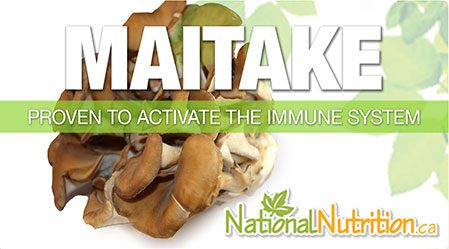
Maitake Mushroom has been proven to activate the immune system
Maitake Mushroom: Uses & Health Advantages
Updated Jul. 22nd, 2024 | Read Time: 2 Minutes | What You Will Learn:
- Key Constituents Found in Maitake Mushrooms
- Maitake mushroom As A Food & Supplement Varieties
- Important Information & Potential Side Effects
- Nutritional Information
- Reader Comments (2)
Maitake means "dancing mushroom'' in Japanese. It got its name because it was so valued in ancient times that people danced when they found a colony in the wild. The maitake‘s shape also looks like a bunch of butterflies that are in a wild dance. Maitake mushrooms have become popular because scientific studies done on mice show that an extract of the mushroom can inhibit the growth of tumours and stimulate the immune system.
Key Constituents Found in Maitake Mushrooms
The health benefits of Maitake are believed to be due to various polysaccharides. Polysaccharide compounds are also a source of medicinal effect in herbs that have immune system action, like Echinacea. Human clinical studies on patients with unhealthy cell growth are currently underway. Maitake may be useful for limiting unhealthy cell growth in the breast, colorectal, lung, stomach or liver. Maitake extracts may also help fight symptoms of autoimmune diseases.
Maitake Mushroom As A Food & Supplement Varieties
Maitake can be found in gourmet restaurants, dried and packaged in gourmet grocery stores, and in supplemental forms either in capsules or a liquid extract. It may be a part of formulas for immune system support. The maitake mushroom is now cultivated, in Japan, for medicinal use. This alleviates concerns about ecological harvesting and extinction of the maitake.
Important Information & Potential Side Effects
Little information has been collected concerning the toxicity of maitake, although some cases of allergic reactions have been reported. Individuals whose condition is dependent on immune system depression should not use maitake. Individuals with cancer, AIDS or other serious health concerns should consult with their health professional before using maitake.













I did not know that maitake means "dancing mushroom'' in Japanese; that is so pretty! And, it is even prettier that this mushroom got its name since the mushroom was so valued in ancient times that people danced when they found a colony of the mushroom in the wild. It gets even prettier with the maitake‘s shape looking like a bunch of butterflies in a wild dance. Finally, as an immunologist, I see one last beautiful element in the mushroom helping the immune system to do its dynamic dance
Hello Rachel,
Agreed, that is such a fun fact about Maitake mushrooms. Thank you for sharing your favourite points about this article and the new insights you've gained. Mushrooms pack many great health advantages, you can learn more here: https://www.nationalnutrition.ca/articles/supplements/medicinal-mushrooms/