

Anise Oil
What Is Anise Oil?
Anise (Pimpinella anisum), also called aniseed, is a flowering plant native to the Mediterranean region and Southwest Asia. Anise is a member of the parsley family, but its seeds have a warm, spicy, and sweet fragrance, often compared to the flavour and aroma of spices and herbs such as star anise, fennel, licorice, and tarragon. Anise is widely cultivated and used in culinary applications such as savoury dishes, candy, teas and tisanes, and even alcoholic beverages, especially in the Mediterranean. Read more >-
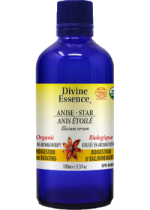
Anise essential oil can be used for many ailments. One of the best things it addresses is anything to do with spasms… Spasms are at the root of numerous signs and symptoms such as tension headaches, migraines, spasmodic coughs related to post nasal drip, asthma or respiratory infections like whooping cough and bronchitis. Divine Essence Anise Star essential oil is used in aromatherapy as an ant...
+ Earn 36 Reward PointsSale: $36.99
Reg.: $41.49 (Save $4.50)
In Stock
Anise Oil
Anise (Pimpinella anisum), also called aniseed, is a flowering plant native to the Mediterranean region and Southwest Asia. Anise oil is a member of the parsley family, but its seeds have a warm, spicy, and sweet fragrance, often compared to the flavour and aroma of spices and herbs such as star anise, fennel, licorice, and tarragon. Anise is widely cultivated and used in culinary applications such as savoury dishes, candy, teas and tisanes, and even alcoholic beverages, especially in the Mediterranean.
The anise plant is also used to make essential oil for use in various aromatherapy applications thanks to its main medicinal ingredient: anethole. Indeed, this essential oil is composed of 80-90% anethole, a compound responsible for the plant's characteristic flavour and aroma. Anethole also offers potent medicinal benefits thanks to its robust antimicrobial properties against bacteria (including Salmonella enterica), yeasts, and fungi (including Candida albicans). But that's not all; anethole is also fantastic to help clear up respiratory infections, including bronchitis, spasmodic coughs, whooping cough, and post-nasal drip. This explains why diffused anise essential oil is so effective as a decongestant and expectorant to help clear out mucus accumulation. Another great benefit of anise essential oil is that it promotes healthy digestion and can be used to soothe symptoms of digestive upset such as indigestion, acid reflux, heartburn, gas, flatulence, and bloating.
Benefits Of Anise Essential Oil
- Alleviates Migraine Headaches
- Reduces Nausea & Upset Stomach & Cramps
- Relieves Asthma Symptoms
- Soothes Symptoms Of The Cold & Flu
- Tames Coughs
Anise Essential Oil Medicinal Properties
Anise seed essential oil is used in a wide range of applications thanks to its numerous medicinal properties. These include:
- Anti-Rheumatic
- Antiseptic
- Antispasmodic
- Aperient
- Carminative
- Cordial
- Decongestant
- Digestive
- Expectorant
- Insecticide
- Sedative
- Stimulant
- Vermicidal
Using Essential Oil
You can use anise seed essential oil by diffusing it in a humidifier, diffuser, or vaporizer to benefit from its stimulant, expectorant, or decongestant properties. It can also be diluted in a carrier oil such as sweet almond or coconut oil (or any other carrier oil of your choosing) and applied directly to the skin via massage or as a hot/cold compress. Topical application is ideal for soothing spasmodic conditions, stomach aches, and migraines. It can also be blended and spritzed onto pillows and bedding to help promote restful sleep. This essential oil may also be used as a perfume or room fragrance and makes a great addition to DIY aromatherapy skincare and body care recipes, such as soaps, lotions, shampoos, masks, etc.
Anise essential oil pairs exceptionally well with Rose, Lavender, Lavandin, Orange, Pine, and Clove, among others.
Back to Top ↑








