

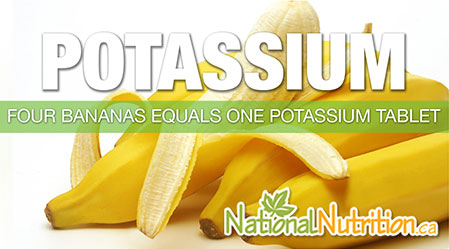
Four Bananas equal one potassium tablet
Potassium
Updated Jan. 21st, 2026 | Read Time: 2 Minutes | What You Will Learn:
- What is Potassium?
- Health Benefits of Potassium
- Shopping For Natural Supplements
- Cautions & Important Information
- Nutritional Information
- Reader Comments (4)
Potassium is an essential mineral that plays a vital role in keeping your body balanced and energized. From supporting heart health and muscle function to maintaining proper fluid and electrolyte levels, this powerful nutrient is foundational to everyday wellness. Let's explore the health benefits of this mineral and take a closer look at how supplements can help boost your intake.
What is Potassium?
Potassium is a key mineral and electrolyte that helps regulate many of your body's important functions. It plays a pivotal role in maintaining proper fluid balance, supporting nerve signals, and enabling muscles to contract, including the heart. Found naturally in a variety of foods like fruits, vegetables, legumes, and whole grains, it works alongside sodium to help control blood pressure and maintain healthy cellular function throughout your body.
Health Benefits of Potassium
This mineral is a key electrolyte that must be kept within certain limits by the body because it regulates heart rhythm and nerve transmission. Stress hormones make nerve and muscle cells fire more quickly by altering the balance of potassium and sodium inside and outside the cell. Therefore, chronic stress eventually leads to an increase in your body’s potassium requirements.
This mineral regulates water balance, via the kidneys, and therefore is an important component in blood pressure regulation. It can prevent calcium kidney stones when taken together with magnesium. It also regulates the intake of nutrients through cell membranes. As we age this function decreases and may be a reason why circulatory damage, lethargy and weakness are common amongst the elderly.
Shopping For Natural Supplements
Supplemental potassium is best taken in organic forms such as gluconate, citrate and fumarate. They usually contain 99mg of elemental potassium per tablet. Inorganic varieties are labelled as potassium sulphate, chloride, oxide and carbonate. These forms are not as easily used by the body as the organic forms. Most multivitamin/mineral preparations include a small amount of this mineral.
Cautions & Important Information
Potassium levels are disrupted by kidney disease, diarrhea, stress, low carbohydrate diets and the use of laxatives, diuretics, alcohol, tobacco, caffeine, sugar and licorice. Individuals on heart or kidney medication should not supplement with this mineral until they have consulted with a health professional.












I recently started learning about potassium as I heard how certain things like stress and too much sugar consumption could deplete it and currently I am under a lot of stress and eat more sugar than I should. I'm glad I came across this article as I was wondering whether I should supplement with potassium or not. I'm glad the article outlined all of the food sources for potassium and what type of potassium is best to be taken. The chart above also mentions potassium toxicity, what causes this? And it is toxic to have too much potassium?
Hello,
We're glad you enjoyed our article on potassium and have learned more about this mineral. Potassium toxicity occurs when your blood accumulates too much potassium, to lessen the likelihood of this, ensure you're consuming the recommended amount of potassium or speak with your health care practitioner to check your levels.
Have a healthy day!
Potassium is an amazing benefit to vegetables and keeps sodium in balance! I am so glad that my veggie rich diet has me doing very well with this essential element. That said, as Roses With Thorns mentions, potassium toxicity is a concerning idea. Is it possible to experience this with diet or does the body regulate absorption of potassium from supplements and foods differently or would diet have to be really extreme in order to induce symptoms of potassium toxicity? Anyway, this was a very interesting article and I appreciate you keeping me well read on nutrition :)
Hello Rachel,
Glad you enjoyed our article on potassium and thank you for sharing your comment, happy you could learn something new about potassium.
Have a healthy day.