

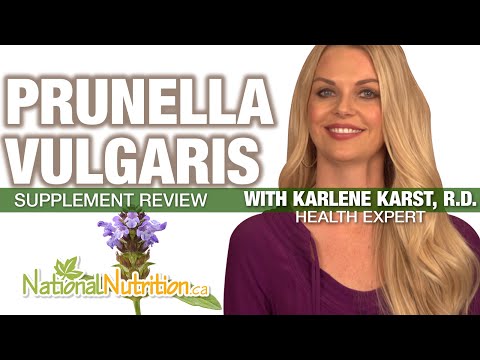
What Is Prunella Vulgaris?
Updated Jan. 26th, 2026 | Read Time: 2 Minutes | What You Will Learn:
- What is Prunella Vulgaris?
- Prunella Vulgaris Health Benefits
- Important Information
- Nutritional Information
- Reader Comments (5)
Prunella Vulgaris has been used for centuries on almost every continent in the world. It has numerous medicinal properties, including antibacterial, anti-inflammatory, antipyretic, anti-septic, anti-viral, astringent, carminative, diuretic, antioxidant and so much more. Prunella is also edible and can be added to and eaten in salads, soups and stews. In traditional Chinese medicine, “heal all” was associated with liver pathologies.
The Prunella flower itself is thought to resemble a throat. It has been shown to have an affinity for the throat and is effective in treating throat afflictions. It also has a long-standing reputation as a wound-healing herb.
What is Prunella Vulgaris?
Prunella Vulgaris is a low growing perennial with an underground “weed” that sends up a red coloured stem ending in blue-violet flowers. These flowering stems, much loved by bees, are what give prunella its medicinal properties. Prunella grows in sunny, dry and open grasslands.
Prunella Vulgaris Health Benefits
Prunella is used for the effective treatment of sore throat, fever, diarrhea, headache, conjunctivitis, hemorrhoids, heavy menstruation, internal bleeding, nephritis and other kidney pathologies, weaknesses of the liver and the cardiovascular system. Prunella is a strong antibacterial that has been found useful in inhibiting the growth of pseudomonas, Bacillus typhi, E. coli and Mycobacterium tuberculi among others. As an immune tonic, studies are showing promising support using Prunella to help HIV, unhealthy cell growth, and herpes.
Important Information
There are no known side effects, toxicity or contraindications with the use of prunella. It has been shown safe in large doses up to 30 g/day, although oral doses tend to be prescribed at anywhere from 6-15 g/day. Individuals on blood thinners may want to exercise extra caution when also using Prunella, as it also has anti-coagulant properties.













With the help of herbal medication, this can help herpes and hpv.
Herpes and HPV being Sexually Transmitted Diseases (STDs) can severely restrict one’s social and love life. Many people suffering from these conditions choose to remain silent, thus living a life filled completely with loneliness and frustration. You can find support with millions of other people with the same condition.
I had never heard of this supplement/plant before. This article was extremely informative both in explaining what it is and how to use it. I will keep this in mind for next winter when cold season returns.
Hello Kashia,
Prunella Vulgaris is a great supplement for cold season and sore throats, fever and headaches. It's nice to learn about new supplements and how they can help your health, we're glad you enjoyed our article and hope you enjoy the others too!
Have a healthy day.
Sometimes when it is clamed that something looks like something else, I believe it is a real stretch. For example, many people claim that the hippocampus of the brain looks like a seahorse and, in fact, this "similarity" in appearence is why this brain region is so named. In my opinion, though, the hippocampus looks nothing like a brain. However, the Prunella Vulgaris flower really does look like a throat. Also, I had never heard of this cross cultural "cure-all" and I am excited to read more about it...especially if any scientific research has been done on the flower's medicinal effects!
Hello Rachel,
Thank you for your comment and thoughts. We're thrilled you not only enjoyed our article on Prunella Vulgaris but liked the comparison of the the flower to the throat.
Have a healthy day