

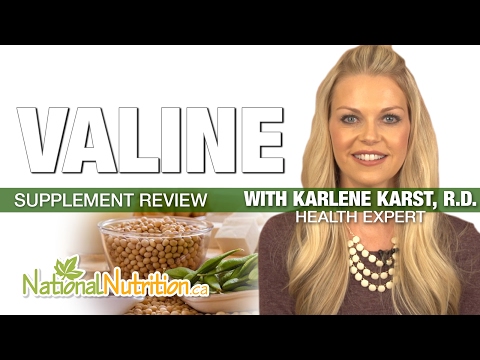
Valine: Benefits, Supplements, and More
Updated Mar. 03rd, 2026 | Read Time: 3 Minutes | What You Will Learn:
- What is Valine?
- Health Benefits of Valine
- Supports Muscle Growth and Repair
- Enhances Exercise Endurance
- Promotes Cognitive Focus During Stress
- Boosts Nitrogen Balance, Tissue Repair & Blood Sugar Regulation
- Liver Support
- Valine Supplements
- Important Information
- Nutritional Information
- Reader Comments (4)
Valine is one of the three branched-chain amino acids (BCAAs) that play a critical role in muscle metabolism, energy production, and tissue repair. Often grouped with leucine and isoleucine, this amino acid is especially popular in sports nutrition for its role in recovery and endurance. Because the body cannot produce it on its own, this amino acid must be obtained through diet or supplementation. In this article, we'll explore common questions and their health benefits.
What is Valine?
Valine is an essential amino acid, meaning it must be obtained from food. It is classified as a BCAA because of its unique chemical structure. It is naturally found in protein-rich foods such as meat, dairy, legumes, and soy.
In the body, this amino acid is primarily metabolized in muscle tissue rather than the liver. This makes it especially important for muscle repair, energy production during exercise, and maintaining nitrogen balance. As a building block of protein, this amino acid contributes to the growth and maintenance of tissues throughout the body.
Health Benefits of Valine
Supports Muscle Growth and Repair
Valine plays a direct role in muscle protein synthesis. It helps repair muscle fibres after exercise and supports the maintenance of lean muscle mass. For athletes and active individuals, adequate intake of this amino acid may improve recovery time and reduce muscle breakdown.
Enhances Exercise Endurance
During prolonged physical activity, this amino acid can be used as an energy source by muscle cells. Supplementing with branched-chain amino acids that include valine may help reduce fatigue and improve endurance performance.
Promotes Cognitive Focus During Stress
Some research suggests that BCAAs, including valine, may help support mental focus during intense physical stress. By competing with tryptophan for transport across the blood-brain barrier, this amino acid may help reduce central fatigue during long training sessions.
Boosts Nitrogen Balance, Tissue Repair & Blood Sugar Regulation
Valine contributes to maintaining nitrogen balance in the body, which is essential for proper tissue repair and metabolic function.
Adequate levels are important during periods of growth, recovery, and physical stress. Other tissues that the BCAAs help to repair are the bones and skin.
BCAAs regulate blood sugar by producing glycogen, the storage form of sugar in muscle tissue. Valine may be helpful for liver and gallbladder conditions.
Liver Support
It can also be given to support the liver in cases of severe protein deficiency, for example, deficiency caused by drug addiction. But this should only be done under medical supervision.
Valine Supplements
Valine supplements are most commonly found as part of BCAA formulas, typically in combination with leucine and isoleucine. They are available in powder, capsule, and tablet form.
Common questions about these supplements include:
- Do I Need Valine Supplements?
Most people who consume adequate protein through diet meet their valine needs. Supplements can benefit athletes, bodybuilders, or those with increased protein requirements.
2. When Should I Take Valine?
Valine-containing BCAA supplements are often taken before, during, or after exercise to support recovery and endurance.
When choosing a supplement, look for products that clearly list the BCAA ratio and are third-party tested for quality and purity.
Important Information
Valine is generally safe when consumed through food or in moderate supplemental amounts. However, excessive intake of BCAAs may cause digestive discomfort or imbalances with other amino acids.
Individuals with certain metabolic disorders, such as maple syrup urine disease (MSUD), must strictly limit intake of this amino acid. Additionally, those with kidney or liver conditions should consult a healthcare provider before using valine supplements.
As with any supplement, quality matters. Choose reputable brands like you'll find here at National Nutrition, and follow recommended dosages to ensure safe and effective use.













BCAA's are important and have unique properties, Valine stands out due to its effectiveness in helping you build more muscle. It is important to know the composition of the BCAA before you decide when to take one. Great workout supplement for sure.
Hello Sam,
We are glad you enjoyed this article. Yes, a balance between the BCAA's, and all amino acids, is essential. BCAA's are great for working our and training to further progress your muscles growth and recovery. If you'd like to learn more about BCAA's, check out this article too:
https://www.nationalnutrition.ca/articles/supplements/branched-chain-amino-acids/
Stay healthy & well.
Your opening states clearly why everybody needs valine: the body cannot produce this protein building block and therefore, it is essential. It's also clear from your video that valine is best taken in conjunction with the other branched chain amino acids (BCAAs), leucine and isoleucine (also essential) due to the functional role of these special amino acids. Thank you for this short but informative article! And the note that high valine doses can cause hallucinations and a skin-crawling sensation is so interesting!! I wonder what the mechanism is?
Hello Rachel,
Thank you for your positive feedback on our article about valine! We're glad that the information provided was informative and useful to you. Valine, as an essential amino acid, plays a crucial role in protein synthesis and muscle repair. It's great to see that you found value in learning about the importance of taking valine in conjunction with other BCAAs like leucine and isoleucine.
Regarding the note about high doses of valine potentially causing hallucinations and a skin-crawling sensation, it's indeed an interesting aspect to consider. This could be because taking too much of this supplement can cause imbalance in the body's nitrogen levels. As with any supplement or medication, it's important to follow recommended dosage guidelines to ensure safety and avoid any potential adverse effects. You can learn more about other amino acids by reading this article, https://www.nationalnutrition.ca/articles/supplements/amino-acid-complex/
Stay healthy & well