

Bee's Wax Products
Exploring Bees Wax: A Natural Wonder
Did you know that beeswax (Cera alba) is a natural wax that comes to us courtesy of the busy honey bee? Indeed, beeswax is produced by a gland in the abdomen of honeybees and excreted to create the hive itself, where it will be used to store honey and pollen and house their larvae. In a circular fashion, worker bees rely on honey for energy to produce beeswax. Once consumed, the sugars in honey are metabolized in wax-gland-associated fat cells into beeswax. Read more >-
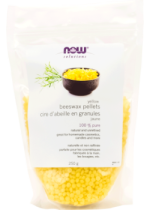
NOW Solutions 100% Pure Beeswax Pellets are great for homemade cosmetics, (eg. balms, lotions, deodorants, etc.) and household products (eg. candles, wood polish, etc.). It is an excellent addition to cosmetic products, because it creates a barrier which helps to seal in moisture, without being airtight, while helping to protect the skin from environmental irritants. NOW Solutions unrefined, ye...
+ Earn 16 Reward PointsSale: $16.99
Reg.: $24.39 (Save $7.40)
In Stock
The Diverse Health Benefits of Beeswax
Did you know that beeswax (Cera alba) has many health benefits? It is a natural wax that comes to us courtesy of the busy honey bee? Indeed, beeswax is produced by a gland in the abdomen of honeybees and excreted to create the hive itself, where it will be used to store honey and pollen and house their larvae.
In a circular fashion, worker bees rely on honey for energy to produce beeswax. Once consumed, the sugars in honey are metabolized in wax-gland-associated fat cells into beeswax. Beeswax production in most hives is about 1.5% to 2% of the total honey yield, and bees consume roughly 8 pounds of honey to produce 1 pound of beeswax. Another fun fact: beeswax is a highly sturdy material, with studies showing that one kilogram (2.2 lb) of wax can store an astounding 24 to 30 kilograms (53 to 66 lb) of honey.
Of course, not all honey and beeswax are harvested. The honey goes first to the colony. The beekeepers harvest about 50 pounds of surplus honey per colony per year. During this harvest, beeswax can also be collected for candlemaking, as a home or commercial wax, or for use in other wax-based products. On average, 1-2 lbs of beeswax are collected per 100 lbs of honey harvested.
Beeswax for Wellness: A Closer Look at Its Advantages
- Helps Clear Acne
- Moisturizes Skin
- Relieves Pain, Joint Stiffness, & Inflammation
- Skin Enhancer – eczema, psoriasis, diaper rash, dry skin, stretch marks
- Used In Candle Making, Fragrances and Soaps
Beeswax Candles: Natural Ambiance and Air Purification
Beeswax is a natural for candle making for many reasons, not the least because it is offers health benefits by being healthier to burn and inhale, and it's a 100% renewable resource. Other significant advantages of beeswax candles include that they have a longer burn time with very little dripping, as well as a cleaner burn with little soot or smoke. Also, let's not forget the soothing amber glow beeswax gives candles and their slightly honeyed scent.
If you decide you want to try and make your own homemade beeswax candles, make sure to find 100% pure beeswax that has no added ingredients.
Concluding Insights on the Multifaceted Uses of Beeswax
Beeswax is an incredible natural substance with a seemingly never-ending array of uses, including cosmetic and candle making. It is also considered safe for topical use. However, some people may be sensitive to beeswax and experience allergy symptoms. If you have a known allergy to bees and bee products, never use beeswax topically. If you notice a skin rash or redness after using beeswax or a product containing it, discontinue use immediately.
Back to Top ↑








