

Strontium Supplements
Understanding Strontium: A Key Element for Bone Wellness
Strontium is a natural trace element found in seawater, soil, and foods like grains, beans, spinach, lettuce, and celery. Strontium has a chemical composition similar to calcium and acts through the calcium-sensing receptor (CaSR) in bone tissue cells to accelerate bone building while inhibiting bone breakdown. As such, strontium is an essential element for strong bones and teeth. Read more >-
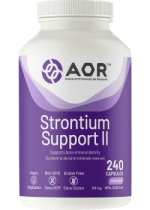
STRONTIUM SUPPORT II FROM AOR 341 MG OPTIMUM DOSAGE FOR SKELETAL SUPPORT. Found largely in the skeletal system, Strontium is an abundant trace mineral. AOR Strontium Support supplies an optimal 341 mg per capsule and has been shown to offer positive benefits to those concerned with Osteoporosis. Studies show Strontium provides essential support to the cells which form new bone and also supplie...
+ Earn 77 Reward PointsSale: $77.94
Reg.: $97.43 (Save $19.49)
In Stock
The Role of Strontium in Promoting Bone Health
Strontium is a natural trace element found in seawater, soil, and foods like grains, beans, spinach, lettuce, and celery. Strontium has a chemical composition similar to calcium and acts through the calcium-sensing receptor (CaSR) in bone tissue cells to accelerate bone building while inhibiting bone breakdown. As such, strontium is an essential element for strong bones and teeth. Indeed, strontium is frequently recommended for bone health and in the prevention and treatment of osteoporosis to help prevent bone loss, to increase bone mass, and as an integral part of treatment plans for low bone mineral density, as well as to accelerate the healing of fractures.
Given its significant role in the maintenance of bone health, it isn’t surprising that strontium is a member of group two on the periodic table of elements, alongside calcium and magnesium—two other bone essential nutrients. Like calcium, strontium is naturally present in the body, and like calcium, 99% of the strontium in the body is found in bone tissue. Just as significantly, strontium and calcium are both absorbed via the gut and incorporated into the bone in the same way. In turn, the body eliminates calcium and strontium similarly via the kidneys. Beyond these similarities, some of the most impressive benefits of strontium include its ability to stimulate the synthesis of bone matrix proteins and upregulate the formation of collagen and cartilage in joints, which helps promote healthy bones, joints, and cartilage and can help prevent bone loss and degenerative joint conditions.
Comprehensive Benefits of Strontium for Bone Density and Strength
- Accelerates Bone Regeneration
- Helps Prevent And Treat Osteoporosis
- Reduces Bone Pain And Improves Mobility
- Stimulates The Rate Of New Bone Building, And Slows The Rate Of Bone Break Down
Strontium for Bone Health: Who Can Benefit?
Strontium is recommended almost exclusively for bone health—more specifically, to help prevent and slow down the breakdown of bone tissue and accelerate the formation of new bone in postmenopausal women. It is typically recommended along with other bone health essentials like calcium, magnesium, boron, vitamin C, vitamin D3, and vitamin K2 to promote optimal bone health and help protect against the loss of bone density.
Choosing the Right Strontium Supplements for Optimal Bone Health
Potency
Strontium supplements come in several doses, typically in the 300–750 mg range. A daily dose of 0.5-2 g of strontium is usually recommended for the treatment of osteoporosis.
Forms
Strontium can be purchased in citrate or chloride form, which, as studies have shown, offer similar benefits. Strontium ranelate is another form that has been extensively studied in relation to bone health, but this form is only available by prescription in Europe and Australia.
Formats
Strontium supplements come in tablets, capsules, and softgels.
Concluding Insights on Strontium's Role in Bone Health Maintenance
Strontium supplementation is inappropriate for those with severe kidney impairment or anyone on tetracycline or quinolone antibiotics. It may also not be appropriate for individuals at high risk for blood clots or taking blood-thinning medications. In such instances, consult your treating physician to discuss whether strontium supplementation is right for you.
Back to Top ↑








