

Saccharomyces Boulardii
What Is Saccharomyces boulardii ?
Did you know that Saccharomyces boulardii is a tropical yeast commonly used as a probiotic supplement? It was first isolated from the skin of lychee and mangosteen fruits by a French scientist named Henri Boulard in 1923, hence its name "boulardii." Read more >-
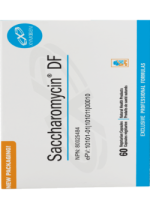
Saccharomycin DF by Xymogen provides Saccharomyces boulardii, a probiotic that helps support gastrointestinal health. This non-pathogenic yeast is produced using a gentle, low-vacuum process designed to maintain stability and resistance to stomach acid, without the use of dairy or lactose. S. boulardii has been studied for its role in supporting a healthy intestinal microflora and maintaining n...
+ Earn 63 Reward PointsSale: $63.99
Reg.: $68.99 (Save $5.00)
In Stock
Saccharomyces Boulardii - What Is It?
Did you know that Saccharomyces boulardii is a tropical yeast commonly used as a probiotic supplement? It was first isolated from the skin of lychee and mangosteen fruits by a French scientist named Henri Boulard in 1923, hence its name "boulardii."
Saccharomyces boulardii has been extensively studied for its numerous beneficial effects on the gastrointestinal system. Indeed, though this strain of bacteria is not a normal part of the human gut microbiota, it has been shown to help restore and maintain a healthy balance of microorganisms in our gut by acting as a probiotic. Moreover, when taken orally, this bacteria can survive the stomach's acidic environment and colonize the intestines, where it can impart its robust health benefits.
Health Benefits of Saccharomyces Boulardii
Research has shown that Saccharomyces boulardii offers several potential health benefits, including:
Diarrhea prevention and treatment: Saccharomyces boulardii has been shown to be effective in preventing and treating various types of diarrhea, including antibiotic-associated diarrhea, traveller's diarrhea, and diarrhea caused by Clostridium difficile (C. difficile) infection.
Gut health support: It helps maintain a healthy balance of gut microorganisms by competing with harmful bacteria for resources, producing substances that inhibit the growth of pathogens, and modulating the immune response in the gut.
Improved Digestive Function: Saccharomyces boulardii may help improve digestion by supporting the breakdown of complex carbohydrates and the absorption of nutrients in the gut.
Inflammatory bowel diseases (IBD): Some studies suggest that Saccharomyces boulardii may help reduce inflammation and improve symptoms in individuals with conditions like Crohn's disease and ulcerative colitis, which are forms of IBD.
Irritable bowel syndrome (IBS): Research has shown that Saccharomyces boulardii may relieve certain symptoms of IBS, such as bloating and abdominal pain.
Protection against Pathogens: Saccharomyces boulardii has been shown to inhibit the growth of various pathogens, including certain bacteria and fungi, in the gastrointestinal tract.
Saccharomyces Boulardii Supplements
These supplements come in isolated form or combination blends alongside other probiotic substances. They are offered in various delivery formats, including:
Capsules: These are the most common form of Saccharomyces cerevisiae supplements. They contain powdered or granulated yeast forms enclosed in a gelatin or vegetarian capsule.
Tablets: Saccharomyces cerevisiae can also be compressed into tablet form. Tablets are similar to capsules in terms of convenience and dosing accuracy.
Powder: Some Saccharomyces cerevisiae supplements are available in powdered form. It can be mixed with water, juice, or other beverages. It allows for flexible dosing.
Liquid: Although less common, Saccharomyces cerevisiae supplements can be found in liquid form.
Typically, Saccharomyces boulardii is taken in doses between 500 and 1000 mg (which works out to 10-20 billion colony-forming units *CFUs)) daily for 4 weeks. In children, it is usually recommended in doses between 250 and 500 mg (about 5-10 billion colony-forming units (CFUs)) for up to 4 weeks.
Final Thoughts
While generally well tolerated, certain groups of people should exercise caution or avoid using Saccharomyces boulardii altogether. These include:
- Immuno-compromised individuals
- Critically ill patients
- Patients with a known sensitivity or allergy
- Children under 1 year of age
- Patients with invasive fungal infections
Back to Top ↑








