

Tampons
What Are Tampons?
The history of tampons is quite fascinating - they have been used for menstrual hygiene for centuries… way before Tampax and Playtex burst onto the scene. Indeed, while the exact origins of them are unclear, there is evidence that they have been used in one form or another since ancient times. Read more >-

Organ(y)c’s feminine hygiene products are better for your health because they’re made without the use of synthetic materials, perfumes, bleach or chlorine, or plastics. They use 100% cotton that’s certified organic by the ICEA, protects against leaks, is pH compatible, hypoallergenic and naturally breathable. Their compact applicator is made of renewable resources and offers smooth edges for co...
+ Earn 33 Reward PointsSale: $11.99
Reg.: $13.72 (Save $1.73)
In Stock -

Unlike many brands out there, Organ(y)c manufactures feminine hygiene products that are made with 100% certified organic cotton, not synthetics such as rayon or wood pulp. With your health and the planets in mind, they use hydrogen peroxide instead of bleach or chlorine and don’t use any perfumes or fragrances. These super tampons have an absorbent core, are breathable and hypoallergenic and th...
+ Earn 33 Reward PointsSale: $11.99
Reg.: $13.72 (Save $1.73)
In Stock -

These super plus compact tampons by Organ(y)c are highly absorbable thanks to their 100% organic cotton materials. Organ(y)c doesn’t use synthetic materials or wood pulp because cotton holds more than 20 times its weight in liquid, protects against leaks, is pH compatible and better for your health. These are also formulated without the use of chlorine, bleach or perfumes and their patented app...
+ Earn 33 Reward PointsSale: $11.99
Reg.: $13.72 (Save $1.73)
In Stock -

These regular tampons are individually wrapped in paper wrapping and come with a cardboard applicator, both of which are made of recycled materials. Made with 100% cotton, they offer a super absorbent core that holds 20 times its weight in liquid. Most brands use synthetic materials, wood pulp, bleach and chlorine, whereas Organ(y)c uses hydrogen peroxide which is safe and natural and organic c...
+ Earn 30 Reward PointsSale: $10.99
Reg.: $12.35 (Save $1.36)
In Stock -

Organ(y)c believes in health; therefore, their products are made with 100% certified organic cotton rather than synthetic materials, chlorine or bleach. These super tampons come in an individually wrapped recycled paper wrapping and cardboard applicator for easy and comfortable insertion. Cotton is breathable, hypoallergenic, absorbent and a better option for your health. Organ(y)c also follows...
+ Earn 30 Reward PointsSale: $10.99
Reg.: $12.35 (Save $1.36)
In Stock -

These regular tampons by Organ(y)c are individually wrapped in renewable packing and are made with natural fibres. Farewell to synthetic materials because these breathable, hypoallergenic tampons are made of 100% certified organic cotton that’s ideal for sensitive skin and pH compatible. Cotton absorbs 20 times its weight in liquid and is better for your health. Organ(y)c doesn’t use perfumes, ...
+ Earn 24 Reward PointsSale: $8.99
Reg.: $9.86 (Save $0.87)
In Stock -
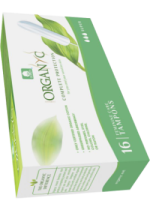
Organ(y)c’s super digital tampons come without an applicator and are individually wrapped in renewable packaging. These are made without the use of wood pulp or synthetic materials, but are super absorbent due to its cotton fibres and core. Cotton absorbs 20 times its weight in liquid, is natural, breathable, hypoallergenic and pH compatible. Orgna(y)c’s products are certified organic by the IC...
+ Earn 27 Reward PointsSale: $9.99
Reg.: $10.96 (Save $0.97)
In Stock
Exploring Tampons and Their Impact on Women's Health
The history of tampons is quite fascinating - they have been used for menstrual hygiene for centuries… way before Tampax and Playtex burst onto the scene. Indeed, while the exact origins of them are unclear, there is evidence that they have been used in one form or another since ancient times.
In ancient Egypt, records show that women would roll papyrus as a tampon-like object to manage their menstrual flow. In ancient Greece, women were said to have used lint wrapped around a small piece of wood. Other cultures, such as the Romans and the Chinese, used various materials, including soft wool, to absorb menstrual flow. The modern tampon was later introduced in the 19th Century, made of medicated cotton wool or sponge. And in 1854, a patent was granted to Ann Haagensen for the first-ever cotton tampon attached to a cord (much like today's iteration).
Since then, tampons have continued to evolve and improve in quality and efficiency. However, the quality of their ingredients has increasingly been a bone of contention. Indeed, conventional tampons may contain dioxins from bleach, pesticide residues from conventional, non-organic cotton, and mystery “fragrance” ingredients. Moreover, conventional varieties often contain rayon, a synthetic fibre used to increase absorbency. However, studies have shown that rayon may increase the risk of toxic shock syndrome (TSS), a severe bacterial infection.
Unsurprisingly, in recent years, there has been a growing interest in tampons made from safe and natural ingredients and eco-friendly and sustainable options that do not add to our environmental impact.
Choosing Natural Tampons: What to Consider
If you’re in the market for a natural alternative, there are a few key factors to consider:
Organic and Chemical-Free – Look for tampons made from 100% organic, pesticide-free cotton and/or other natural materials. This helps ensure they are free from harmful chemicals, synthetic additives, and pesticide residues.
Biodegradable or Compostable – Consider biodegradable or compostable materials, as they are more environmentally friendly than conventional tampons that take years to decompose.
Fragrance and Dye-Free – Steer clear of products that contain fragrances or artificial dyes, as these can cause irritation and allergic reactions which are not good for women's health.
Chlorine-Free – Choose chlorine-free tampons, as conventional ones are often bleached with chlorine, which can create harmful by-products called dioxins that can be absorbed into the body and take up to eleven years to eliminate.
Applicator Options – If you prefer a tampon with an applicator, consider options made from biodegradable or recyclable materials, such as cardboard or plant-based plastics.
Trusted Brands – Look for reputable brands that prioritize natural and sustainable practices. Research the brand's commitment to environmental sustainability, transparency, and product safety for your complete peace of mind.
Best Practices for Safe Tampon Use
Using tampons is a convenient and comfortable way to manage menstrual flow. While tampons aren't tricky to use by any means, you should follow a few basic guidelines for optimal efficacy and safety. These include:
- Choosing a tampon with the right absorbency for your needs
- Always selecting the tampon with the lowest absorbency necessary
- Changing tampons regularly (every 4 to 6 hours)
- Alternating with pads / Wearing a pad to sleep
- Never flushing tampons down the toilet
Some of the most reputable natural feminine hygiene brands include Natracare and Organyc.
Back to Top ↑








