

Flax
Flax Seed Oil, Powder & More
Many are familiar with flax seed oil, but did you know, flax seeds, also known as linseeds, come from the flowering flax plant (Linum usitatissimum) in the family Linaceae. They have been cultivated for thousands of years and have long been revered for their impressive nutritional benefits. Read more >-
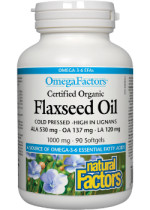
1000 MG FLAX SEED OIL FROM NATURAL FACTORS. The good fats! Flax oil contains essential fats that our bodies cannot manufacture on their own, including Alpha Linoleic acid, Oleic acid, and Linoleic acid. With 1000 mg of cold-pressed, solvent-free, unrefined Flax Seed Oil; a wise choice for anyone concerned with better health. Often recommended to help reduce cholesterol and blood pressure. [SOF...
+ Earn 11 Reward PointsSale: $11.99
Reg.: $13.99 (Save $2.00)
In Stock -
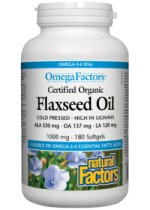
1000 MG FLAX SEED OIL FROM NATURAL FACTORS. The good fats! Flax oil contains essential fats that our bodies cannot manufacture on their own, including Alpha Linoleic acid, Oleic acid, and Linoleic acid. With 1000 mg of cold-pressed, solvent-free, unrefined Flax Seed Oil; a wise choice for anyone concerned with better health. Often recommended to help reduce cholesterol and blood pressure. LARG...
+ Earn 15 Reward PointsSale: $15.99
Reg.: $24.99 (Save $9.00)
In Stock
Discover the Nutritional Power of Flax Seeds
Many are familiar with flax seed oil, but did you know, flax seeds, also known as linseeds, come from the flowering flax plant (Linum usitatissimum) in the family Linaceae. They have been cultivated for thousands of years and have long been revered for their impressive nutritional benefits.
Flax seeds and their oil have an exceptionally high omega-3 fatty acid content, which is beneficial for heart health. Flax seeds are one of the richest plant sources of alpha-linolenic acid (ALA), an essential omega-3 fat. In the body, ALA is converted to eicosapentaenoic acid (EPA) and docosahexaenoic acid (DHA), the active forms of omega-3s. Flax seeds are also an excellent source of both soluble and insoluble fibre, which aids in digestion and promotes bowel regularity. Moreover, flax seeds contain protein, vitamins (such as thiamine and vitamin B6), minerals (including magnesium, phosphorus, and manganese), and lignans.
As if that wasn't impressive enough nutritionally speaking, flax seeds are also rich in lignans, phytoestrogens, that mimic the action of estrogen in the body. Lignans have potent antioxidant properties and offer numerous health benefits, such as improving healthy cell growth, improving heart health, and promoting hormonal balance. Given their complex nutritional profile, flax seeds have been associated with several significant health benefits, including helping reduce inflammation, supporting brain health, and lowering the risk of chronic diseases. The high fibre content of flax seeds is also ideal for aiding digestion, promoting satiety, and promoting healthy weight management.
Health Advantages of Flax Seed Consumption
- Aids Weight Loss
- Antioxidant-Rich
- Helps Lower Cholesterol And Regulate Blood Pressure
- Promotes Hair & Skin Health
- Supports Digestive Health
Guide to Buying Flax Seed Products
Flax seeds are available in several forms such as oil and powders, each with its characteristics and uses. You may choose from the following:
Whole raw flax seeds, which are unprocessed, have a hard outer shell. They have a longer shelf life than ground flax seeds and retain all of their nutritional value. However, the hard shell makes it difficult for the body to digest and absorb the nutrients effectively, so they are often recommended for grinding before consumption.
Ground flax seeds are whole flax seeds that have been finely ground into a powder. They are easier for the body to digest and absorb, allowing for better nutrient availability. However, they have a shorter shelf life than whole flax seeds, so it's best to store them in an airtight container in the refrigerator.
Flax seed oil extracted from flax seeds is available in liquid form. It is rich in omega-3 fatty acids, particularly alpha-linolenic acid (ALA). It is commonly used as a dietary supplement or as an ingredient in salad dressings, smoothies, and other recipes. It should be stored in a cool, dark place to prevent oxidation.
Flaxseed meal is made by grinding whole flax seeds into a coarse meal. It is coarser than ground flax seeds and often contains some of the outer shells. Flaxseed meal is commonly used as a dietary supplement, added to baked goods, or used as an egg substitute for vegans or those with egg allergies.
How to Include Flax Seeds in Your Diet
Whether you choose oil, ground powder or whole seeds, flax seeds can be consumed in various ways and are often added to smoothies, cereals, yogurt, or baked goods like muffins and bread. Whole flax seeds are sometimes used as a topping for salads or incorporated into cereal, granola, and trail mixes. To use flax seeds as an egg replacement – mix one tablespoon of ground flax seeds with three tablespoons of water and let it sit for a few minutes until it forms a gel-like consistency. Then, use this mixture as a substitute for one egg in any recipe.
When you first start consuming flax seeds, it’s best to start with small amounts and gradually increase your intake. Additionally, drinking plenty of water is essential, as it absorbs liquid and can cause digestive discomfort without adequate hydration.
Also noteworthy is the fact that flax seeds are rich in omega-3 fatty acids, which have blood-thinning properties. While this can be advantageous for cardiovascular health, individuals taking blood-thinning medications or with bleeding disorders should exercise caution and consult their healthcare practitioner before significantly increasing their flax seed intake.
Back to Top ↑








