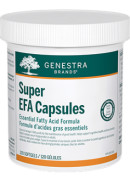
Each capsule contains:
- 3765 mg
- lax (Linum usitatissimum) Seed Oil
- Yielding
- 1883 mg
- ALA (AlphaLinolenic Acid)
- 600mg
- LA (Linoleic Acid)
- 500mg
- Fish Oil (Sardine and Anchovy)
- Yielding
- 80mg
- DHA (Docosahexaenoic Acid)
- 50mg
- EPA (Eicosapentaenoic Acid)
- 2025 mg
- Total Omega3 Fatty Acids
- 140 mg
- Evening Primrose (Oenothera biennis) Seed Oi
- Yielding
- 14 mg
- GLA (GammaLinolenic Acid)
Non-Medicinal Ingredients:
Natural orange flavour, d-alpha tocopheryl
Natural orange flavour, d-alpha tocopheryl
Important Information:
Guaranteed to contain no added wheat, starch, yeast, gluten, corn, soy, sodium, sugar, artificial colouring or flavouring, antimicrobial preservatives or dairy products. of harvested fish.
Format
 Softgels
120 Caps
Dosage
Adults and Children (9 years and older): Take two capsules twice daily with meals, or as recommended by your healthcare practitioner.
Product Information:
- 187.5 mg DHA and 262 mg EPA per serving size
- Helps support cognitive health and/or brain function
- Helps reduce high serum triglycerides/triacylglycerols levels
- Helps support the development of brain, eyes and nerves in children up to 12 years of age
- Sourced from anchovy and sardine
- NEO-3 natural EPA and DHA enrichment

Evidence-Based Natural Health Supplements for Optimal Wellness
Genestra delivers professional-grade products that are offered in a variety of formats. Genestra natural health products have been proven safe, effective and reliable for over 30 years, and are backed by clinical evidence. Genestra brings you HMF Forte, HMF Immune, HMF UTI, Digest Plus, Probiotics, D-Mulsion and Super EFA Liquid. Read more >What People Are Saying:
- Reviews
- POST A NEW REVIEW
Reviews for:
Super EFA Caps - 120 Caps
(3 reviews)
Reviews By Rating
helpful votes
0
0 customers found this product review helpful
More Info
Super EFA Capsules contains sardine and anchovy oils in a EPA:DHA ratio of 1.4:1 that supports cardiovascular health. Super EFA Capsules is naturally flavoured with sweet orange oil and does not have a fishy aftertaste. Source of omega-3 fatty acids, EPA and DHA for the maintenance of good health.
EFA Liquid is a great-tasting, well-balanced combination of essential fatty acids prepared from flaxseed oil, sardine and anchovy fish oils and evening primrose oil. EFA Liquid is a source of essential fatty acids (including omega-3 fatty acids, DHA, EPA and ALA) for the maintenance of good health (1),(2). EFA Liquid also helps to maintain cardiovascular health and to support cognitive health and brain function.
Nutrition and brain and eye function
Essential fatty acids, like vitamins, cannot be made by the body and so must be included in the diet. The body converts essential fatty acids into long chain polyunsaturated fatty acids (LCPs), which form part of the membrane around and within every cell in the body and play an important role in eye and brain activity.
Fat in its various forms makes up about 20% of the bodyweight but the brain contains an even higher percentage - 60%. Research carried out at Purdue University has shown that a nutritionally complete diet that includes combinations of certain fatty acids can play a vital role in the development of vision, learning ability and co-ordination.
A large proportion of the human brain is composed of LCPs and the most abundant of these are docosahexaenoic acid (DHA)and arachidonic acid (AA). Each of these LCPs play a vital role in eye and brain function; DHA is required for nerve cell and eye membranes, and AA is required for transmission of messages along nerves and for the development of memory.
Learning ability in humans begins to show itself early on in childhood. Some parents discover that although their children are intelligent and creative, they can find every day tasks daunting and some may even demonstrate unruly or disruptive behaviour.
Dietary inclusion of the nutrients DHA and AA may help in the support of a child's concentration, and therefore their learning ability and behaviour. Efalex is a convenient way to help safeguard dietary intake of DHA and AA fatty acids and is suitable for people of all ages, and may be especially useful for children over the age of two.
WHAT ARE ESSENTIAL FATTY ACIDS?
Fat - essential for life
Fat comes in good and bad forms, and too much bad fat in your diet can contribute to obesity. However, too little fat can also be very bad for you, particularly if you're very young - and too little of the vital Long Chain Polyunsaturated fatty acids (LCPUFAs) could contribute to a variety of health issues:
-Reduced learning ability
-Slower development
-Hormonal imbalance
-Dry skin
-Inflammatory diseases.
The science...
There are two 'families' of essential fatty acids (EFAs), the omega-6 and omega-3 series, the 'parents' of which are an essential component of a healthy diet as they cannot be produced by our bodies:
Linoleic acid (LA) is the parent fatty acid of the omega-6 family and is commonly found in vegetable oils such as corn oil, sunflower oil, palm oil, rapeseed oil and soya oil. Evening primrose Oil is a member of the omega-6 family.
Alpha-linolenic acid (ALA) is the parent of the omega-3 family and predominantly comes from green leafy vegetables and some vegetable oils (flax, rape and soya), while the longer chain members of the omega-3 series are predominantly found in fish and fish oils.
These essential fatty acids are converted in the body by enzymes into Long Chain Polyunsaturated fatty acids (LCPUFAs). The four most important LCPUFAs needed by the body are:
Gamma Linolenic Acid (GLA)- An important omega-6 nutrient needed for important bodily functions such as the maintenance of hormonal balance and healthy skin structure. Can also be broken down into AA.
Arachidonic Acid (AA)- An important omega-6 nutrient found in the membranes of nerves and helps with the transmission of messages in the central nervous system.
Docosahexaenoic Acid (DHA)- An important omega-3 nutrient needed by the body for the structure of nerves and cells and is needed for brain and eye health in particular.
Eicosapentaenoic Acid (EPA)- An important omega-3 nutrient needed by the body for the role it plays in maintaining healthy and supple joints, circulation and heart health
Why diet alone may not ensure sufficient GLA, DHA, EPA and AA
Unfortunately, the body's conversion of essential fatty acids to LCPUFAs is an inefficient process, especially in the very young and old and during times of stress or illness. However, the biggest contributing factor towards an LCPUFA deficiency is the modern lifestyle and diet:
High consumption of alcohol, caffeine, saturated fats, sugar, nicotine, and excess cholesterol can affect the efficiency of enzymes and therefore inhibit the manufacture of LCPUFAs in the body.
An increase in vegetable oil consumption has resulted in excess omega-6 fatty acids in the diet
An increase in vegetarianism has resulted in an excess of omega-6 fatty acids, while strict vegetarian diets provide no DHA, EPA or AA
Increases in hydrogenated fats in processed foods has increased trans fatty acid consumption
Low fish consumption leads to low intakes of the vital LCPUFAs DHA and EPA
Farmed fish and meat from cattle fattened on cereals rather than grass have less omega-3 LCPUFAs than before
Over the years, breast milk composition has changed and mother's milk now has less DHA and more omega-6 fatty acids
THE IMPORTANCE OF EVENING PRIMROSE OIL AND FISH OIL
The impaired conversion of the parent essential fatty acids means their LCPUFA derivatives GLA, EPA, DHA and AA need to be supplied pre-formed in the diet, and many years of research have pointed to Evening Primrose Oil as the most reliable source of GLA. Fish oil from oily fish such as tuna, mackerel, and salmon are a rich source of EPA and DHA.
EFA Liquid is a great-tasting, well-balanced combination of essential fatty acids prepared from flaxseed oil, sardine and anchovy fish oils and evening primrose oil. EFA Liquid is a source of essential fatty acids (including omega-3 fatty acids, DHA, EPA and ALA) for the maintenance of good health (1),(2). EFA Liquid also helps to maintain cardiovascular health and to support cognitive health and brain function.
Nutrition and brain and eye function
Essential fatty acids, like vitamins, cannot be made by the body and so must be included in the diet. The body converts essential fatty acids into long chain polyunsaturated fatty acids (LCPs), which form part of the membrane around and within every cell in the body and play an important role in eye and brain activity.
Fat in its various forms makes up about 20% of the bodyweight but the brain contains an even higher percentage - 60%. Research carried out at Purdue University has shown that a nutritionally complete diet that includes combinations of certain fatty acids can play a vital role in the development of vision, learning ability and co-ordination.
A large proportion of the human brain is composed of LCPs and the most abundant of these are docosahexaenoic acid (DHA)and arachidonic acid (AA). Each of these LCPs play a vital role in eye and brain function; DHA is required for nerve cell and eye membranes, and AA is required for transmission of messages along nerves and for the development of memory.
Learning ability in humans begins to show itself early on in childhood. Some parents discover that although their children are intelligent and creative, they can find every day tasks daunting and some may even demonstrate unruly or disruptive behaviour.
Dietary inclusion of the nutrients DHA and AA may help in the support of a child's concentration, and therefore their learning ability and behaviour. Efalex is a convenient way to help safeguard dietary intake of DHA and AA fatty acids and is suitable for people of all ages, and may be especially useful for children over the age of two.
WHAT ARE ESSENTIAL FATTY ACIDS?
Fat - essential for life
Fat comes in good and bad forms, and too much bad fat in your diet can contribute to obesity. However, too little fat can also be very bad for you, particularly if you're very young - and too little of the vital Long Chain Polyunsaturated fatty acids (LCPUFAs) could contribute to a variety of health issues:
-Reduced learning ability
-Slower development
-Hormonal imbalance
-Dry skin
-Inflammatory diseases.
The science...
There are two 'families' of essential fatty acids (EFAs), the omega-6 and omega-3 series, the 'parents' of which are an essential component of a healthy diet as they cannot be produced by our bodies:
Linoleic acid (LA) is the parent fatty acid of the omega-6 family and is commonly found in vegetable oils such as corn oil, sunflower oil, palm oil, rapeseed oil and soya oil. Evening primrose Oil is a member of the omega-6 family.
Alpha-linolenic acid (ALA) is the parent of the omega-3 family and predominantly comes from green leafy vegetables and some vegetable oils (flax, rape and soya), while the longer chain members of the omega-3 series are predominantly found in fish and fish oils.
These essential fatty acids are converted in the body by enzymes into Long Chain Polyunsaturated fatty acids (LCPUFAs). The four most important LCPUFAs needed by the body are:
Gamma Linolenic Acid (GLA)- An important omega-6 nutrient needed for important bodily functions such as the maintenance of hormonal balance and healthy skin structure. Can also be broken down into AA.
Arachidonic Acid (AA)- An important omega-6 nutrient found in the membranes of nerves and helps with the transmission of messages in the central nervous system.
Docosahexaenoic Acid (DHA)- An important omega-3 nutrient needed by the body for the structure of nerves and cells and is needed for brain and eye health in particular.
Eicosapentaenoic Acid (EPA)- An important omega-3 nutrient needed by the body for the role it plays in maintaining healthy and supple joints, circulation and heart health
Why diet alone may not ensure sufficient GLA, DHA, EPA and AA
Unfortunately, the body's conversion of essential fatty acids to LCPUFAs is an inefficient process, especially in the very young and old and during times of stress or illness. However, the biggest contributing factor towards an LCPUFA deficiency is the modern lifestyle and diet:
High consumption of alcohol, caffeine, saturated fats, sugar, nicotine, and excess cholesterol can affect the efficiency of enzymes and therefore inhibit the manufacture of LCPUFAs in the body.
An increase in vegetable oil consumption has resulted in excess omega-6 fatty acids in the diet
An increase in vegetarianism has resulted in an excess of omega-6 fatty acids, while strict vegetarian diets provide no DHA, EPA or AA
Increases in hydrogenated fats in processed foods has increased trans fatty acid consumption
Low fish consumption leads to low intakes of the vital LCPUFAs DHA and EPA
Farmed fish and meat from cattle fattened on cereals rather than grass have less omega-3 LCPUFAs than before
Over the years, breast milk composition has changed and mother's milk now has less DHA and more omega-6 fatty acids
THE IMPORTANCE OF EVENING PRIMROSE OIL AND FISH OIL
The impaired conversion of the parent essential fatty acids means their LCPUFA derivatives GLA, EPA, DHA and AA need to be supplied pre-formed in the diet, and many years of research have pointed to Evening Primrose Oil as the most reliable source of GLA. Fish oil from oily fish such as tuna, mackerel, and salmon are a rich source of EPA and DHA.
Back to Top ↑