

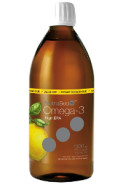
Omega First Omega 3 Liquid - 250ml - Health First

We're sorry, we no longer carry this item.
Check These out
Suggested, Similar, & Related Products:

Sale: $44.99
Reg.: $54.99 (Save $10.00)
(Click Add to Select Bonus)

Sale: $27.99
Reg.: $31.99 (Save $4.00)

Sale: $34.99
Reg.: $39.99 (Save $5.00)
(Click Add to Select Bonus)

Sale: $46.99
Reg.: $67.99 (Save $21.00)
(Click Add to Select Bonus)

Sale: $79.20
Reg.: $93.17 (Save $13.97)

Sale: $84.06
Reg.: $98.89 (Save $14.83)

Sale: $43.99
Reg.: $61.99 (Save $18.00)

Sale: $34.99
Reg.: $59.99 (Save $25.00)
Sale: $79.99
Reg.: $104.99 (Save $25.00)
Or, Shop our Latest Deals:
Shop Now >- 760mg
- EPA (eicosapentaenoic acid)
- 505mg
- DHA (docosahexaenoic acid)
Natural lemon flavour & Vitamin E (d-alpha tocopherol).
Free from artificial flavours, artificial colours, gluten, wheat, lactose, artificial preservatives, added sugar and yeast. Keep out of the reach of children. Refrigerate after opening and consume within 90 days.
 Liquid
250ml
Adults: Take 1 to 2 teaspoons per day. Children: 1-18 years old take 1 teaspoon per day. Shake well before using.
- 5 Star IFOS Rating
- Prevent heart attacks.
- Reduce rheumatoid inflammation.
- Reduce dry skin.
- Improve psoriasis.
- Natural lemon flavour.
- GMO free.

- Reviews
- POST A NEW REVIEW
Source of omega-3 fatty acids for the maintenance of good health. Helps maintain/support cardiovascular health.
Helps support cognitive health and/or brain function. Helps to reduce serum triglycerides/triacylglycerols.
Product Brief:Fish oil from deep cold waters is naturally rich in the important Omega-3 Fatty Acids, EPA and DHA. While studied primarily for cardiovascular health, EPA and DHA have been studied for a lengthy list of benefits:
Prevention of heart disease and atherosclerosis.
Reduction of high blood triglycerides.
Prevention of heart attacks due to irregular heartbeat.
Reduction of high blood pressure.
Reduction in rheumatoid inflammation.
Improvement of skin diseases: dry skin and psoriasis.
Improvement of mental diseases: attention deficit disorder (ADD), aggression, depression.
Improvement of multiple sclerosis, diabetes and Crohn's disease.
Increased brain development in children and fetuses.
*Sourced from non-farmed anchovy and sardine body oil. Oil is distilled for purification and analyzed to ensure compliance to the CRN (Council for Responsible Nutrition) monograph for heavy metals, dioxins and PCB's.
DHA
Docosahexanoic acid is an omega 3 essential fatty acid. It is an essential component of the brain and central nervous system. It seems to concentrate in areas where there is lots of electrical activity such as the synaptosomes, where nerve cells communicate, and the photoreceptors of the eye. This is why a deficiency of DHA can result in poor brain development, attention/deficit hyperactivity disorder, learning disorders, memory problems and poor visual development.
Supplementation of DHA is especially important in pregnant women, breastfeeding mothers and children. Some infant formulas are now fortified with DHA because, in the past, formula has contained less essential fatty acids than breast milk.
DHA can be taken in through the diet by eating fish or fish oil. The body can also convert alpha linolenic acid (ALA), from vegetable sources like flaxseeds, into DHA. However, the standard North American diet is deficient in essential fatty acids, especially omega 3s and very few individuals have enough excess ALA to meet the body's need for DHA. Supplemental DHA is usually made from tuna, salmon, herring, mackerel or sardines. These fish contain more omega 3 rich fat than other fish species. Cod liver and halibut liver oils also contain some omega 3s but are primarily used for their vitamin A and D content. Some newer fish liver oils have been fortified with DHA and may be an economical choice for those individuals taking both DHA and liver oils.
DHA supplements are found as liquid oil (processed to remove the fishy taste), soft gel chewables (flavoured) and standard soft gel capsules. Children favour DHA liquids and flavoured soft gel chewables. Fish liver oil supplements should be used cautiously in children, pregnant and nursing women because of the toxicity of fat-soluble vitamins.
Ensure your fish oil supplement is not processed with heat because it damages the acids and creates free radicals. It is important to purchase a good quality DHA supplement that has been tested for contaminants. Refrigerate all liquid DHA supplements and keep capsules away from heat to increase shelf life. Using liquid DHA is much more cost effective than capsules because numerous capsules must be taken to make an equivalent amount of liquid oil.
EPA
Eicosapentaenoic acid is an omega 3 essential fatty acid. It is an important fatty acid in the maintenance of cardiovascular health and the regulation of inflammation. EPA is a precursor to a series of chemicals whose job it is to regulate the inflammatory effects of arachidonic acid. Too much arachidonic acid leads to pain and inflammation in conditions such as arthritis.
Arachidonic acid also causes inflammation in arteries and leads to the development of atherosclerotic plaques. Deficiency of EPA can result in cardiac arrhythmias, high cholesterol and excessive aging. EPA has been used to treat heart disease, arthritis and other inflammatory conditions.
EPA can be taken in through the diet by eating fish or fish oil. The body can also convert alpha linolenic acid (ALA), from vegetable sources like flaxseeds, into EPA. However, the standard North American diet is deficient in essential fatty acids, especially omega 3s and very few individuals have enough excess ALA to meet the body's need for EPA. Supplemental EPA is usually made from tuna, salmon, herring, mackerel or sardines. These fish contain more omega 3 rich fat than other fish species. Cod liver and halibut liver oils also contain some omega 3s but are primarily used for their vitamin A and D content. Some newer fish liver oils have been fortified with EPA and may be an economical choice for those individuals taking both EPA and liver oils.
EPA supplements are found as liquid oil (processed to remove the fishy taste), soft gel chewables (flavoured) and standard soft gel capsules. Fish liver oil supplements should be used cautiously in children, pregnant and nursing women because of the toxicity of fat-soluble vitamins.
Ensure your fish oil supplement is not processed with heat because it damages the acids and creates free radicals. It is important to purchase a good quality EPA supplement that has been tested for contaminants. Refrigerate all liquid EPA supplements and keep capsules away from heat to increase shelf life. Using liquid EPA is more cost effective than capsules because numerous capsules must be taken to make an equivalent amount of liquid oil.
Back to Top ↑








