

Copper
What Is Copper?
Did you know that the body can’t store copper in sufficient amounts? It’s only able to hold about 100mg of copper at any one time, so it’s important that you get enough via diet and/or supplementation. Unfortunately, copper deficiency is quite common in Western diets. Copper is an essential mineral that can be found in all of the body’s tissues and is crucial to overall health and wellness across the lifespan. Read more >-
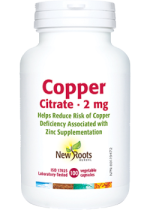
Copper is an essential mineral with multiple roles yet required in relatively small quantities for the maintenance of good health. New Roots Copper Citrate 2mg may help with energy and melatonin production and in the development of conjunctive tissue, and it teams up with iron for red blood cell formation. It also plays a role in gene expression and exerts an antioxidant action. Common signs of...
+ Earn 9 Reward PointsSale: $9.29
Reg.: $10.63 (Save $1.34)
In Stock
Copper Mineral Supplements
Did you know that the body can’t store the mineral, copper in sufficient amounts? It’s only able to hold about 100mg of copper at any one time, so it’s important that you get enough via diet and/or supplementation. Unfortunately, copper deficiency is quite common in Western diets.
Copper is an essential mineral that can be found in all of the body’s tissues and is crucial to overall health and wellness across the lifespan. Among other things, copper works in tandem with iron to metabolize food into hemoglobin, as well as is intimately involved in the utilization of iron and oxygen in the blood. What’s particular about copper deficiency is the cause. While it can be the result of malnutrition or malabsorption, excessive zinc intake is often the root cause and referred to as Acquired Copper Deficiency from zinc Toxicity.
Research has shown that an excessive ratio of zinc to copper negatively impacts cardiovascular and skeletal health. Complicating things is the fact that the absorption of copper can further be impaired by a high intake of iron. This is why the body must get the right amounts of each of these nutrients in just the right ratios (about ten-to-one). This explains why copper supplements are often sold in combination form along with zinc.
Besides its role in the production of hemoglobin, copper is required to maintain a healthy metabolism, to activate the antioxidant enzyme superoxide dismutase, for the production of melanin, collagen, bone, and connective tissue, for the production of ATP (cellular energy), as well as to maintain the myelin sheath, to lower cognitive decline.
Benefits of Copper Mineral Supplements
- Helps To Manufacture Hemoglobin & Optimizes Oxygen Utilization in Cells
- Boost Immune Function
Who Needs Copper?
Copper supplements may be recommended for the healthy formation of red blood cells, to ensure proper enzymatic reactions, and efficient utilization of iron for immune system support, and to help stimulate bone mineralization. It’s also recommended to help produce and repair connective tissue, support cardiovascular function, and protect neurological health.
Copper Mineral Supplement Potency, Forms & Formats
Potency
Copper supplements are typically available in 1 to 4 mg potency and are dosed once daily.
For the treatment of an acquired copper deficiency practitioners will typically recommend 1.5 to 3 mg of copper daily. Discuss the appropriate dosing with your health care provider.
Forms
Copper supplements are available in a range of forms, from cupric oxide, cupric sulfate, copper amino acid chelates/glycinates, and copper gluconate. Copper; however, is said to be poorly absorbed in the gut, so should ideally be chelated with amino acids for the body to be able to absorb and use it. Copper is most effectively absorbed and assimilated when taken in combination with iron, zinc, and to a lesser extent, cobalt, which is why you’ll often find blends of these minerals on the shelves.
Formats
Copper is available either as a standalone or in combination with other naturally occurring ionic trace minerals in capsule, tablet and liquid form.
Choosing The Right Copper Mineral Supplement For You
Copper is only required in small amounts by the body’s tissues, and it must be supplied in a specific ratio to zinc (10:1). The absorption and utilization of copper can be affected by a high intake of copper antagonists like zinc, iron, and vitamin C. If you are taking a multivitamin complex, make sure to read the label carefully to verify the ratios of each nutrient in the formula before adding in a copper supplement.
Back to Top ↑








