

Policosanol + 10mg - 90 Caps - Organika
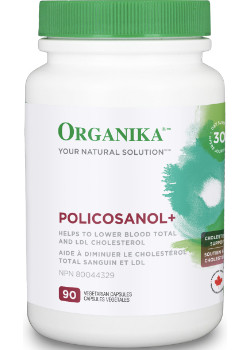
We're sorry, we no longer carry this item.
Check These out
Suggested, Similar, & Related Products:
Sale: $17.99
Reg.: $29.99 (Save $12.00)
(Click Add to Select Bonus)
Sale: $27.99
Reg.: $49.99 (Save $22.00)
(Click Add to Select Bonus)
Sale: $29.99
Reg.: $38.99 (Save $9.00)
(Click Add to Select Bonus)
Sale: $69.97
Reg.: $89.99 (Save $20.02)
(Click Add to Select Bonus)
Sale: $7.99
Reg.: $11.99 (Save $4.00)
Sale: $39.99
Reg.: $59.99 (Save $20.00)
Sale: $29.99
Reg.: $49.99 (Save $20.00)
(Click Add to Select Bonus)
Sale: $19.99
Reg.: $29.99 (Save $10.00)
(Click Add to Select Bonus)
Sale: $19.99
Reg.: $25.49 (Save $5.50)
(Click Add to Select Bonus)
Or, Shop our Latest Deals:
Shop Now >- 10mg
- Policosanol (Saccharum officinarum) (Wax)
- 250mg
- Free Plant Sterols (Glycine max) (Seed) (Containing 80% Combined beta- Sitosterol, Campesterol and Stigmasterol)
Contains no dairy, egg, artificial preservatives, colours, yeast, artificial sweeteners, wheat or gluten.
Consult a health care practitioner prior to use if you are taking blood thinning agents. Do not use if you are pregnant or breastfeeding.
 Veggie Caps
90
1 capsule three times per day with meals and a glass of water.
- Helps lower high cholesterol levels
- Increases good and lowers bad cholesterol
- Promotes healthy platelet function
- Supports the cardiovascular system
- Helps prevent atherosclerosis
Nourishment Rooted in Nature - 12 New Added
Organika, formulators of Canada’s best-selling Collagen and marine collagen and Bone Broth supports skin and joint health. Organika's health products also include; Organika spirulina, Chlorella, Curcumin to support inflammation, Organika Enhanced Collagen Protein, and Adaptogens to provide balance. Shop Organika here at National Nutrition.ca for quality, Canadian-made supplements. Read more >- Reviews
- POST A NEW REVIEW
Policosanol is a long-chain alcohol that is derived either from beeswax or from sugar-cane wax. It has been shown in randomized, double-blind studies to significantly lower overall cholesterol levels, and raise HDLs while lowering LDLs. It also reduces other cardiac risk factors, such as platelet clumping (blood clots), high blood pressure and atherosclerosis (hardening of the arteries caused by a buildup of plaque inside the artery walls) all without the dangerous side effects of statins
An article in the American Heart Journal published in 2002 reported that policosanol "lowers total cholesterol by 17% to 21% and LDLs by 21% to 29%... and raises HDLs by 8% to 15%." And, in tests that were head-to-head vs. statins, policosanol won. This was at doses of 10 mg to 20 mg per day. The authors state that at higher doses, policosanol could be even more effective.
Finally, the authors concluded that "policosanol seems to be a very promising phytochemical alternative to classic lipid-lowering agents, such as the statins, and deserves further evaluation."
Lowering High Cholesterol The Natural Way
Heart disease is one of the leading causes of death in North America. High cholesterol contributes to heart disease when the fatty molecules build up on the inside of arteries. This leads to a decrease in the flexibility and elasticity of the walls. As the artery becomes narrower, decreased circulation leads to high blood pressure because the body struggles to maintain enough blood flow to its tissues. Pieces of the cholesterol plaque can break off or the turbulent flow of blood can cause clots to form. If the pieces or clots lodge in smaller vessels this leads to heart attack or stroke.
The Good, The Bad, and The Cholesterol
Cholesterol is not all bad; it is the amount and the ratio of the various forms of cholesterol that are a health concern. LDL (low density lipoprotein) cholesterol is fat that is being transported from the liver for use by your cells. It is commonly called bad cholesterol. HDL (high density lipoprotein) cholesterol is called good cholesterol because it is fat that is being taken unused cholesterol from your cells back to the liver, where it is broken down. Cholesterol levels are unhealthy if you have lots of circulating LDL, not enough HDL or a combination of the two.
Dietary cholesterol is different than the serum cholesterol mentioned above. Although eating foods that are high in cholesterol does raise serum cholesterol levels the liver is responsible for making cholesterol when needed. Thus a cholesterol reduction plan should include a low cholesterol diet with other treatments to help to reduce serum cholesterol. Genetics also plays a role in high cholesterol.
Dangerous Side Effects With Cholesterol Drugs
Conventional treatment of high cholesterol with lipid lowering drugs decreases serum cholesterol but makes only small improvements to your chance of developing heart disease. Plus these drugs have many side effects. The most troublesome is the increased risk of depression and suicide amongst medicated individuals. The drugs also deplete vital nutrients for heart health such as coenzyme Q10. These medications can interact with natural products. Consult a health professional before starting any new therapy.
Back to Top ↑








