

Lactobacillus Acidophilus & Bifidus 2 Billion - 60 Caps - Swiss Naturals
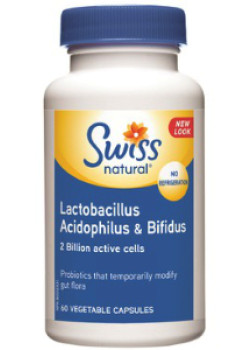
We're sorry, we no longer carry this item.
Check These out
Suggested, Similar, & Related Products:

Sale: $37.99
Reg.: $44.99 (Save $7.00)

Sale: $26.99
Reg.: $44.99 (Save $18.00)
(Click Add to Select Bonus)

Sale: $54.99
Reg.: $69.99 (Save $15.00)

Sale: $10.99
Reg.: $12.99 (Save $2.00)

Sale: $34.99
Reg.: $54.99 (Save $20.00)

Sale: $12.49
Reg.: $16.99 (Save $4.50)

Sale: $8.99
Reg.: $11.99 (Save $3.00)

Sale: $19.99
Reg.: $29.99 (Save $10.00)
(Click Add to Select Bonus)

Sale: $24.99
Reg.: $29.99 (Save $5.00)
Or, Shop our Latest Deals:
Shop Now >- 80% 1.6 billion CFU
- Lactobacillus Rhamnosus HA-111
- 10% 0.2 billion CFU
- Bifidobacterium Longum HA-135
- 10% 0.2 billion CFU
- Lactobacillus Acidophilus HA-122
Ascorbic acid, magnesium stearate, malto-dextrin, gelatin
No artificial flavours, colours or sweeteners. No preservatives, gluten or wheat.Contains dairy.
Keep refrigerated for maximum potency
 Capsules
60
Children (age 6-12): Take 1 capsule per day.
Adults: Take 1 to 3 capsules per day. Take on a full stomach or as directed by healthcare practitioner.
- Helps maintain healthy gastro-intestinal tract
- Helps relieve gastro-intestinal disturbances associated with antibiotic therapy
- Probiotic
- Great daily supplement
- Digestive aid, and great for intestinal health

- Reviews
- POST A NEW REVIEW
Probiotics, or friendly bacteria, are the beneficial microbial flora we all need for optimal digestive and colon health. We all have them the first probiotics being given to us during the process of breast feeding from our mothers, with our need for them never waning throughout our entire lives. Without health gut flora, poor assimilation of nutrients, intestinal irritation or constipation can result. But, their effects go beyond those commonly associated with digestion.
Both naturopathic and medical doctors are recognizing the importance gut flora plays for overall health. Many normal, bodily functions require healthy gut flora, ranging from immune function to heart health. Certain strains of the Lactobacillus type have been shown to be crucial for producing important immune factors which the body cannot produce without them, while others have been shown to be crucial for the reduction of bad cholesterol.
The Types of Friendly Bacteria
In general, probiotics can be categorized by where they are used by the body. For example, there are friendly bacteria which are used only in the small intestine and those that proliferate only in the large intestine, or colon. But, believe it or not, beneficial bacteria exist in the mouth, urinary tract, stomach, and even on the surface of the skin.
What to Look For in a Probiotic
There are literally thousands of probiotic supplements available in health food stores today; with so many available it can be difficult to know which one is best for you or your family. A multi-strain probiotic is frequently the best way to go for most people. This type of probiotic can be considered the "multivitamin" of the probiotic category of supplements as they will usually supply you with at least 6, 8 or even as many as 10 or 20 different strains of healthy bacteria. Naturally in your body you have many, so it makes sense to take a supplement with as broad a spectrum as possible as this will give you the greatest coverage to replenish or maintain the natural gut flora.
That said, there are certain types of therapeutic probiotics which more specifically address certain health concerns. Saccharomyces boulardii is one that is particularly useful for those who have had chronic intestinal flushing from c. difficile infection or even from food poisoning. The homeostatic soil organism type of probiotic (such as the popular brand Primal Defense) contains healthy bacteria from soils. In years past we would have ingested these from root vegetables grown in the ground, but in our modern sanitized world where we purchase cleaned vegetables from supermarkets, it's difficult for us to get it from food unless we're growing them ourselves. This particular type of beneficial bacteria has been clinically proven to fight candida well.
Candida can be particularly stubborn and requires long-term use of a probiotic in addition to the use of one of the therapeutic version discussed above. The same can also be true for instances of food poisoning, which not only deplete gut flora, but can also cause damage to the intestinal lining; a high cell count, therapeutic probiotic is therefore appropriate if you've had food poisoning.
Another common use for probiotics is for preventing parasites and diarrhea while traveling. For these purposes, it's best to begin taking your probiotic two weeks to a month before departure and then also during. This allows you to build up the health of your gut flora, so that you're friendly bacteria are at their strongest if you come into contact with pathogenic organisms. If you do happen to pick up an intestinal concern from drinking water or other source, continue taking your probiotic for at least thirty days after your symptoms have abated to ensure that your intestinal flora has been completely replenished; it can take several weeks or even months for a full recuperation.
Detoxification and Probiotics
Doing an intestinal cleanse is beneficial for most people, especially if you've ever been constipated or had intestinal parasites. Encrusted waste matter in the colon creates an environment where yeast and harmful anaerobic bacteria can proliferate, so it's important to both cleanse as well as replenish friendly bacteria; parasites, candida, and other pathogenic organisms all compete for resources in the gut with our friendly bacteria. During a cleanse, probiotic supplements can perform a "rebuilding" function, helping to replenish friendly bacteria depleted by the harmful type, as well as the "flushing" that can occur during an intestinal cleanse or fast.
Unlike vitamins, minerals, and herbs, probiotic supplements are measured by active cell count rather than milligram weight. A high potency probiotic would be considered in the 10 billion cell count or higher. While they do have a shorter shelf-life than standard nutritional supplements, probiotics are generally more stable than what most people recognize. While it is best to store them in fridge, especially if you aren't going to finish the bottle very quickly, most healthy gut flora supplements will degrade only 5% of the total active cell count under normal cupboard conditions over the span of about thirty days.
Probiotic supplements are usually best taken on an empty stomach, as this helps more viable bacterial cells to pass through the stomach to reach their destination in the small or large intestines than taking them with food. Powders and lozenge form probiotics help to inoculate the mouth and esophagus with millions of helpful bacteria.
Back to Top ↑








