

Rooibos Tea (South Africa Source)
WHAT IS ROOIBOS? Rooibos tea, also called red tea or red bush tea, is an herbal tea that is completely unrelated to black and green teas. Indeed, unlike black tea, such as Assam, Darjeeling, Ceylon tea, and Green tea, Rooibos tea is a very flavourful, caffeine-free, alternative. Rooibos tea is also low in tannins, meaning it’s not at all astringent or bitter and won’t upset your stomach. Read more >
-
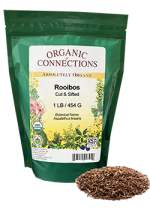
Rooibos is a tea most people are familiar with. It’s long been used for its polyphenol compounds to help support relaxation and stress. Organic Connections rooibos is cut and sifted to make a premium tea that you can sip alone or paired with other herbs such as ashwagandha, cinnamon, ginger or cloves. Organic Connections follows best farming practices so you they can provide certified organic b...
+ Earn 24 Reward PointsSale: $24.99
Reg.: $30.53 (Save $5.54)
In Stock
What is Rooibos Tea?
Rooibos tea, also called red tea or red bush tea, is an herbal tea that is completely unrelated to black and green teas. Indeed, unlike black tea, such as Assam, Darjeeling, Ceylon tea, and Green tea, Rooibos tea is a very flavourful, caffeine-free, alternative. Rooibos tea is also low in tannins, meaning it’s not at all astringent or bitter and won’t upset your stomach.
The tea comes from the needle-like leaves of a bush plant that’s a member of the legume family, Aspalathus linearis, that grows exclusively in the mountains near the Cape of Good Hope in South Africa. The leaves are used for making either green - unfermented, or red – fermented rooibos teas.
This type of tea is extremely nutrient-dense, containing many vital minerals including calcium, fluoride, iron, magnesium, manganese, zinc, and alpha hydroxyl acid, as well as high levels of vitamin C. Rooibos tea is also rich in antioxidants and may contain up to 50% more antioxidants than green tea, so helps protect the body’s cells and tissues against free radical damage. Rooibos tea makes a potent natural antioxidant and anti-inflammatory beverage, and consumed daily, can help promote bone health by increasing osteoblast activity (bone development), balancing blood sugar, and may even aid weight loss efforts.
Rooibos Tea - taste, texture, aroma
Fermented red rooibos tea has an earthy, nutty, yet slightly floral taste with natural sweetness, and notes of honey and vanilla. It’s an extremely smooth tea, but also robust enough that it can be paired with a range of added ingredients such as chocolate, spices, flowers, dried fruits, and other herbs. Unfermented green rooibos tea, on the other hand, has a much more delicate flavour, with a light pleasant earthy sweetness.
Brewing a Perfect Cup of Rooibos Tea
There is no singular recipe to prepare rooibos tea. It can be steeped for as short as a few minutes and as long as an hour, and no matter how long you steep it, it will never get bitter like black or green tea that’s been left to steep for too long. Steeping your rooibos for longer; however, will bring out interesting full-bodied, rich, woody notes.
People often add a little honey to their rooibos once brewed to accentuate the tea’s flavour. It can also be served with a little milk and sugar over ice for a delicious and refreshing caffeine-free alternative to espressos and lattes.
Active Compounds in Rooibos Tea
- Alpha hydroxy acid (AHA) – AHA’s are a group of natural acids found in foods. Rooibos tea is naturally rich in AHA, which is well-known for its anti-aging properties and is an important nutrient for healthy skin.
- Aspalathin – This is the main polyphenol in rooibos tea leaves and a powerful antioxidant; it has been associated with a diverse range of health-promoting properties. Green unfermented rooibos contains far more aspalathin than does fermented red rooibos since oxidation significantly reduced its concentration.
- Cinnamic acid – This is an organic compound found in rooibos tea that is in large part responsible for the tea's characteristic honey-like aroma and flavour. In fact, it is commonly used to flavour foods and drinks, as well as for its aroma in perfumes and cosmetics
- Luteolin – This is a bioflavonoid found in many herbs, fruits, and vegetables and is traditionally used in Chinese medicine thanks to its potent antioxidant and anti-inflammatory properties, as well as recognized as a natural allergy support. Though bioflavonoids are intrinsically bitter, the presence of luteolin in rooibos contributes primarily to the tea’s rich colour and very little to its flavour since the tea has little to no bitterness to it.
- Orientin – Belongs to the class of organic compounds known as flavonoid glycosides and has a sharp and bitter flavour, like that of darker herbal teas. Unlike other flavonoids, orientin doesn’t have as strong of pigmentation, but it does add a slight brown colour to rooibos tea.
- Quercetin – A powerful antioxidant that helps the body fight against free radical damage. Quercetin is yellow and has a bitter flavour that doesn't come across in rooibos tea.
- Rutin – Is a citrus bioflavonoid and has a sweet and flowery flavour. It also possesses powerful antioxidant properties, as well as helps the body produce collagen and use vitamin C, and thus, helps promote skin health.
Back to Top ↑








