

Dry Vitamin E
Key Advantages of Dry Vitamin E Supplements
Because the digestive tract requires fat to absorb Vitamin E, people with fat-malabsorption disorders can easily become deficient. Those with pancreatic insufficiency, cholestatic liver disease, short bowel syndrome, Crohn’s disease, or cystic fibrosis often have a diminished bile acid pool, which results in malabsorption of important nutrients, leading to deficiency and oxidative stress. Read more >-
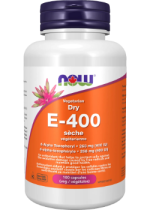
Supplement with NOW’s Dry E-400iu, they provide antioxidants that help to protect cells against the oxidative damage caused by free radicals and maintain good health. Vitamin E is a major fat-soluble antioxidant that is particularly important for maintaining cellular health by neutralizing free radicals formed through normal metabolic processes, as well as through environmental exposures. In ad...
+ Earn 27 Reward PointsSale: $27.99
Reg.: $40.49 (Save $12.50)
In Stock
Advantages of Dry Vitamin E (Water-Soluble Vitamin E)
Do you know what the difference is between fat-soluble and water-soluble vitamins?
Fat-soluble vitamins are stored in the body for a few days to a few months (depending on the vitamin) until they are needed by tissues. At that point, they are transported by special carriers to where they're needed inside the body. Vitamins A, D, E, and K are all-natural fat-soluble vitamins. Because they can be stored in the body’s liver and adipose tissue, fat-soluble vitamins do not necessarily need to be taken every day, and mega doses can, in certain circumstances, cause problems.
Water-soluble vitamins, on the other hand, cannot be stored inside the body. Once ingested, they are carried to the various tissues through the bloodstream. Any excess amounts of these water-soluble vitamins are excreted via urine. Because they cannot be stored in the body, water-soluble vitamins are not active for as long as fat-soluble vitamins and must be replenished daily (some water-soluble vitamins may need to be replenished a few times throughout the day in certain circumstances/health conditions).
Because the digestive tract requires fat to absorb vitamin E, people with fat-malabsorption disorders can easily become deficient. Those with pancreatic insufficiency, cholestatic liver disease, short bowel syndrome, Crohn’s disease, or cystic fibrosis often have a diminished bile acid pool, which results in malabsorption of important nutrients, leading to deficiency and oxidative stress. This is especially true of fat-soluble nutrients and antioxidants, which are important for normal immune and neurologic function. In these instances, water-soluble dry-E is the ideal solution.
Key Benefits of Dry Vitamin E
In its natural form, vitamin E is fat-soluble and, unsurprisingly, is primarily found in foods that contain fat, such as nuts, seeds, avocado, and vegetable oils like wheat germ, sunflower, safflower, and soybean oils. While fat-soluble vitamin E supplements abound, there is also a water-soluble option. Dry Vitamin E in the form of Succinate from oil-free natural d-alpha-tocopheryl succinate, or d-alpha-tocopheryl acetate, are water-soluble forms of vitamin E that research has shown can significantly increase absorption of vitamin E in those that cannot digest fats and oils.
Some data suggest that water-soluble vitamin E is taken directly across cell membranes and fed into your Krebs cycle - the metabolic pathway responsible for energy production inside the body - which greatly extends Vitamin E’s stay inside your body - way beyond the length of time traditional water-soluble vitamins are retained - so offers longer-lasting antioxidant protection.
Dry Vitamin E Supplement Varieties
Potency
Dry E supplements are typically offered in 200 or 400 IU potency.
Formats
Water-soluble Dry-E is presented in tablet form or dry-powder capsules (regular animal gelatin-based, or veggie caps), each offering comparable bioavailability, absorption, and retention. Tablets are often more affordable, while capsules and veggie caps are slightly more expensive.
Final Considerations & Contraindications For Dry Vitamin E
Vitamin E can slow down blood clotting. You may be at increased risk of bruising and bleeding if you are taking anticoagulant medications such as Warfarin (Coumadin), aspirin, clopidogrel, and ibuprofen. Talk to your health care practitioner before taking Vitamin E if you are taking any of these medications. If you are taking Warfarin, be sure to have your blood checked regularly, as your dosing may need to be adjusted.
Vitamin E may also decrease the effectiveness of some cholesterol-lowering medications, so it’s advisable to speak to your doctor in this circumstance.
Back to Top ↑








