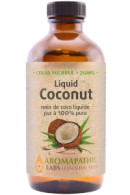
- 100% pure Fractionated Coconut Oil
For aromatherapy use. Please consult an essential oil book or other professional reference source for suggested dilution ratios.
 Liquid
250ml
For aromatherapy use. Please consult an essential oil book or other professional reference source for suggested uses and dilution ratios.
- 100% Pure
- Does Not Clog Pores
- Can Help with Dry Skin
- Used as a Carrier Oil
- Great for those with sensitive skin

- Reviews
- POST A NEW REVIEW
COCONUT OIL
Coconut oil is an edible oil from the kernel or 'meat' of the coconut, which comes from the coconut palm (cocos nucifera)...
Medium chain fatty acids
We are now much more educated about the severe health risks associated with consumption of trans fats, and how some saturated fat in our diets can actually improve our overall health. We also know more about the specific fatty acids in coconut oil, namely lauric acid and capric acid, both medium chain fatty acids (MCFA's). MCFA's contain 6-10 carbons, compared to long chain fatty acids, which contain 10+.
Coconut Oil is excellent for topical applications and skin health.
Medium chain fatty acids differ significantly from their longer chained counterparts and may be a more fat friendly, abundant, rapidly used and available source of energy. Another bonus to using MCFA's for energy is that, when compared to carbohydrates, MCFA's do not have a stimulatory effect on insulin levels. Studies are now showing that coconut oil may be useful in controlling weight gain and obesity, thanks to its lauric acid component. Lauric acid makes up the largest proportion of saturdated fat in coconut oil. Lauric acid has been shown to increase HDL cholesterol (the 'good' cholesterol) in the body, creating a more favourable cholesterol profile.
Coconut oil and Alzheimer's
Advancements in Alzheimer’s research has led to a theory about the development of the disease that points to the inability of brain cells to process glucose. Scientists are not sure why this happens, but this inability leads to the starvation of brain cells. Research dedicated to studying the potential for coconut oil use in Alzheimer’s treatment and prevention is promising. Since coconut oil is a natural source of MCFA’s, which provide the brain with ketones instead of glucose for energy, regular consumption has been shown to improve cognitive function and mood in Alzheimer’s patients. These findings are optimistic and could mean coconut oil has a role in stopping brain atrophy in Alzheimer’s patients. Of course, more studies will need to be done to test the accuracy of the theory and if it is a universal phenomenon.
More health benefits - Immune Support
Lauric acid is converted to monolaurin in the body, a MCFA that is otherwise only naturally found in breast milk. We now know the importance of monolaurin during the first few days and months of life, as it supports the absorption of necessary minerals, such as calcium and magnesium. Although it was initially reserved for use in the soap and cosmetic industry, Lauric acid has significant anti-viral, anti-bacterial and anti-protozoal functions within the body, as well. It has been shown to destroy lipid coated viruses, such as HIV, herpes, CMV, and influenza, as well as bacteria like heliobacter, and protozoa such as giardia. It has these effects by solubilizing the lipids and phospholipids in the envelope of the virus, causing disintegration. Some researchers have also suggested that monolaurin from lauric acid interferes with signal transduction between virus and bacteria, as well as interfering with virus assembly and maturation. The immune benefits of coconut oil (and specifically its MCFA content, including lauric acid) have been clearly demonstrated.
Back to Top ↑