

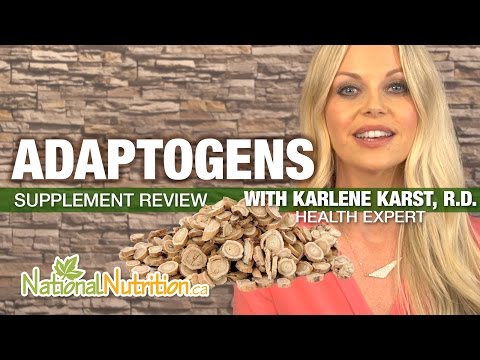
Adaptogens: Nutrients For Stress Support
Updated Mar. 16th, 2026 | Read Time: 8 Minutes | What You Will Learn:
- What Are Adaptogens?
- A Historical Look At Adaptogens & Traditional Chinese Medicine
- Yin and Yang
- Cooling Vs Warming
- Herbal Properties in Illness
- Adaptogens And The Adrenal Glands
- Adrenal Glands and Hormones
- Effects of Chronic Stress
- Adaptogens & Hormonal Effects (Stress and Sex)
- Energy Boosting Effects of Adaptogens
- Adaptogens & Immune System Benefits
- Antioxidant Properties of Adaptogens
- Adaptogens As An Immune Booster
- Examples of Adaptogens
- Ginseng Varieties
- How Can I Take Adaptogens?
- Important Information
- Adaptogen FAQs
- Nutritional Information
- Reader Comments (10)
What Are Adaptogens?
Adaptogens are a wide variety of plants that can have several beneficial effects on the body. The term originated in the 1940s when Eastern European herbalists used it to describe plants that support the body's adaptation to stress.
Adaptogens act as an adrenal and nervous system tonic. This helps us deal with times of mental, physical and emotional stress. Other names for adaptogens are rejuvenating herbs, Qi tonics (traditional Chinese medicine), Rasayana (Ayurvedic medicine), or restoratives. Some non-herbal nutrients are also loosely referred to as "adaptogens" for their similar and complementary effects. Some examples are vitamin B5 and adrenal glandular extracts.
A Historical Look At Adaptogens & Traditional Chinese Medicine
Yin and Yang
Traditional Chinese Medicine acknowledges that there is a delicate balance in the entire universe and everything in it between two forces known as yin and yang. Yin represents females, rest and regeneration while yang represents males, action and energy. The same universal balance exists within each of our bodies that can be disturbed by excess or deficiency on either side (yin or yang), resulting in illness.
Each herb can be classified as yin or yang by its properties and actions. It is generally considered beneficial to complement your current nature or the nature of your condition or illness with a medicine that contains the opposite properties, thus restoring balance to the system. Although yang is generally associated with males and yin with females, characteristics of each can be found within both sexes. This is best represented by the popular yin-yang symbol where yin (black) and yang (white) swirl around each other, and yet each contains a piece (small circle) of the other.
Yang-type people are warm-blooded; they rarely feel cold and often overheat. They are active (fidgety), thin and wiry. Yin-type people are more relaxed and tend to feel chilly. They are calmer and even-tempered and tend to be larger, thicker-built. Depending on their symptoms, illnesses can also be classified as yin or yang. For more information, see: "Herbal Properties in Illness" below.
Cooling Vs Warming
Another means of viewing the properties of herbs is traditional to most societies on Earth with roots in Indian, Chinese, American (North and South), and European cultures. This categorizes the herbs on a sliding scale between cooling and warming. Some apparent examples familiar to most are mint as a cooling herb and cayenne pepper as a warming. This is essential information for treatment based on the inherent nature of the condition for which each particular herb is being used. For example, warming herbs are better used for cold, stagnant conditions such as a head cold with stuffiness and chills. On the other hand, cooling herbs are better used for hot conditions such as excessive fevers, and anxiety.
The requirement for heating or cooling may also be determined by the seasons for those in climates where the weather changes with the seasons. Warming herbs are better used in the winter and cooling herbs in the summer.
Herbal Properties in Illness
There are large differences between the natures of each of the adaptogenic herbs. Some are stimulatory and some are nourishing, some are warming and some are cooling, and some are yin and some yang. Although in general the concepts of yin, cooling, and nourishing go together and yang, warming and stimulatory also correspond, the particular nature of each herb can actually vary and result in very different treatment profiles. This is important to keep in mind when selecting the herb you wish to use. The same principles of yin/yang or hot/cold apply to illnesses as to the herbs.
- Yang/hot illness tends to include heat, redness, and eruptions such as rashes and sores.
- Yin/cold illness tends to show chilliness, pale skin, swelling, and slowing of bodily functions.
Using a herb with properties that are directly opposite those of the disease can further speed recovery. The underlying nature of the person being treated and the treatment season is considered when an appropriate herbal selection is made. Although simple conditions can be treated with a basic knowledge of the herbs, it is generally a good idea to consult with an experienced physician or herbalist before attempting to treat more extensive conditions, particularly with patients depleted by chronic or more severe diseases.
Adaptogens And The Adrenal Glands
All adaptogens affect the adrenal glands, which are small pyramid-shaped glands on top of each of our kidneys. They are responsible for producing several different hormones in the body.
Adrenal Glands and Hormones
- The inner core of the adrenal gland is called the medulla. It produces epinephrine and norepinephrine (adrenaline and noradrenaline), the hormones responsible for responding to immediate stressors and resulting in our "fight, flight or freeze" responses.
- The outer layer, called the cortex, has three sub-layers that release steroid hormones such as aldosterone, cortisol and sex hormones. The hormone cortisol is responsible for our body's ability to adapt to chronic stressors, which are those stressors that continue past the effects of the immediate (adrenaline) stress response.
Effects of Chronic Stress On Adrenals
Although it was likely more important in our evolutionary history to have the immediate adrenaline response to protect us during brief attacks by animals or other humans, chronic stress is prevalent in most of our lives today. After prolonged chronic stress, our adrenal glands' ability to sustain the release of cortisol may diminish. At the same time, this drain on resources can also affect the gland's ability to produce its other steroid hormones, such as aldosterone, which regulates blood pressure, and sex hormones. The sex hormones the adrenal glands have to complement the hormones released by our gonads (ovaries or testes). When adrenal sex hormone synthesis is affected, a wide variety of symptoms can occur, ranging from impotence and disinterest in sex to PMS, acne, and fertility issues (amongst many others). Adaptogens can help to nourish the adrenal glands and to provide cofactors and precursors necessary to continue the release of these hormones.
Adaptogens & Hormonal Effects (Stress and Sex)
In addition to supporting the adrenal gland in the endogenous synthesis of hormones, many adaptogenic herbs contain active constituents resembling hormones in the human body. Some constituents resemble cortisol, the primary long-term stress hormone in our body, allowing them to support our depleted responses to long-term stress. Other constituents resemble sex hormones and can help to balance the effects of hormonal disregulation. Non-herbal adaptogens may contain components like these or act as a cofactor in important chemical reactions in the body.
Energy Boosting Effects of Adaptogens
Adaptogens improve energy by regulating the cellular activities that produce and utilize energy molecules in our bodies. They help to improve liver detoxification pathways, thus allowing us to handle a higher load of toxic insult, and also support the adrenal glands. The adrenal glands release several different hormones that affect our energy levels, attention span, and our ability to cope with stress. Helping to regulate the function of the adrenal gland can help to normalize (often by increasing) energy levels without having the extreme swings in energy that occur with the use of caffeine or other stimulants. This also avoids the anxiety and shakiness that can occur with overuse of many commonly used stimulants.
Adaptogens & Immune System Benefits
In addition to helping us cope with stress, adaptogens also help to regulate and protect the immune system, by boosting lowered immune resistance and reducing excessive or inappropriate immune responses such as those that occur in autoimmune diseases. Specific adaptogens can also regulate hormone levels and can help treat conditions such as PMS, low libido, and sexual dysfunction. Adaptogens commonly boost energy levels and help maintain mental and physical stamina during increased stress. Please see our adrenal gland support article for more information on adrenal support.
Antioxidant Properties of Adaptogens
The powerful antioxidant capabilities possessed by many adaptogens help to protect the body against free radical damage. Free radicals are unstable molecules with an unpaired electron that are highly reactive and damage surrounding cell membranes, fats, and fat-soluble vitamins and nutrients. We encounter free radicals through environmental exposures, such as cigarette smoke, air pollution, and ultraviolet radiation from the sun (UV rays). In this way, adaptogens increase our resistance to and protect our bodies against, a large number of physical stressors.
Adaptogens As An Immune Booster
Adaptogens also strengthen the immune system and protect it against stress-related depletion. Research has shown that this isn't a mindless boosting of the immune system but rather a modulation effect. If current immunity is low, adaptogens will help to boost the immune response and will be beneficial in preventing infection and illness. On the other hand, if immunity is currently excessively active, as in the case of autoimmune disease, adaptogens can help to reduce the immune response and regulate it to aim at appropriate targets.
Examples of Adaptogens
The following is a list of some examples of popular adaptogens, although this is not an exhaustive list. You can click on any highlighted names below for more information on each herb.
• Adrenal glandular extract
• Astragalus
• Vitamin B5 (Pantothenic Acid)
• Chaga
• Licorice
• Rhodiola
• Schisandra
Ginseng Varieties
• Chinese ginseng
• North American ginseng
• Korean ginseng
• Brazilian ginseng (Suma)
• Siberian ginseng (Eleuthero)
• Indian ginseng (Ashwagandha)
• Peruvian ginseng (Maca)
How Can I Take Adaptogens?
Each adaptogen is often supplemented in powder or capsule form and they can often be found in combination formulas for immune support, energy boosting, athletic performance, antioxidants and hormonal regulation. Dosing of each herb can be found by clicking on the links above.
Important Information
Adaptogens can have various hormonal effects and use should be cautioned in those with hormone sensitive conditions and cancers. Some adaptogens can only be taken for certain lengths of time in order to avoid exhaustion. Many adaptogens have not been sufficiently studied for their use in pregnancy or lactation. Please see specific pages for details by clicking the links above.
Adaptogen FAQs
What Are Adaptogens?
Adaptogens are herbs that help the body adapt to stress, helping you feel more alert, energetic, and focused. They can reduce fatigue and insomnia, increase stamina and endurance, promote relaxation and sleep, improve mood and mental function, enhance physical performance, and even provide beauty benefits.
How Do Adaptogens Work?
Adaptogens help to regulate hormones such as cortisol (which is your body's stress hormone). They can also have a modulating effect on the immune system. It's worth pointing out that adaptogens don't simply raise hormones, they
What Do Herbal Adaptogens Do?
Taking herbal adaptogens can help increase your energy and stamina, promote relaxation and focus, as well as help you sleep better at night.
Where to Buy Adaptogens?
Most health food stores will offer a good selection of adaptogens.













I've never heard of adaptogens before. This was very informative, I need to try some.
Hello Mike,
We're glad our article could help you learn something new! A lot of people haven't heard much about adaptogens, but they are very beneficial to health, especially in relation to supporting stress. Adaptogens support adrenal health and you may enjoy our articles on that as well:
https://www.nationalnutrition.ca/articles/health-concerns/adrenal-support/
Have a healthy day!
I hadn't heard much about adaptogens before, learn something new every day! I will have to incorporate some of these into my day.
This video was short enough to watch any time but also provided a wealth of valuable information. The National Nutrition representative speaks about the importance of other supplements that should be taken along with adaptogens as they are necessary for your body to be supported, absorbs, and utilize the benefits of the adaptogen herbs. I think this is something most people don’t know or look into but is very important to see the effects of the herbs. Thanks for the wonderful video!
Hello Jacquelyn,
We are so glad to hear you enjoyed our article and video on Adaptogens. And yes, some supplements work better when used synergistically and offer increased support. If you'd like to continue learning about them and the adrenals, which adaptogens support, check out our other articles as well:
https://www.nationalnutrition.ca/articles/health-concerns/adrenal-support/
Stay healthy & well.
I am learning so much about adrenal glands and adaptogens lately. I didn't even know anything about how adrenal health effects the body and how certain supplements or health foods can help! This article was filled with great information, I'm going to have to try some of these remedies soon.
I've just started taking adaptogens. Glad I found this article to learn more and see how they can help my body and stress levels. Looking forward to the day I feel the resutls!
Hello Fred,
Thank you for sharing, we hope your supplements are helping your health and needs and that you're feeling less stress. If you'd like to learn more about adrenal glads, which adaptogens support, check out our article here:
https://www.nationalnutrition.ca/articles/health-concerns/adrenal-support/
Stay healthy & well.
This was a great and mind expansive article on adaptogens, NN!
I had no idea that there were so many different adaptogenic ginsengs, including Chinese, Korean, North American, Siberian, Indian, and Peruvian...in fact, before reading your articles, I did not know that maca also went as Peruvian Ginseng and that ashwagandha also went as Indian Ginseng. Additionally, on your list of adaptogens, there are some I knew about in terms of having medicinal/biological effects but did not know that they were adaptogens, such as licorice. Thank you for openning my eyes to more adaptogens :)
Hello Rachel,
We’re glad you enjoyed this article and could discover more adaptogens! There are quite a few of them, which is great because adrenal health is often forgotten.
Since you liked this read, we think you’ll love this one too: https://www.nationalnutrition.ca/articles/supplements/gingseng/
Stay healthy & well!