

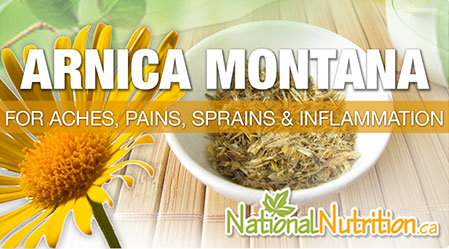
Used for aches, pains, sprains and inflammation.
Arnica Montana: A Homeopathic Remedy For Joint Pain
Updated Mar. 16th, 2026 | Read Time: 3 Minutes | What You Will Learn:
- What is Arnica Montana?
- Arnica Montana Uses & Health Benefits
- Reduces Pain & Inflammation
- Supports Bruise Healing
- Eases Muscle Soreness
- Relieves Joint Discomfort
- Different Types of Arnica Supplements
- Side Effects & FAQS
- Nutritional Information
- Reader Comments (6)
Arnica Montana is a vibrant herb with a long history in traditional medicine. Arnica’s hairy stem and bright yellow flower, which bloom about mid-summer, can grow to be about 2 feet tall. Its preference for Mountainous areas gave it the common name of mountain tobacco or mountain daisy. In this article, we'll explore what it is, its traditional and modern uses, the health benefits it offers, and the various types of supplement options available.
What is Arnica Montana?
Arnica montana, often called leopard's bane or mountain tobacco, is a perennial herb native to the mountainous regions of Europe and Siberia. The plant produces bright yellow, daisy-like flowers and is a member of the sunflower family.
Traditionally, Arnica was used by indigenous populations for its purported ability to soothe bruises, sprains, and muscle soreness. Today, it is widely recognized as a natural anti-inflammatory.
Arnica Montana Uses & Health Benefits
Reduces Pain & Inflammation
One of the most popular uses of Arnica montana is for alleviating pain and reducing inflammation in muscles and joints. It is commonly applied topically to ease discomfort from bruises, sprains, or minor injuries.
Supports Bruise Healing
Arnica montana is well-known for speeding up the healing of bruises. When applied as a cream or gel, it may help reduce discolouration and tenderness.
Eases Muscle Soreness
Athletes often turn to Arnica montana to soothe sore muscles after exercise. By reducing inflammation, it can promote quicker recovery.
Relieves Joint Discomfort
Those with osteoarthritis, rheumatoid arthritis, or joint pain may find relief from this herb. The anti-inflammatory properties can help reduce swelling and discomfort around joints.
Different Types of Arnica Supplements
Arnica montana is available in several forms to suit different preferences and needs:
- Topical creams and gels - applied directly to the skin to reduce pain and swelling. But it should never be applied to broken skin.
- Homeopathic tablets - highly diluted forms of Arnica is often used for minor injuries.
- Dried bark, extract capsules, or tea - used for internal support of inflammation or joint health.
When shopping for Arnica montana supplements, look for high-quality, standardized products to ensure potency and safety.
Side Effects & FAQS
As a homeopathic treatment, because it is so diluted, there are no toxic side effects.
Studies have shown that it is actually an active ingredient in the herb called henelin that is responsible for its anti-inflammatory, analgesic and anti-septic properties. It appears to work by stimulating white blood cells within muscle or joint tissue to remove stagnant or congested blood. It has also been shown to dilate subcutaneous blood vessels, again making movement easier.
After prolonged topical use, it may cause toxic skin reactions, such as peeling, eczema or blistering.
Lastly, Arnica can cause severe side effects of vomiting, increased heart rate and nervous disorders when taken internally.















Arnica is a great healing herb which is also used in homeopathy preparations. I find instead of reaching for prescription meds for pain, it has been helpful instead to reach out for arnica because it has no side effects compared to other medicines. Arnica is also added to many pain preparations and toothpastes.
Hello AL K,
Excellent that you found arnica for pain management, easier on the body than some alternatives. Other remedies include aromatherapy massage blends. When diluted properly, they can also help alleviate muscle and joint pain. Check out our article here:
https://www.nationalnutrition.ca/articles/health-concerns/muscle-joint-injury/
Have a healthy day!
En effet l’arnica aide beaucoup en cas de blessures et de coups. Je l’ai toujours dans ma pharmacie.
…..
Indeed arnica helps a lot in the event of injuries and blows. I still have it in my pharmacy.
Hello Maryse,
Indeed, Arnica is a great product to have in your first aid kit!
Stay well.
Get it, "pretty" cool? Because arnica montana is a pretty flower? (okay-haha that was lame of me but seriously, I really love it when natural remedies derive from something beautiful-like a nod to Mother Nature's magic!). I find it wonderful that arnica montana, for homeopathic purposes, is so dilute that it causes no side effects (unlike traditional prescription medications). I will have to share this information with my Brother, who suffers from a disorder that causes him to experience chornic pain!
Hello Rachel,
Haha, thank you for your comment and sense of humour. We're glad you enjoyed reading about Arnica.
We think you’ll also enjoy this article on homeopathy: https://www.nationalnutrition.ca/articles/health-concerns/homeopathy-101/
Have a healthy day!