

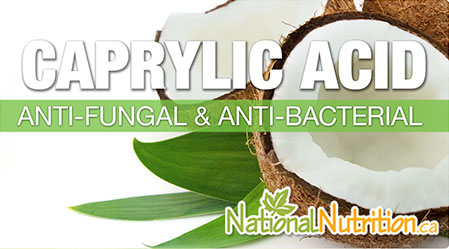
A natural source of Caprylic Acid is coconut oil.
Caprylic Acid
Updated Feb. 11th, 2025 | Read Time: 2 Minutes | What You Will Learn:
- Health Properties of Caprylic Acid
- Anti-Fungal and Anti-Bacterial Properties
- Taking Caprylic Acid Supplements
- Safety & Potential Side Effects
- Nutritional Information
- Reader Comments (4)
Chemically known as octanoic acid, caprylic acid is a medium-chained fatty acid naturally found in the milk of many mammals. It can also be found in smaller amounts of coconut oil and palm kernel oils.
Health Properties of Caprylic Acid
Anti-Fungal and Anti-Bacterial Properties
Caprylic acid is best known as an effective anti-fungal and anti-bacterial, often recommended for its help in the treatment of ringworm and candidiasis (systemic yeast overgrowth).
It has been shown to restore and maintain a 'normal' or healthy level of yeast in the body; therefore, maintaining an adequate balance of 'beneficial' or 'healthy' bacteria with yeast and other bacteria that tend to take over the gastrointestinal system. It has also been used to support the treatment of leaky gut, IBS gastroenteritis, salmonella, and even parasitic infections.
Scientists believe that Caprylic acid can break down the protective outer layer of fungi, making it easier for the immune system to attack and eradicate.
Taking Caprylic Acid Supplements
Caprylic acid can be found on its own, or in many combination supplements geared toward the removal of yeast or candida. There is no known safe or effective dosage according to the literature, although anywhere from 300-1200 mg/day has been used for the treatment of yeast and various fungal infections.
Safety & Potential Side Effects
Some side effects associated with high fatty acid intake can include bloating, nausea, constipation or diarrhea and abdominal pain. There is little evidence to suggest these side effects will occur at the dosage range mentioned above. Caprylic acid may interfere with some non-steroidal anti-inflammatory (NSAID) medications, as well as inotropic medications, such as warfarin. Consult a healthcare practitioner before taking this supplement if you are currently taking one of these medications. Supplementation with caprylic acid is not currently recommended during pregnancy and breastfeeding.














Derived from Coconuts, caprylic acid is a natural essential fat type oil supplement that you can use for helping to get rid of candida. Sometimes yeast overgrows in your intestines, usually from taking an antibiotic that wipes out your gut biome. Using a supplement like caprylic acid keeps the yeast from overgrowing and becoming a problem. As this article points out, if you really need a good candida detox, take your caprylic acid liquid with bentonite caly.
Hello Jennifer,
Indeed, gut health is very important to take care of for many reasons, especially if taking or recently taken a course of antibiotics. We think you may also enjoy this article as well:
https://www.nationalnutrition.ca/articles/health-concerns/candida-yeast-overgrowth/
Stay healthy & well
As you share and expound upon, there are benefits to the MCT caprylic acid such as anti-fungal and anti-bacterial properties. However, as someone who has tasted caprylic acid supplemented products, I feel obligated to share the warning that it tastes like goat (well, I don't know what goats taste like but it is both bitter and barnyard all at one). In fact, the name caprylic derives from the Greek word for goat!
Hello Rachel,
Thank you for your comment and sharing your experience!
Have a healthy day!