

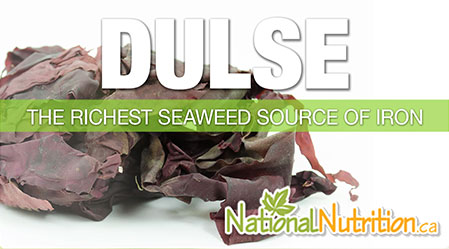
Dulse is a nutrient-dense sea vegetable that naturally contains iodine and other essential nutrients.
Dulse: Discover The Healing Power of Algae
Updated Aug. 17th, 2026 | Read Time: 2 Minutes | What You Will Learn:
- Key Nutrients Found in Dulse
- Iodine & Dulse
- Top Health Benefits of Dulse
- Causes of Hypothyroidism
- Dulse Supplement Varieties
- Nutritional Information
- Reader Comments (2)
Dulse is the common name for a red multicellular algae (Palmaria palmate) whose colour varies between deep-rose and reddish-purple. People commonly use dulse in Ireland, Iceland, Canada, and the United States. They add it to foods as a nutrient-rich ingredient or flavouring.
What Are The Key Nutrients Found in Dulse?
Dulse is a nutrient-dense seaweed that contains all trace elements required by humans.
It is approximately one-third protein and one-third fibre by weight. Dulse provides a concentrated source of several nutrients, making it a nutrient-dense food. Its rich mineral and nutrient content allows dulse to help promote healthy growth of hair and nails. It has one of the highest contents of B vitamins of all edible seaweeds and also contains the highest levels of bioavailable iron as well. These nutrients help dulse support the adrenal glands and prevent and treat anemia. Like other seaweeds, dulse is also an extremely rich source of iodine.
Iodine & Dulse
Because of the depletion of iodine in the soil, it has become difficult to get sufficient amounts from diet alone. Manufacturers add iodine to staple foods such as table salt to help address dietary iodine gaps. Iodized salt contains an inorganic form of iodine. Natural, organic sources, such as those derived from wakame are much more absorbable and easier for the thyroid gland to use than the inorganic (mined) sources found in enriched foods.
Is Dulse Good For My Health?
Causes of Hypothyroidism
Iodine deficiency can cause some cases of hypothyroidism and lead to an enlarged thyroid called a goiter. When there is insufficient iodine available to the thyroid gland, it is not able to produce sufficient thyroid hormone. Thus, it cannot properly regulate the body's metabolism, a condition known as hypothyroidism. Hypothyroid individuals experience many symptoms due to a lack of thyroid hormone including fatigue, weight gain, hair loss, constipation, and frequent colds and flu.
Dulse Supplement Varieties
You can find dulse fresh or dried in many supermarkets. Manufacturers also sell it as a powder or tablet supplement. Supplement manufacturers commonly source iodine from seaweed. Iodine supplements come in liquid, capsule, and tablet forms. The standardized types of these supplements contain a higher level of iodine and a consistent amount in each tablet – usually about 150mcg (0.15mg). This is the preferred form for clinical use in low thyroid conditions, while the unstandardized dulse is suitable for people in need of a daily supplement for health maintenance. Often this is more easily achieved by simply incorporating either raw or dried dulse into your diet.













Dulse is a wonderful example of how sea plants are underrated nutrient powerhouses. As you elaborate upon, dulse is not only rich in core macronutrient protein and fiber but also a great natural source of iodine, a nutrient which is essential for metabolism and thyroid health. Also, I did not know that dulse specifically has one of the highest contents of B vitamins of all edible seaweeds and also contains the highest levels of bioavailable iron to boot: I guess dulse is even super among seaweeds!
Hello Rachel,
Indeed, this is a nutrient packed seaweed that can support your health in many ways. It's a great plant source of iron for those following a plant-based lifestyle.