

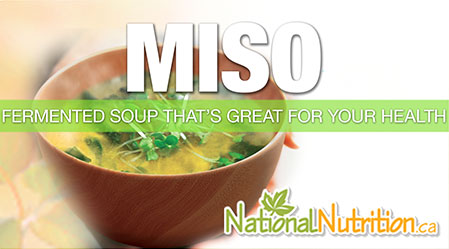
Miso: Explore Its Tasty Benefits
Updated Aug. 13th, 2024 | Read Time: 3 Minutes | What You Will Learn:
- What Is Miso?
- Key Health Benefits of Miso
- Understanding How Miso Benefits Your Health
- Tips For Incorporating Miso In Your Diet
- Nutritional Information
- Post a Comment
Long ago when refrigeration was not available food would spoil…so humans invented ways to preserve food via fermenting to lengthen shelf life. Miso is one example of a fermented food. In Asian cultures, Miso is incorporated into peoples’ diets daily. Due to miso's health benefits, instead of coffee and breakfast cereal, Miso is often served at breakfast to start your day off right…
What Is Miso?
Miso is a paste made from soybeans, sea salt and a mould starter called Koji. It’s often mixed with grains like barley or rice and then fermented for 3 months to 3 years. The result is a salty flavorful paste you can use in soups, stews and sauces.
Key Health Benefits of Miso
Miso is used not only as a yummy soup to begin your day but it has many health benefits as well. The Japanese culture uses it to stimulate digestion and energize the body. It’s generally served at the beginning of a meal to prepare your digestion system for food.
It’s also used for improving poor, sluggish or compromised digestion, detoxifying your body, and nutritionally providingneeded Vitamin B12 and complete veggie protein.
Understanding How Miso Benefits Your Health
Miso’s action to detoxify your body is rooted in a compound it contains called Zybicolin. Zybicolin can bind toxins in your body and remove them. This includes environmental pollutants in the air and buildings, chemicals and toxic elements like lead and mercury. It can even neutralize radioactive material via an alkaloid called Dipilocolonic Acid. Dipilocolonic Acid also chelates heavy metals and discharges them from your body.
As for its ability to improve digestion, Miso acts on your digestive system in several ways. First, it is high in Vitamin B12 which you need for many functions in your body, including healthy digestion. Miso also stimulates digestive enzyme production in your stomach and intestines. Sufficient digestive enzymes are necessary for the effective breakdown of food. Miso further restores beneficial probiotics in your gut to make sure you retain gut flora and balance.
Some studies also show that Miso, because it is a fermented soy product, is protective against unhealthy cell growth.Studies also show that the Soy Isoflavones in Miso protect against strong estrogens which can contribute to the development of some unhealthy cell replication. Lastly, studies show that Melanoidins found in miso cut the growth rate of unhealthy cell growth potential in the colon in half.
Tips For Incorporating Miso In Your Diet
Miso comes in multiple varieties, from rice to barley. They vary in colour from light yellow to dark brown. The darker the brown pigment in Miso the higher the concentration of melanoidins, and the lighter the colour, the sweeter and milder the flavour.
Take a tsp of Miso and add hot water to dissolve the paste for a quick cup of Miso soup. Add Miso to homemade soup or stews instead of soup flavouring. Or make traditional Miso soup with seaweed, shitake, green onion and kale for a nutritional meal over Kelp Noodles.












