

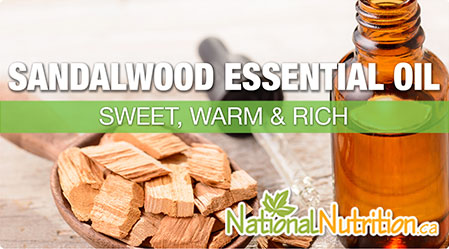
Sandalwood Essential Oil
Updated Feb. 09th, 2026 | Read Time: 2 Minutes | What You Will Learn:
- History of Sandalwood Oil
- Sandalwood Oil Extraction Method
- Sandalwood Uses & Applications
- Cautions & Considerations For Essential Oils
- Nutritional Information
- Reader Comments (2)
History of Sandalwood Oil
Sandalwood is an exotic, rich oil. Its many different uses have made it quite valuable around the world. Used throughout history by Buddhists, Hindus and Muslims in purification and religious ceremonies. Sandalwood has also been an important ingredient in many medicines, perfumes, cosmetics and incense.
Sandalwood Oil Extraction Method
The essential oil is extracted through steam distilled wood from matured sandalwood trees aged 40-80 years, although it is thought that the older the tree the better. This is because the older it is the more oil that is available and the aroma is stronger.
Sandalwood Uses & Applications
The deep-woody scent of sandalwood intensifies when applied to the skin and clothing, often lingering for days. Aromatherapy practitioners often use this popular oil to soothe anxiety and promote relaxation and tranquility. It has also been known to stimulate sensuality and is considered by some to have mild aphrodisiac qualities. Sandalwood is commonly used for skin and lung concerns.
Common conditions that this essential oil can benefit are:
- Bronchitis
- Laryngitis
- Chapped/Dry Skin
- Oily Skin
- Scars
- Stretch marks
Sandalwood should be used with prudence as this very popular tree is slowly returning from near extinction.
Cautions & Considerations For Essential Oils
When using sandalwood essential oil, it's important to dilute it with a carrier oil (jojoba, grape seed, avocado etc) before applying it topically, as it can be potent and may cause skin irritation otherwise. Conduct a patch test first, especially if you have sensitive skin or allergies.
All essential oils should never be ingested, and steer clear of use during pregnancy or with certain medical conditions. If you're taking medications or have concerns, consult a healthcare provider before use.













I have to say sandalwood definitely has a very distinct smell, you can smell it from a mile away! It is a very strong smell, but to be honest after the initial shock of how strong the smell is, it is pretty pleasant. It does have a calming and therapeutic quality and the smell definitely puts you in a healing place. I am saddened to hear that the sandalwood tree was near extinction! It would be horrible to lose such an amazing part of history.
Hello,
Yes, Sandalwood is a great scent, it's very woodsy and spicy. It makes a great base note when mixing essential oils together.
Here's an essential oil recipe of ours that includes some mixing recipes you might like:
https://www.nationalnutrition.ca/articles/essential-oils/lavender-essential-oil/
Have a healthy day!