

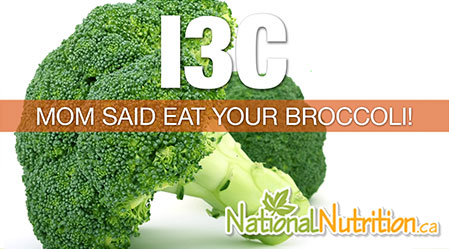
Some food sources include Broccoli, cauliflower, cabbage, bok choy & more!
Indole-3 Carbinol: A Detoxifying Nutrient
Updated Jun. 25th, 2024 | Read Time: 3 Minutes | What You Will Learn:
- What is Indole-3 Carbinol? Discover Key Factors About This Nutrient
- Identifying The Health Benefits Indole-3 Carbinol Offers
- I3C and Abnormal Cell Growth
- Indole-3 Carbinol and Lupus (SLE)
- Exploring The Relationship Between Indole-3 Carbinol and DIM
- Indole-3 Carbinol Supplement Varieties
- Important Safety Information To Consider
- Nutritional Information
- Reader Comments (2)
Broccoli is an excellent source of Indole-3 carbinol (I3C), which aids in the detoxification of estrogen, reduces free radicals, and helps to protect the liver. Keep reading to learn more about this nutrient and how it protects your health.
What is Indole-3 Carbinol? Discover Key Factors About This Nutrient
It is a substance found in cruciferous (Brassica family) vegetables such as cauliflower, cabbage, cress, bok choy, broccoli, kale, and similar green leaf vegetables, indole-3 carbinol (I3C) offers powerful antioxidant properties.
It is also known to promote more efficient estrogen metabolism, helping to decrease excess estrogen or prevent estrogen from building up in the body. This is particularly useful for healthy cell growth in women. Both I3C and DIM are being examined in clinical trials for their treatment of various types of unhealthy cell growth in women.
Identifying The Health Benefits Indole-3 Carbinol Offers
I3C and Abnormal Cell Growth
Initial research into I3C use has shown great promise for its role in fighting abnormal cell growth, particularly in the lungs, liver, colon, cervical, endometrial, prostate, and breasts. I3C is a precursor to diindolylmethane (DIM). Emerging evidence has shown that exposure of abnormal human cells to I3C or DIM triggers transcriptional, cell signalling, enzymatic, and metabolic changes that directly lead to the stoppage of replication and/or apoptosis (regulated cell death). This has been particularly well studied in estrogen-receptor-positive (ER+) abnormal cell growth, where I3C has also been seen to prevent BRCA1-dependent cell migration. This implicates I3C as a possible agent to reduce the metastasis of BRCA1-positive abnormal cells found in the breast. Interestingly, I3C has even been found to be additionally beneficial when used in conjunction with Tamoxifen.
Indole-3 Carbinol and Lupus (SLE)
There is also some very promising research on the use of I3C for the treatment of Systemic Lupus Erythematous (SLE or Lupus). Primarily affecting women, Lupus has also been associated with estrogen dominance. It is proposed that I3C can block the development of certain B and T cells of the immune system, which then causes a drop in the auto-antibody production thought to be a major causative factor in the development of Lupus.
Exploring The Relationship Between Indole-3 Carbinol and DIM
Diindolylmethane (DIM) is a product of the digestion of I3C in the presence of stomach acid. It has independent metabolic effects as well in both men and women. It may be beneficial to supplement DIM in place of I3C in people with reduced stomach acid.
Indole-3 Carbinol Supplement Varieties
I3C can be consumed in the diet, or found in capsule form if supplementation is needed. Recent research has suggested a chemopreventative dose of 300mg/day.
Important Safety Information To Consider
I3C is considered safe in both food/diet amounts and therapeutic dosages, although high supplementation has caused skin rashes and small increases in liver enzymes, less frequent tremors and nausea. Overuse and/or preventative use of I3C is further ill-advised because of its hormone-altering effects in normal individuals that can result in systemic hormone dysregulation. For this reason, do not use it as a supplement while pregnant or breastfeeding.













I knew that broccoli, like many other vegetables, acts as an aromatase inhibitor and since aromatase is the biological enzyme that is responsible fo converting the testosterone hormone to the estrogen hormone, it reduces estrogen. I did not know that broccoli's I3C was involved with estrogen detox; does it do this via upregulating aromatase inhibitors or by inhibiting aromatase directly? Anyway, thank you for this interesting article about I3C; I am interested to learn more about it as new research continues to emerge! :)
Hello Rachel,
Excellent review, thank you for taking the time to comment, we're glad our article raised some questions for you to further research and learn. Knowledge is health and we're glad we can help you discover more in the fascinating world on natural health.
Happy learning!