

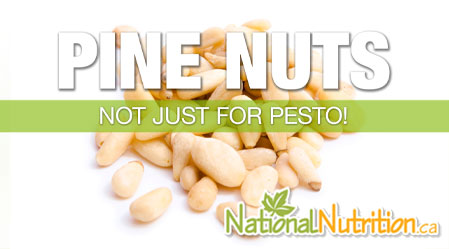
Pine Nuts Are A Rich Source of Vitamins, Minerals, Healthy Fats And Antioxidants
Pine Nuts
Updated Jan. 20th, 2026 | Read Time: 4 Minutes | What You Will Learn:
- What are Pine Nuts?
- Health Benefits of Pine Nuts
- Healthy Fats
- Cardiovascular Health
- Mineral Profile
- Vitamin Profile
- How to Use Pine Nuts?
- Shopping for Nuts
- Nutritional Information
- Reader Comments (2)
Most people think of pesto when they hear about pine nuts. However, when looking at the nutritional value of them you see that for those who are not allergic to them, they offer a rich source of nutrients and culinary versatility to be added to salads, nut butters, shakes and your favourite yogurt.
What are Pine Nuts?
Pine nuts, also called Cedar nuts, are from two specific species of pine trees – Pinus sibirica and Pinus koraiensis. These nuts have a tough outer shell and their edible soft kernel has a creamy white buttery delicate flavour.
Pine nuts, like other nuts, are a rich source of vitamins, minerals, antioxidants, and healthy fats.
Health Benefits of Pine Nuts
Pine nuts provide a rich source of energy (673 cal/100g) of healthy protein, fats, antioxidants, minerals, vitamins and other phytonutrients.
Healthy Fats
Pine nuts are abundant in the monounsaturated fatty acid called Oleic Acid. Oleic Acid helps reduce “bad” LDL Lipoprotein cholesterol from your blood and at the same time increases “good” HDL Lipoprotein cholesterol. This positively affects your blood lipid profile, overall cholesterol, and minimizes the degree of cardiovascular disease that can develop over time.
Another essential fatty acid that these nuts contain is Pinolenic acid. This special fatty acid has been shown in studies to facilitate weight loss. It does this by releasing hunger suppressing enzymes called Cholecystokinins and Glucagon-like peptides-1 (GLP-1) in your gut and this reduces appetite. Pinolenic acid has also been shown to increase LDL Cholesterol uptake by the liver which can reduce your blood LDL levels. This has been shown to be important for cardiovascular health.
Cardiovascular Health
Also protective for your cardiovascular system, pine nuts are high in Vitamin E. In fact just 100g of them have 9.33mg of Vitamin E, which is 63% of your RDA. Vitamin E is a powerful lipid-soluble antioxidant which protects your cell membranes, mucus membranes and skin from oxidative cellular damage.
Mineral Profile
Another mineral which is high in these nuts is Manganese. Manganese is important for many things in your body particularly making Superoxide Dismutase (SOD). SOD is a critical antioxidant which protects your cells from becoming damaged.
Pine nuts are rich in minerals, including Calcium, Magnesium, Iron, Potassium, Selenium, and Zinc. Minerals are important for structural tissues in your body, like your bones, nails, teeth, tendons, ligaments and muscles. They are also key co-factors for almost all enzyme systems in your body.
Vitamin Profile
They are also an excellent source of B Vitamins like Riboflavin, Niacin, Thiamine, Pantothenic Acid, B6 and Folate. B Vitamins work together for nerve transmission, hormone health and as co-factors in energy metabolism in your body.
How to Use Pine Nuts?
They are a great snacking nut. A quick handful along with a piece of fruit makes for a perfect combination of carbohydrate and fat, which will satisfy your hunger and provide antioxidants, vitamins and minerals.
Gently toasted with a bit of coconut oil, cinnamon and nutmeg or a spicy cumin curry mix makes for a yummy treat to be eaten solo or sprinkled on a green salad
If no time for toasting, simply add raw nuts to salads or a cooked whole grain like brown rice or quinoa.
You can also use them in deserts, on yogurt or on hot cereals. Or make a traditional Basil or Cilantro Pesto. Yum!
Alternately, grind them up with Walnuts and Pecans to make a wonderful natural nut butter for flat breads.
Shopping for Nuts
Any nut or seed is best bought raw. All nuts and seeds have fragile oils which can go rancid and turn into unhealthy trans fats when stored for a long time, or when exposed to air or heated. So purchasing them raw is one way to get fresh healthy nuts. Another way is to store them in the fridge. If you can find pine nuts in an air tight package it's even better.
Alternatives
Pine nuts are tree nuts and as such they can be allergenic to some people. If you know or suspect you may have a tree nut allergy you will want to avoid Pecans.
If you are unsure, food allergy and sensitivity testing can be done through your ND or MD.
Alternatives to pine nuts are seeds like pumpkin, sesame, chia, and sunflower. Raw seeds can also provide healthy fats, minerals and antioxidants to benefit your health.













How do you eat pine nuts, you ask: I don't!! While you rightfully cite many health benefits to be had by eating pinenuts. pine nuts have one big drawback that I cannot overlook. And, no, it's not an allergy-it's AGEs, aka sdvanced glycation end products (AGEs), which are oxidants created via nonenzymatic reducing sugars reacting with free amino groups of proteins, lipids, or nucleic acids. AGEs are known to contribute to increased oxidative stress and inflammation. Unfortunately, pine nuts are one of the biggest sources of AGEs out there, with over 3,000kU per serving!!!
Hello Rachel,
Thank you for sharing your thoughts on pine nuts.
Have a healthy day.