

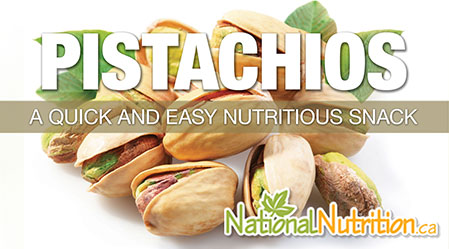
Pistachios are a rich source of vitamins, minerals, healthy fats and antioxidants.
Pistachios Health Benefits
Updated Jan. 20th, 2026 | Read Time: 4 Minutes | What You Will Learn:
- What are Pistachios?
- Health Benefits of Pistachios
- How To Use Pistachios
- Shopping For Quality Nuts
- Nutritional Information
- Reader Comments (4)
With public awareness of nuts being high in fat has given nuts a bad nutritional reputation. Taking another look at the nutritional value of pistachios and nuts in general, we see that not only are nuts nutritious, their fats are healthy for your cardiovascular system and more.
What are Pistachios?
Pistachios come from the Pistacia vera tree which is native to the Mediterranean, Middle east, and Central Asia. The Pistachio tree is from the same family as the cashew tree. It produces small avocado green colour nuts.
They have been eaten for thousands of years dating back to 6750 BC, as confirmed by archaeological digs in Jarmo, Iraq.
Pistachio shells are unique in that they start off green and as they ripen they turn a yellowish red and split open. This is why Pistachio shells are split open when you buy them.
Pistachios, like other nuts, are a rich source of antioxidants, minerals, protein and healthy fats.
Health Benefits of Pistachios
When enjoyed as a snack, pistachios are packed with healthy fats and fibre, helping curb your appetite and support weight management. A 2010 study published in the Journal of the American College of Nutrition found that, over a 12-week period, regular pistachio consumption led to reductions in body mass index and triglyceride levels. Just one ounce of these nuts provides about 160 calories, along with 6 grams of protein, 3 grams of fibre, and 15 grams of healthy fats.
In terms of nutrients, they are rich in potassium and vitamin K, both essential for cardiovascular health and maintaining electrolyte balance. They also offer a significant portion of your daily requirements for vitamin B6, thiamines, phosphorus, and magnesium. Notably, they are high in oleic acid, which helps lower LDL (bad) cholesterol while boosting HDL (good) cholesterol, thereby improving overall lipid profiles and reducing cardiovascular risk.
Research from the American Journal of Clinical Nutrition in 2008 showed that incorporating pistachios into a reduced-calorie diet can significantly lower cholesterol levels. They are also abundant in L-arginine, an amino acid that helps keep arterial walls flexible and reduces the risk of blood clots. Additionally, pistachios are rich in vitamin E, an antioxidant that protects cells from oxidative damage and supports arterial health.
Moreover, these nuts are loaded with essential minerals such as calcium, magnesium, iron, potassium, and zinc, all crucial for maintaining healthy bones, muscles, and enzymatic functions. Pistachios are particularly high in copper, providing over 140% of the daily recommended intake per 100 grams, which supports nerve health, red blood cell formation, and metabolism.
Finally, these nuts are an excellent source of B vitamins, including riboflavin, niacin, thiamine, pantothenic acid, vitamin B6, and folate. These vitamins play a vital role in energy metabolism, hormone regulation, and overall nerve function.
How To Use Pistachios
Pistachios are a great snacking nut. A quick handful along with a piece of fruit makes for a perfect combination of protein and fat....along with all the antioxidants, vitamins and minerals Pistachios offer.
Add Pistachios to salads or as a nut butter on flat breads or enjoy in deserts, on yogurt or on hot cereals.
Shopping For Quality Nuts
Pistachios should taste fresh – a rich nutty buttery flavour. If the flavour is sharp or bitter it is likely that the fats have gone rancid. They can be found in their shells or shelled. They are healthiest bought still in their shells.
The fragile oils in Pistachios are kept freshest when they are left raw. And to continue preservation they are ideally stored in the fridge. Once shelled or roasted they can go rancid quickly.
Further, it is best to eat Pistachios without salt added. Many studies have confirmed the use of salt is not advised as it can contribute to swelling and elevated blood pressure.
Alternatives
Pistachios are tree nuts and so can be allergenic to some people. If you know or suspect you may have a tree nut allergy you will want to avoid Pistachios.
If you are unsure, food allergy and sensitivity testing can be done through your ND or MD.
Alternatives to Pistachios are seeds like pumpkin, sesame, chia, and sunflower. Raw seeds can also provide healthy fats, minerals and antioxidants to benefit your health.













I absolutely love pistachios! They are my all time favorite nut! I'm so happy to learn of their numerous health benefits! I don't even mind un-shelling them as their amazing taste is so worth the time and effort! I'm so happy that this article contained a chart recommending how many pistachios you should eat a day for health benefits. When I eat pistachios they are already salty is this their natural taste? Would love to know!
Hello,
Pistachios are a yummy snack and it's an added bonus that they offer so many health benefits too! You can get pistachio's in their natural state, roasted without salt. Another nut that's packed with nutrients is the walnut, they support cognitive health, you can learn more here:
https://www.nationalnutrition.ca/articles/supplements/supplement-articles-walnuts-2/
Stay healthy & well!
My Mother is nuts about this nut and I am now so so happy for her health. I always knew that pistachios had a good macronutrient spread but I didn't realize that they had so many other benefits including a big boost of B6 and L-Arginine, an amino acid, which is absolutely amazing (my research has even touched on it-it's cool how among other health benefits, this amino acid can render the arterial lining more flexible and less likely to develop blood clots!). The Vitamin E is awesome as well. May my Mother keep eating pistachios: for enjoyment and health!
They're also high in Vitamin E, which helps decrease plaque build up in your arteries. In fact in 100g of Pistachios, you receive 23g of Vitamin E. Vitamin E is a powerful lipid-soluble antioxidant, which protects your cell membranes, mucus membranes and skin from oxidative cellular damage.
If eaten as a snack, Pistachios being high in healthy fats and fiber help curb your appetite. So if you are trying to lose weight consider eating Pistachios as a snack. A study published in the Journal of American College of Nutrition in 2010 found that over 12 weeks, Pistachio consumption reduced peoples' body mass index and triglycerides.
Pistachios are rich in minerals, including Calcium, Magnesium, Iron, Potassium, Manganese, Selenium, and Zinc. Minerals are important for structural tissues in your body, like your bones, nails, teeth, tendons, ligaments and muscles. They are also key co-factors for almost all enzyme systems in your body.
Pa
Hello Rachel,
Thank you for sharing your history with pistachios, we don't blame your mother for loving this yummy snack, it's a bonus something so tasty is also packed full of nutrients. You can add pistachios to this delicious and healthy recipe: https://www.nationalnutrition.ca/articles/healthy-recipes/trail-mix-protein-bars/
Enjoy!