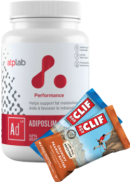
- 2200mg
- L-carnitine tartrate (Provides 1500mg of L-Carnitine)
- 800mg
- Green coffee beans (Less than 2% caffeine / 50% Chlorogenic acids)
- 300mg
- Wakame seaweed extract
- 150mg
- Irvingia gabonenis extract 10:1
- 50mg
- Oligonol (Lychee as Litchi chinensis)
- 2mg
- Chromium Polynicotinate (Provides 200mcg of elemental chromium)
Vegetable cellulose, Vegetable stearic acid.
If you have liver or kidney disease, or a seizure disorder, consult a healthcare practitioner prior to use. Discontinue use and consult a healthcare practitioner if you experience symptoms of hypoglycaemia including feelings of anxiety, dizziness, tremor, sweating, nausea or headache. If you develop symptoms such as sweating, paleness, shivering, headaches, dizziness and/or confusion, stop using this product and consult a healthcare practitioner (as these symptoms can be caused by low blood sugar). If you are pregnant or breastfeeding, do not use this product.
 Capsules
120 Caps
Adults take 2 capsules 2 times a day. Take 2-4 hours prior to exercise.
- Helps support fat metabolism
- Improved insulin sensitivity
- Blood-glucose regulation
- Workout support
- Helps maintain healthy blood pressure levels
- Helps support cardiovascular health

Performance, Cognitive, Hormonal & Immune Health Support
At ATP Laboratories, human beings are at the heart of their concerns. In order to improve their quality of life, they have put our 40 years of experience to work to develop, produce, and market natural health products that are pure, effective, and of the highest quality. ATP Laboratories is constantly innovating, committed to working in close cooperation with their partners to develop, produce, and market the best products in the industry. At ATP Lab they test every batch of raw materials to identify, potency, microbial contaminants, heavy metals solvant residues and allergens. Herbal ingredients are tested for pesticide compounds. Essential fatty acids and fish oils are tested for dioxins, furans, PCBs and other agents. Manufactured in Canada. Read more >- Reviews
- POST A NEW REVIEW
Cardio Health
By: Articles by a Naturopathic Doctor (N.D.)
Many factors affect the health of your heart and your circulatory system, many of which are fortunately within our control - even if you have a family history...
The cardiovascular system consists of the heart, which pumps blood around the body through approximately 60 thousand miles of blood vessels. These vessels are divided by function into two types. There are the arteries, which carry blood from the heart to the body and the veins, which drain blood from the body back to the heart. Blood nourishes the cells of the body by transporting nutrients like oxygen and food to the cells.
It also removes waste products from the cells for filtering by organs like the liver, kidneys and spleen. Any interruption in blood supply causes cell and tissue death, like those caused by heart attack and stroke. Because of this, the maintenance of a healthy cardiovascular system is essential.
Any interruption in blood supply, for example a heart attack or stroke, causes tissue death so the maintenance of a healthy cardiovascular system is essential.
CAUSES OF CARDIOVASCULAR DISEASE
Lifestyle factors such as smoking, obesity, improper diet, stress and lack of exercise are bigger indicators of your heart disease risk than your family history. Common lifestyle contributors are: obesity, poor nutrition, medications, free radical damage, lack of exercise, poor emotional processing, and stress.
Obesity
Being overweight is detrimental to cardiovascular health for several reasons. Excess weight increases the force of gravity acting on the body. The heart is forced to respond by working harder and increasing blood pressure to ensure all of the body cells still receive nourishment. Excess intake of food causes the body to increase the amount of cholesterol and triglycerides in the blood. Cholesterol shuttles fat around the body and is implicated in the formation of plaque in arterial walls. For more information on this process, please see our Cholesterol and Arteriosclerosis articles.
Poor Diet
Hearth health requires a nutritious diet high in vitamins, minerals and essential fatty acids. The saturated fat, chemical additives, preservatives and refined carbohydrates that have come to represent the typical North American diet of processed foods are harmful to the vessels in your heart. The heart is a muscle and the best way to keep it working for you is to provide it with a varied diet high in nutrients and low in food that does not provide the heart with usable energy. Trans-fatty acids and toxic additives are harmful to heart health.
Medications
Some medications deplete heart-supporting nutrients like Coenzyme Q10, Magnesium, Potassium and Zinc. Ironically, several of these medications are those used to treat cardiovascular disease. Cholesterol lowering medications, such as statins can deplete Coenzyme Q10. Diuretics, used to treat high blood pressure, increase the excretion of minerals like Magnesium and Potassium. This can cause problems maintaining heart rhythm and can lead to muscle spasms and lightheadedness. ACE inhibitors deplete zinc, and beta-blockers deplete coenzyme Q10. It is important to replenish these minerals and nutrients if you are on these medications to avoid deficiencies.
Free Radical Damage
We encounter free radicals through environmental exposures, such as cigarette smoke, air pollution, processed foods, and ultraviolet radiation from the sun (UV rays). Free radicals are unstable molecules with an unpaired electron that are extremely reactive, and damage surrounding cell membranes, fats, and fat-soluble vitamins and nutrients. When free radicals damage the smooth inner lining of the blood vessels, this leads to inflammation, and causes a raw region to form (like a cut) that makes the area susceptible to further damage, and clot or plaque formation.
Poor Emotional Expression
Studies have shown that certain personality types are at a greater risk for developing heart disease. An individual of type A personality is driven, focused and goal oriented. They are focused on control. Emotionally, they are inexpressive and tend to hold in volatile emotions like anger and frustration. This personality type keeps the body on constant alert, which raises blood pressure and heart rate. The cardiovascular system may weaken under this constant strain and eventually lead to heart disease and heart attack or stroke.
Sedentary Lifestyle
Lack of exercise and a sedentary lifestyle are the norm in North American society. Most people find it difficult to make time in their busy schedule for exercise. Being sedentary is detrimental to the cardiovascular system because it stagnates circulation. Sitting or standing in one place allows blood to pool in the lower body making it unavailable to the internal organs and brain. Stagnation impedes the delivery of nutrients to cells and slows the clearing of waste products.
COMMON CARDIOVASCULAR CONCERNS
Arteriosclerosis and Atherosclerosis
Arteriosclerosis is a hardening of the arteries that decreases the flexibility and elasticity of the walls. Atherosclerosis, on the other hand, occurs when deposits build-up inside of the artery walls. Both conditions are caused by inflammation and deposits of unhealthy substances that cause a reduced ability of the arteries to function. Deposits can be made of calcium (arteriosclerosis) or fatty substances like cholesterol (atherosclerosis). For more information on these disease processes, please see our Arteriosclerosis / Atherosclerosis article. As the arteries harden and narrow, it can cause a decrease in circulation to the body.
High Blood Pressure (Hypertension)
Decreased circulation leads to high blood pressure as the body struggles to maintain enough blood flow to its tissues. This is often caused by arteriosclerosis and/or atherosclerosis creating a narrowing of the artery. In these cases, pieces of the deposits can break off or the turbulent flow of blood caused by restricted arteries can cause clots to form. If the pieces or clots lodge in smaller vessels this can lead to heart attack (in the blood vessels of the heart) or stroke (in the blood vessels of the brain). Other causes are kidney disease, heavy metal toxicity, obesity, stress, and poor diet. Over time, high blood pressure leads to heart attacks, strokes, kidney failure and retinal damage. For more information, please see our Blood Pressure article.
Heart Attack
When the blood vessels feeding the heart become sufficiently constricted or blocked, it effectively blocks blood flow to the heart muscle, and results in a heart attack. Over the following minutes, the starved muscle cells begin to die, and are replaced with scar tissue. It is this remodelling of heart muscle with non-functional scar tissues that leads to permanent heart damage, and potentially death. The cause of the constriction can be an atherosclerotic plaque, a piece of tissue, an air bubble or a blood clot. For more information, please see our Heart Attack article.
Stroke
When blood flow to an area of the brain is compromised it starves brain cells for oxygen and nutrients, and within minutes the brain tissue begins to die. There are two types of stroke. Ischemic stroke occurs when blood flow is decreased due to a blood clot, arterial plaque or air bubble. Hemorrhagic stroke occurs when blood vessels in the brain rupture and bleed into the surrounding tissue. For more information, please see our Stroke article.
REDUCING YOUR RISK
Most cardiovascular disease is caused by a combination of genetic and lifestyle factors, but the vast majority of cardiovascular disease risk is actually due to lifestyle factors. Therefore it is encouraging to note that adopting a healthier lifestyle and using natural therapies can maintain a healthy vascular system.
- Maintain a healthy weight
- Consume a heart friendly diet
- Stop smoking and limit your exposure to environmental toxins
- Use stress reduction techniques and improve your emotional health
- Make regular exercise part of your daily routine
- Supplement your diet with nutrients that support the heart, especially if you take medications that deplete essential nutrients
Weight Loss
The key is to look at the maintenance of normal weight as a lifestyle change, not just as a diet that will be over in a given amount of time. See a health professional to ensure that there are no medical conditions that are causing you to gain weight. Remember healthy weight loss is no more than 2-4 lbs weekly.
Diet
Dietary changes for heart health include maintaining adequate fibre intake and lowering the fat and cholesterol content of your foods. Drink lots of clear fluids and eat raw fruits, vegetables and whole grains. Include green leafy vegetables, nuts, seeds, vegetable protein sources (like soybeans), and unrefined oils (like olive, flax and sunflower) in your daily diet. Foods to avoid are any junk foods, fried foods, processed foods, fast foods, white flour products, refined sugar products, red meat, egg yolks, ice cream, salt, coffee, sodas and other caffeine sources. Eliminate alcohol, tobacco and highly spiced foods.
Stress and Emotional Health
Have a positive mental outlook and deal with stress effectively. Stress reduction techniques such as deep breathing, yoga or biofeedback will help to maintain a healthy stress level. Colour therapy and biofeedback have been studied with regard to their blood pressure lowering effects. Be sure to express your emotions in a healthy way and avoid suppressing them. Journaling can be an effective way to express emotion without falling back on negative behaviours.
Back to Top ↑