- 130
- Calories
- 2g
- Total Fat
- 0.5g
- Saturated
- 0g
- +Trans
- 0mg
- Cholesterol
- 22g
- Protein
- 5g
- Carbohydrate
- 1g
- Sugar
- 2g
- Fibre
- 370mg
- Sodium
- 160mg
- Potassium
- 33mg
- Calcium
- 6mg
- Iron
- 1.12g
- Alanine
- 1.92g
- Arginine
- 2.13g
- Aspartic Acid
- 0.45g
- Cystine
- 3.86g
- Glutamic Acid
- 0.95g
- Glycine
- 0.45g
- Histidine
- 0.94g
- Isoleucine
- 1.79g
- Leucine
- 0.96g
- Lysine
- 0.51g
- Methionine
- 1.18g
- Phenylalanine
- 0.87g
- Proline
- 1.07g
- Serine
- 0.79g
- Threonine
- 0.94g
- Trytophan
- 0.99g
- Tyrosine
- 1.25g
- Valine
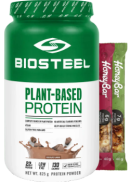
Organic Brown Rice Protein, Pea Protein, Natural Flavours, Organic Pumpkin Seed Protein, Cocoa Powder, Celtic Sea Salt® Sea Salt, Stevia (Leaf) Extract, Xanthan Gum, Sea Salt.
Plant-Based Complex:
3 sources of plant-based protein: Whole Grain Brown Rice, Pea Protein Isolate, and Pumpkin Seed Protein.
Store in a cool, dry place. Do not use if security seal is broken or missing. May Contain: Milk, sesame, peanuts, tree nuts, soy, egg, fish/crustaceans/shellfish oils, and wheat products.
 Powder
825g
(Adults): Mix 1 scoop (33 g) once daily with 250-500 mL of cold water or beverage of your choice. Vary the amount of liquid to achieve your own desired taste and consistency.
- Assists in muscle development
- Sugar Free - Sweetened with stevia
- Easily absorbed by the body
- Mixes well in either a shaker cup or blender
- No gluten, soy, or artificial flavours/colours

Sports Hydration, Protein, Greens & Energy Supplements
Biosteel set out to create the healthiest, most trusted sports nutrition supplements on the market, ensuring their formulas are made only with clean, honest and effective ingredients. Known for their popular “pink drink”, Biosteel offers sports drinks in a wide range of flavours, as well as premium hydration powders that provide electrolyte balance, whey and plant-based protein powders to maximize gains, recovery powders to support muscle recovery, plant based BCAA’s, pre-workout formulas, sports greens, sports collagen blend to support joint health and many more. Biosteel is not only made for pro athletes, but for anyone wanting to optimize their workouts. Read more >- Reviews
- POST A NEW REVIEW
PROTEIN
Protein is one of the most important building blocks in our bodies...
Protein is second most abundant substance in our body; it is second only to water. Protein makes up much of the structure of our body, including: our muscles, ligaments, tendons, bones, organs, glands, nails, and hair. It also makes up the vast majority of the molecules that allow our bodies to function and regulate itself; protein is required for: cell signaling molecules, hormones, transport molecules and most enzymes in our bodies, including our digestive enzymes. Without sufficient protein, our bodies cannot function properly.
DNA – The Code For Proteins
Our genetic material (DNA) is the blueprint that shows each cell how to produce the proteins that make life possible. It is differences in this coding that makes the variations of our proteins that make each of us unique. For example, it is protein in the iris of our eyes that gives us our distinctive eye colours.
What Is Protein?
Proteins are composed of building blocks called amino acids. These subunits are linked together by peptide bonds to form chains that can be straight lines, or branched like the sub-branches on a tree. When we eat protein the body must break these peptide bonds in the digestive tract using proteases. Then single amino acids, or amino acids in short chains (called peptides), are absorbed through the gut, into the body, where they are used as building blocks to create whatever protein the body needs.
Essential Amino Acids
Some amino acids are considered "non-essential". This means that we do not need to ingest these amino acids, because our bodies can biosynthesize them using the skeleton of other amino acids. So long as the body gets sufficient protein, these amino acids are not required. The amino acids that the body cannot produce itself need to be taken in through the diet, and are called "essential" amino acids. There are 9 essential amino acids: isoleucine, leucine, lysine, methionine, phenylalanine, threonine, tryptophan, histidine, and valine. Some amino acids are "conditionally essential", meaning that certain populations who naturally don't make enough, or all humans under certain conditions, may require certain dietary intake to meet their needs. Some examples of conditionally essential amino acids are: arginine, glutamine, cysteine, and glycine.
Protein Malnutrition
Protein is an easily available energy source for the body. When insufficient protein is ingested in the diet, or insufficient calories are taken in, the body will catabolize protein from muscle mass and then eventually from the organs to cover the deficit. This breakdown of body tissue can even happen before exhausting fat reserves. As protein levels drop, the body will prioritize protein usage to enzymes and signaling molecules to continue proper bodily function, and will catabolize other tissues to do so. As such, insufficient protein or calorie intake results in protein malnutrition, which causes muscle wasting, and eventually can lead to the breakdown of organs, and tissues. Eventually this causes a condition known as Kwashiorkor, which causes diarrhea, edema (swelling) and a large protruding belly.
Protein And Weight Loss
It is important to note the connection between low calorie diets and loss of muscle mass. Those individuals seeking to lose weight who overly restrict their dietary intake will ultimately lower their muscle mass. This is counterproductive, as our muscles are the body tissue that burns the most calories by weight. From a biological perspective, the body's response makes sense; when food is scarce, reducing the amount of calorie burning tissue you have, allows you to live with lesser requirements until food can be found again. In modern society, this leads to the inability to lose weight despite a calorie-restricted diet. Recently, the popularity of high protein diets has made supplementation of protein popular for weight loss. When protein is ingested with carbohydrate, it slows the rate at which sugar enters the body. By avoiding spikes in blood sugar, protein minimizes the storage of sugar as fat. Individuals with blood sugar imbalances, like diabetes and hypoglycemia, will benefit from protein's regulation of blood sugar. Because protein also builds muscle tissue, which burns more energy than other body tissue, it can also help weight loss.
Protein Requirements
According to the Canadian Dietary Reference Intake guidelines: sedentary adult women require 46 grams of protein per day, while sedentary adult males require 56 grams to avoid deficiency. This is just the amount to prevent protein malnutrition. Athletes and individuals who are physically active at work or play will all require additional protein to repair their tissue and build more lean muscle. People who are recovering from illness or long periods of inactivity require additional protein to rebuild their lost muscle mass as well. The immune system is dependent on protein to make the cells and antibodies that protect our body. Frequent colds and flus and chronic infections are signs that the body may need more protein. In general, the recommendation is between 1.5 and 2 grams of protein per kilogram body weight daily intake for fairly active people. This is around 125g of protein per day for a 70kg (155lb) person.
Excess Protein
The body is incapable of storing protein, so when we ingest it in much larger amounts than the body needs, excess protein has to be broken down. The extra amino acids are transported to the liver where they are broken down to create energy. Although an easy energy source, protein does not "burn clean", and breaking it down creates a waste product called urea. Normally this is easily excreted through the kidneys in our urine. This excretion requires calcium, so high protein diets should be combined with a calcium supplement to protect against reduced calcium stores.
Protein Powders
Protein powders can be used for many different health and performance enhancing purposes. There are a large variety of readily available protein supplements and protein processing techniques. The six main supplemental sources are: whey, egg, hemp, soy, rice and pea, although other sources are occasionally used in some supplements. Higher quality formulas use superior processing techniques, and avoid binders, fillers, artificial flavorings and sweeteners. Be sure to check the ingredients on the label of your protein supplement.
TYPES OF PROTEIN POWDERS
Whey
This form of protein is concentrated from a byproduct of the production of cheese from cow's milk. It comes in three major forms, each of which has a different bioavailability. Whey protein, in all three forms, is the most bioavailable form of supplemental protein available. There are some cases of sensitivity to whey protein, and those who are allergic to milk should avoid its use.
Egg
Chicken eggs are an excellent source of protein as well as a number of other vitamins and nutrients. When just the egg whites are used, less nutrition is available, but it is still an excellent source of complete protein and does not contain the additional fat. Egg protein is the second most bioavailable protein source. There are some cases of sensitivity to egg protein, and those who are allergic should avoid use of this protein supplement.
Rice
Rice protein powder consists of brown rice treated with enzymes to remove the carbohydrate, leaving only the protein behind. This source of protein is vegan and hypoallergenic. Since it is lower on the food chain it is also more eco-friendly, and doesn't take such a large environmental footprint to create. Since it is naturally a little low in the amino acid lysine, rice protein is often mixed with pea protein to create a more balanced protein supplement.
Pea
Pea protein powder is created using yellow split peas. Like rice protein, pea protein is vegan and hypoallergenic, and also has a much more eco-friendly footprint. In order to balance its amino acid profile, pea protein is often mixed with rice protein to create a more balanced protein supplement.
Soy
Soy protein powder is extracted from soy beans. It is an inexpensive vegan protein that offers a complete protein source. In addition to being rich in protein, soy also contains isoflavones that act as phytoestrogens in the body. Although this makes them less than promising for body builders, this can be of great benefit to post menopausal women and others with hormone imbalances.
Hemp
Hemp protein is extracted from hemp seeds and is an eco friendly, and vegan protein source that provides all 9 essential amino acids. In addition to its protein content, hemp also contains essential fatty acids (EFAs) and fibre, both of which are major ingredients in a healthy balanced diet.
Spirulina
This water-grown algae is sometimes considered a complete food. It naturally contains 60-70% protein as well as a huge number of other nutrients, vitamins and minerals. It is such a rich source of protein and B12 that it is often recommended to vegetarians to cover potential dietary gaps. It also contains chlorophyll, which helps to clear toxins from the body.
Protein Availability – Biological Value (BV)
Scientists have developed a measure of a protein's ability to be used by the body and with this in mind created a scale of bioavailability called biological value (BV). The value given to a protein source represents the percentage of the absorbed protein that your body actually uses.
Protein – Quick Facts
Sources
· Meat, Dairy, Eggs, Nuts, Legumes, Tofu, Spirulina, Quinoa. Protein Powder: Whey, Hemp, Soy, Rice, Pea.
Applications
· Muscle Building, Wasting Illnesses, Post-Surgical Healing, Hiv, Low Immune Function, Fatigue, Improved Athletic Performance, Meal Replacement, Obesity, Diabetes, Hypoglycemia
Optimum Dosage
· Dependent Upon An Individual's Weight And Activity Level. Between 0.8 And 2 Grams Protein/Kg Body Weight Per Day. (Clinical Doses May Be Higher As Recommended By Your Practitioner).
Works Well With
· Calcium, Multi-Vitamin, Multi-Mineral, Creatine, Antioxidants, Exercise
Important Information
· Do Not Take High Amounts Of Supplemental Protein If You Have Impaired Kidney Function.
· Supplementing High Doses Of Protein Can Deplete Calcium. Additional Calcium May Be Required With Prolonged Use.
· High Protein And Low Dietary Fibre Can Increase The Risk Of Colon Cancer.
Back to Top ↑