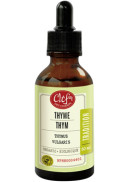
- 354mg
- Organic Thyme (leaf, thymus vulgaris)
- 39%
- Organic Alcohol
Consult a health care practitioner if symptoms persist or worsen. Do not use if you are pregnant.
 Liquid
50ml
Adults 1.5 to 3 ml, 3 times per day. Dilute tincture in a mouthful of water. Shake before using. For long-term treatment, take 6 days out of 7.
- Expectorant
- Helps soothe bronchitis
- Relieves cough
- Easy To Take Liquid
- No additives, colouring, added sugar, gluten, soy or GMOs.
- Kosher, vegan and non-irradiated

Herbalist Recommended Tinctures, Teas, & Capsules
Clef des Champs is a Canadian company that was founded by an herbalist in Quebec. All of their herbs are organically grown in their own garden in the Quebec mountains. The natural elements nourish each herb until it’s ready to be picked, dried and made into one of their natural formulations. Their blends offer support for many health concerns including; oral health, women’s health, immune and respiratory health, digestive health, men’s prostate health, and muscle and joint relief. Available in water-alcohol, alcohol-free, capsule, syrup or salve formula’s, Clef des Champs uses the healing power of herbs to support your needs. Read more >
- Reviews
- POST A NEW REVIEW
Reviews By Rating
helpful votes
0
0 customers found this product review helpful
THYME TINCTURE - COUGH & BRONCHITIS
Mode Of Action
Thyme is used for all respiratory tract conditions where there is productive or spasmodic cough. As an expectorant and anticatarrhal, it frees the bronchi and calms inflammation. It is antiseptic and rich in antibacterial volatile oils. Thyme’s action on the bronchial cilia helps expectorate mucus. It also relaxes the smooth muscles of the bronchi, making it very effective to treat coughs. It calms coughing fits and relieves sore throat. Thyme reduces inflammation of the mucus membrane of ear, nose and throat and is antibacterial and antiviral. It is diaphoretic, relieves fever and is used in the treatment of colds, flu, laryngitis and pharyngitis.
Thyme stimulates the digestive processes and aids difficult digestion. It is antispasmodic, relaxes smooth muscles and calms abdominal pain. As a carminative, it relieves bloating and gas caused by dyspepsia. It is antiparasitic and can eliminate unwanted bacteria that has settled in the intestine, thereby rebalancing the intestinal flora. Studies have shown that thyme has a specific action on some bacteria (H. pylori) ) and yeasts (Candida albicans). It is also an antioxidant.
Thymus vulgaris is an emmenagogue and has been used traditionally to reduce the pain of menstrual cramps by relaxing the muscles of the uterus. Its antiseptic and diuretic properties are very useful in the treatment of urinary tract infections.
The main constituents of thyme are volatile oils (thymol, carvacrol, linalool), tannins, flavonoids (eriodictyol, luteolin, naringenin), acids (rosmarinic, caffeic), saponins, resins, polysaccharides (arabinogalactan) and bitter principles.
Helpful Associations
Pulmonatea for spasmodic cough, irritation of the bronchi.
Bronchix or Plantain Syrup for irritation of the bronchi, bronchitis.
Drastix for colds and flu.
Estomix for gas, bloating and digestive troubles.
Parasitix for parasites.
Uses
Immune system: whooping cough, laryngitis, tonsillitis (as a gargle).
Respiratory system: bronchitis, asthma, emphysema, catarrh of the respiratory tract.
Digestive system: colic, flatulence, abdominal cramps, diarrhoea, parasites, fungus infection, gastritis, acid reflux.
Other uses: gingivitis (gargle), inflammation of the mouth caused by chemotherapy (gargle), convalescence, allergies, otitis.
History
Originally from the Mediterranean basin, thyme was used by the Pharaohs and the Sumerians to embalm the dead. In Antiquity, the Romans used it to flavour cheeses and alcoholic beverages and Roman legionnaires felt increased vigor when they added it to their bathwater. The Greeks used it as incense to purify the air and to keep animals away. In his 17th Century writings, the herbalist Nicholas Culpeper mentioned that thyme was used to treat whooping cough, shortness of breath, gout and stomach aches. Today, thyme is included in many products such as soaps and mouthwashes.
Back to Top ↑