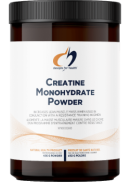
- 5g
- Creatine Monohydrate
Keep out of reach of children. Please see below for more information.
 Powder
450g
Adults 18 years and older: Mix 5 g (approx. 1 scoop) in 8-10 ounces of water 1-4 times per day. Do not exceed 5 g per single dose.
- Convenient powder that rapidly dissolves in liquid
- Improved absorption, digestibility and enhanced bioavailability to targeted muscle tissue
- Boost Brain and cognitive function
- Support muscle growth and strength, and athletic performance
- Vegan. Does not contain gluten, dairy, soy or GMOs

Researched & Formulated With Integrity: Sold at National Nutrition.
Designs for Health is a leading innovator and the fastest-growing brand of premium nutritional supplements within the healthcare practitioner sector. Offering one of the most extensive and diverse ranges of nutritional supplements, including products such as 5-HTP Supreme, CoQnol 100, Digestzymes, Liposomal Vitamin C, Magnesium Malate, Thyroid Synergy, and Vitamin B12, among others. Read more >
- Reviews
- POST A NEW REVIEW
Cautions & Warnings: Ask a health care practitioner before use if you are pregnant, breastfeeding, or if you have kidney disorder. Using this product may result in weight gain.
BEST CREATINE SUPPLEMENTS
Creatine has long been a favourite of athletes and bodybuilders for building lean muscle mass and enhancing performance, but don’t discount it just because you aren’t a gym rat; the best Creatine supplement has so much more to offer!
Creatine is an amino acid located mostly in your body's muscles as well as in the brain. It plays a critical role in the formation of adenosine triphosphate (ATP) - a major source of cellular energy. Because meat is the primary food source of creatine, vegetarians typically have lower amounts than non-vegetarians, so would benefit from supplementation. These supplements help increase strength, power and muscle mass; the more of this amino that's available, the better muscles can perform. Creatine also draws water into muscle cells plumping them up and making them look larger. Though it gives athletic performance a leg-up, it’s important to note that creatine is not considered doping and is permitted by the International Olympic Committee and in professional sports.
Athletes aside, this amino acid can also be used to help prevent muscle cramping, rebuild lean muscle mass after convalescence, counteract age-related declines in skeletal muscle (sarcopenia) and bone mineral density, and help enhance cognitive performance, especially in older adults.
Benefits Of Creatine
- Boosts Cognitive Performance
- Enhances Muscle Hydration to Boost Muscle Protein Synthesis
- Increases Muscle Strength
- Improves Endurance & Intensity
- Prevents Sarcopenia
Who Needs Creatine?
Naturopaths often recommend creatine to help improve exercise performance and muscle Protein synthesis in athletes, as well as in older adults to reduce oxidative damage in the body after strenuous exercise. It also protects against DNA and lipid damage in the blood and protects against cardiovascular disease.
Best Creatine Supplements
Creatine can be purchased in capsule, liquid and powder form (flavoured or plain), and is often added to protein powders or other supplements to enhance athletic performance. Your dosing will depend on what you’re using it for. For building muscles and boosting performance, a loading phase of 5 to 7 days at 20+g daily is recommended, followed by a maintenance phase of 5g daily. Other indications may require closer to 10g daily. It’s recommended to divide your total daily dose and take it throughout the day. Combining caffeine with creatine can reduce its efficacy.
Final Thoughts
Creatine is available in a few different forms, the most common being the monohydrate form which consists of a creatine molecule and a water molecule. Despite the different forms offered, you can likely expect comparable results with equal dosing. Of course, always follow the dosing information listed on the label.
This supplement also pairs well with other “muscle-feeding” supplements such as protein powder, Glutamine, Nadh, alpha-lipoic acid and Carbohydrates.
Back to Top ↑