- 1050 mcg RAE
- Vitamin A (palmitate)
- 1500 mcg
- Beta-Carotene
- 1.4 mg
- Vitamin B1(Thiamine mononitrate)
- 1.6 mg
- Vitamin B2 (Riboflavin)
- 18 mg
- Vitamin B3 (niacinamide)
- 7 mg
- Vitamin B5 (Calcium d-Pantothenate)
- 5 mg
- Vitamin B6 (Pyridoxine HCl)
- 2.8 mcg
- Vitamin B12 (Cyanocobalamin)
- 120 mg
- Vitamin C (Ascorbic Acid)
- 600 IU
- Vitamin D3 (Cholecalciferol)
- 28 IU
- Vitamin E (d-alpha tocopherol)
- 90 mcg
- Vitamin K1
- 35 mcg
- Biotin
- 1000 mcg
- Folate (Folic Acid)
- 200 mg
- Calcium (Carbonate)
- 25 mcg
- Chromium (Polynicotinate)
- 267 mcg
- Copper (chelate)
- 150 mcg
- Iodine (potassium iodide
- 27 mg
- Iron (Ferrous fumarate)
- 25 mg
- Magnesium (Oxide)
- 2 mg
- Magnanese (citrate)
- 50 mcg
- Molybdenum (sodium molybdate)
- 60 mcg
- Selenium (selenomethionine)
- 20 mg
- Zinc (Oxide)
- 275 mg
- Fish Oil (Anchovy, Sardine)
- 150 mg
- Docosahexaenoic Acid (DHA)
- 17.5 mg
- Eicosapentaenoic Acid (EPA)
This product contains enough iron to seriously harm a child.
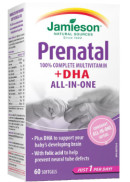
 Softgels
60 Softgels
Take 1 caplet daily with a meal prior to conception, during pregnancy, and when breastfeeding. Take a few hours before or after taking other medications.
- A multivitamin and mineral supplement for the maintenance of good health
- Source of omega-3 fatty acids, eicosapentaenoic acid (EPA) and docosahexaenoic acid (DHA)
- Folic acid helps to prevent neural tube defects when taken daily or prior to becoming pregnant and during early pregnancy
- Helps to form red blood cells, helps normal growth and development and helps in tissue formation and wound healing
- Helps in the development and maintenance of bones, cartilage, teeth and gums

Jamieson Supplements for Whole-Family Health & Wellness
Jamieson has consistently been voted Canada’s most trusted brand of vitamins. Jamieson vitamins and supplements most popular natural health products include Jamieson probiotic, multivitamin, Jamieson vitamin C, Omega 3 and D3, plus many more! They provide consumers with the purest, safest and most effective natural health solutions available. Shop Jamieson right here at National Nutrition.ca Read more >- Reviews
- POST A NEW REVIEW
DHA / DOCOSAHEXANOIC ACID
Fish can help you overcome learning disabilities, neurological diseases and visual impairment...
Docosahexanoic acid is an omega 3 essential fatty acid. It is an essential component of the brain and central nervous system. It seems to concentrate in areas where there is lots of electrical activity such as the synaptosomes, where nerve cells communicate, and the photoreceptors of the eye.
This is why a deficiency of DHA can result in poor brain development, attention/deficit hyperactivity disorder, learning disorders, memory problems and poor visual development.
Supplementation of DHA is especially important in pregnant women, breastfeeding mothers and children. Some infant formulas are now fortified with DHA because, in the past, formula contained less essential fatty acids than breast milk.
DHA Supplementation not only plays a role on proper brain development in infants and children but it is important for ongoing brain health. It has been shown to help improve memory in cases of Alzeimer's Disease as well as age related memory loss. DHA impacts the brain's structure and signalling systems as well as the nervous system.
It has been shown that DHA supports healthy levels of neurotransmitters including serotonin, norepinephrine, acetylcholine, glutamate, and dopamine. There have been numerous studies conducted on DHA and its effects on depression (chronic, major, and post partum), hostility, aggression, anger, anxiety, and panic attacks. So far much of the research looks promising in helping relieve a lot of these health concerns.
DHA can be taken in through the diet by eating fish or fish oil. The body can also convert alpha linolenic acid (ALA), from vegetable sources like flaxseeds, into DHA. However, the standard North American diet is deficient in essential fatty acids, especially omega 3s and very few individuals have enough excess ALA to meet the body’s need for DHA. Supplemental DHA is usually made from tuna, salmon, herring, mackerel or sardines. These fish contain more omega 3 rich fat than other fish species. Cod liver and halibut liver oils also contain some omega 3s but are primarily used for their vitamin A and D content. Some newer fish liver oils have been fortified with DHA and may be an economical choice for those individuals taking both DHA and liver oils.
DHA supplements are found as liquid oil (processed to remove the fishy taste), soft gel chewables (flavoured) and standard soft gel capsules. Children flavour DHA liquids and flavoured soft gel chewables. Fish liver oil supplements should be used cautiously in children, pregnant and nursing women because of the toxicity of fat-soluble vitamins.
Ensure your fish oil supplement is not processed with heat because it damages the acids and creates free radicals. It is important to purchase a good quality DHA supplement that has been tested for contaminants. Refrigerate all liquid DHA supplements and keep capsules away from heat to increase shelf life. Using liquid DHA is much more cost effective than capsules because numerous capsules must be taken to make an equivalent amount of liquid oil.
DHA – QUICK FACTS
FOOD SOURCES
· Breast milk, tuna, salmon, herring, mackerel, sardines, halibut liver, cod liver.
DEFICIENCY SYMPTOMS
· Learning disorders, neurological diseases, visual impairment.
OPTIMUM DOSAGE
· Dosages depend on the type of oil that is used, usually 1tsp daily or 3 – 9 capsules daily. (Clinical doses may be higher as recommended by your practitioner).
WORKS WELL WITH
· Other essential fatty acids, vitamin A, vitamin D, vitamin E, vitamin K.
IMPORTANT INFORMATION
· Fatty acids are best absorbed with a fatty meal.
· Those with an inability to absorb fats should take an enzyme complex to facilitate the intake of EFAs.
· Use caution when taking EFAs while using blood thinning medication.
· Watch for toxicity of vitamin A and D if you use a fish liver oil supplement for its DHA content.
Back to Top ↑