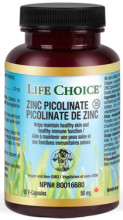
1 capsule contains:
- 50mg
- Zinc Picolinate (Zinc 10mg)
- 100% Pure Pharmaceutical grade
Non-Medicinal Ingredients:
cellulose, hypromellose, ascorbyl palmitate, all from vegetable source.
cellulose, hypromellose, ascorbyl palmitate, all from vegetable source.
Important Information:
Contains no: wheat, corn, yeast, soy or dairy. V Caps are made from vegetarian source, no gelatine used. 100% pure pharmaceutical grade
Format
 Veggie Caps
90 V-caps
Dosage
Take 1 capsule daily with food a few hours before or after other medications.
Product Information:
- Essential Amino Acid
- Supports development of sex organs
- Important in nucleic acid synthesis and plays a role in carbohydrate and phosphorus metabolism
- 10mg dosage

Nutraceutical Vitamins, Minerals & Advanced Wellness Supplements
Life Choice Ltd. is a Canadian Nutraceutical Company, founded in 1986 by Eldon Dahl. Life Choice uses pharmaceutical standards and their precise formulations are designed to be natural alternatives to allopathic medicine. Life Choice brings you award winning products like DMAE Liquid and Gel, DMSO, Kava Kava and Adrenal Gland. Read more >What People Are Saying:
- Reviews
- POST A NEW REVIEW
Reviews for:
Zinc Picolinate 50mg - 90 V-Caps
(6 reviews)
Reviews By Rating
helpful votes
5
5 customers found this product review helpful
More Info
Zinc Picolinte
Zinc is an essential trace mineral, which is second only to iron as the most plentiful trace element in the body. It aids in the absorption of B vitamins, and is a constituent of at least 25 enzyme systems, as well as being a component of insulin and of superoxide dismutase. Zinc is essential for growth and development of sexual organs, is important in nucleic acid synthesis and plays a role in carbohydrate and phosphorus metabolism.
There is concern regarding the absorption of zinc, both from dietary intake and nutritional supplements, because of zinc's essential role in human nutrition and metabolism, and because of evidence that some population groups have a marginal-to-deficiency condition: not all zinc preparations have equal bioavailability.
Acrodermatitis enteropathica (AE), a rare genetic disorder characterized by a severe zinc deficit, provides an excellent model for understanding zinc deficiency and absorption in humans. Patients with AE have a defect in tryptophan metabolism, which may predispose them to producing decreased levels of picolinic acid (PA). PA, a natural product of normal tryptophan metabolism in the body, has been shown to be an important, if not an essential component of zinc absorption. Zinc picolinate appears to have the greatest efficacy in reversing the zinc deficiency of AE and is also absorbed to a higher degree in normal subjects than other zinc supplements.
Unlike supplementation with many other mineral chelates, use of zinc picolinate may actually provide the compound normally created by the body in the intestinal tract to facilitate absorption.
Zinc may be useful for the following conditions: retarded growth, delayed sexual maturity, slow healing, prostate problems, immune system deficiency, and anorexia nervosa. Several factors, including calcium, naturally decrease zinc's bioavailability in the diet. Today, with more people supplementing their diets with calcium, the need to provide this highly bioavailable form of zinc is well warranted.
Zinc
Earl Mindell put it best in his book, Vitamin Bible, when he wrote, "Zinc acts like a traffic policeman, directing and overseeing the efficient flow of body processes (and) the maintenance of enzyme systems and cells". This explains why zinc is responsible for so many body functions. Zinc concentrates in the reproductive glands where it aids in normal fetal development and sperm maturation.
It is especially important in the prostate gland where supplemental zinc has been shown to decrease prostate inflammation. Zinc is a regulator of the immune system ensuring that cells for identifying and killing microbes, viruses and other cells are in good working order. Zinc is a cofactor for the antioxidant system superoxide dismutase (SOD). Antioxidants neutralize free radicals. They are unstable molecules that in their bid to become more stable must bump into healthy cells and cause damage. Zinc also speeds wound healing and is used for the healing of burns and surgical incisions. Zinc is involved in the sensory organs, the eyes, nose and taste buds.
One of the first signs of zinc deficiency can be altered taste and smell. Zinc regulates the activity of insulin, for blood sugar control, thyroid hormone, for metabolism and the digestion of sugar and protein. Natural health practitioners use zinc for a variety of health concerns including; acne, benign prostatic hyperplasia, colds, flus, diabetes, diaper rash, stomach ulcers, macular degeneration, impotence, osteoporosis, eczema and wound healing.
The supplemental forms of zinc are the inorganic zinc sulphate and the organic zinc gluconate and zinc picolinate. The chelated, organic forms of zinc, picolinate and gluconate, are easier for the body to use. Zinc is usually found in tablet form or as lozenges, for use during colds. Zinc is also a part of multivitamin/mineral formulas and some immune boosting and antioxidant formulas. A special form of zinc called zinc monomethionine is used as an antioxidant. It has antioxidant activity equivalent to that of vitamin C, vitamin E and beta-carotene. It is often recommended to take a copper supplement concurrently with zinc, usually in a ratio of 10-15mg of zinc to 1mg copper.
Zinc levels are decreased by diarrhea, kidney disease, liver disease, alcoholism and diabetes. Zinc is not absorbed when it is consumed with fibre, phytates (found in grains and legumes), hard water, calcium, copper and iron. Zinc is lost through perspiration so supplementation may be helpful for athletes, those who live in hot climates and those who regularly use saunas or steam rooms. Zinc is depleted by the following medications: oral contraceptives, some diuretics, ulcer medications, antiviral medication and some antibiotics. Much of our food is deficient in zinc due to poor soil levels of the mineral. Food processing techniques destroy zinc.
Zinc is an essential trace mineral, which is second only to iron as the most plentiful trace element in the body. It aids in the absorption of B vitamins, and is a constituent of at least 25 enzyme systems, as well as being a component of insulin and of superoxide dismutase. Zinc is essential for growth and development of sexual organs, is important in nucleic acid synthesis and plays a role in carbohydrate and phosphorus metabolism.
There is concern regarding the absorption of zinc, both from dietary intake and nutritional supplements, because of zinc's essential role in human nutrition and metabolism, and because of evidence that some population groups have a marginal-to-deficiency condition: not all zinc preparations have equal bioavailability.
Acrodermatitis enteropathica (AE), a rare genetic disorder characterized by a severe zinc deficit, provides an excellent model for understanding zinc deficiency and absorption in humans. Patients with AE have a defect in tryptophan metabolism, which may predispose them to producing decreased levels of picolinic acid (PA). PA, a natural product of normal tryptophan metabolism in the body, has been shown to be an important, if not an essential component of zinc absorption. Zinc picolinate appears to have the greatest efficacy in reversing the zinc deficiency of AE and is also absorbed to a higher degree in normal subjects than other zinc supplements.
Unlike supplementation with many other mineral chelates, use of zinc picolinate may actually provide the compound normally created by the body in the intestinal tract to facilitate absorption.
Zinc may be useful for the following conditions: retarded growth, delayed sexual maturity, slow healing, prostate problems, immune system deficiency, and anorexia nervosa. Several factors, including calcium, naturally decrease zinc's bioavailability in the diet. Today, with more people supplementing their diets with calcium, the need to provide this highly bioavailable form of zinc is well warranted.
Zinc
Earl Mindell put it best in his book, Vitamin Bible, when he wrote, "Zinc acts like a traffic policeman, directing and overseeing the efficient flow of body processes (and) the maintenance of enzyme systems and cells". This explains why zinc is responsible for so many body functions. Zinc concentrates in the reproductive glands where it aids in normal fetal development and sperm maturation.
It is especially important in the prostate gland where supplemental zinc has been shown to decrease prostate inflammation. Zinc is a regulator of the immune system ensuring that cells for identifying and killing microbes, viruses and other cells are in good working order. Zinc is a cofactor for the antioxidant system superoxide dismutase (SOD). Antioxidants neutralize free radicals. They are unstable molecules that in their bid to become more stable must bump into healthy cells and cause damage. Zinc also speeds wound healing and is used for the healing of burns and surgical incisions. Zinc is involved in the sensory organs, the eyes, nose and taste buds.
One of the first signs of zinc deficiency can be altered taste and smell. Zinc regulates the activity of insulin, for blood sugar control, thyroid hormone, for metabolism and the digestion of sugar and protein. Natural health practitioners use zinc for a variety of health concerns including; acne, benign prostatic hyperplasia, colds, flus, diabetes, diaper rash, stomach ulcers, macular degeneration, impotence, osteoporosis, eczema and wound healing.
The supplemental forms of zinc are the inorganic zinc sulphate and the organic zinc gluconate and zinc picolinate. The chelated, organic forms of zinc, picolinate and gluconate, are easier for the body to use. Zinc is usually found in tablet form or as lozenges, for use during colds. Zinc is also a part of multivitamin/mineral formulas and some immune boosting and antioxidant formulas. A special form of zinc called zinc monomethionine is used as an antioxidant. It has antioxidant activity equivalent to that of vitamin C, vitamin E and beta-carotene. It is often recommended to take a copper supplement concurrently with zinc, usually in a ratio of 10-15mg of zinc to 1mg copper.
Zinc levels are decreased by diarrhea, kidney disease, liver disease, alcoholism and diabetes. Zinc is not absorbed when it is consumed with fibre, phytates (found in grains and legumes), hard water, calcium, copper and iron. Zinc is lost through perspiration so supplementation may be helpful for athletes, those who live in hot climates and those who regularly use saunas or steam rooms. Zinc is depleted by the following medications: oral contraceptives, some diuretics, ulcer medications, antiviral medication and some antibiotics. Much of our food is deficient in zinc due to poor soil levels of the mineral. Food processing techniques destroy zinc.
Back to Top ↑