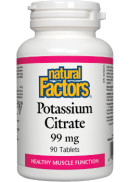
Each tablet contains:
- 99mg
- Potassium (potassium citrate)
Non-Medicinal Ingredients:
Microcrystalline cellulose, dicalcium phosphate, croscarmellose sodium, vegetable grade magnesium stearate (lubricant).
Microcrystalline cellulose, dicalcium phosphate, croscarmellose sodium, vegetable grade magnesium stearate (lubricant).
Important Information:
Contains no artificial preservatives, color or sweeteners; no corn, dairy, starch, wheat or yeast.
Format
 Tablets
90 Tabs
Dosage
1-5 tablets daily or as directed by a health care practitioner.
Product Information:
- Easily absorbed citrate form.
- Important electrolyte mineral.
- Support heart and nerve functions.
- Needed to regulate fluid balance.
- May be helpful for hypertension.

Trusted Wellness For 60 Years, Sold at National Nutrition.
Based in British Columbia, Natural Factors Canada is one of the largest manufacturers of nutritional products in North America. Natural Factor Supplements origins reach back to the 1950s, & right from day one, they've been fully committed to making products right. Today, Natural Factors vitamins brings you tested and true products like Acidophilus and Bifidus, Ultimate Multi Probiotics, RX Omega-3, Theracurmin, PGX Daily, Whey Factors Protein and Oil of Oregano all of which you can BUY right here at National Nutrition.ca. Read more >What Customers Are Saying:
- Reviews
- POST A NEW REVIEW
More Info
Natural Factors Potassiumthis electrolyte mineral helps maintain healthy muscles, nerves and heart.
Why do we need Potassium?
Potassium is a key electrolyte that must be kept within certain limits by the body because it regulates heart rhythm and nerve transmission. Stress hormones make nerve and muscle cells fire more quickly by altering the balance of potassium and sodium inside and outside the cell. Therefore chronic stress eventually leads to an increase in the body's potassium requirements.
Potassium regulates water balance, via the kidneys, and therefore is an important component in blood pressure regulation. Potassium can prevent calcium kidney stones when taken together with magnesium. It also regulates the intake of nutrients through cell membranes. As we age this function decreases and may be a reason why circulatory damage, lethargy and weakness are common amongst the elderly.
What are Electrolytes?
Electrolytes are soluble salts dissolved in the body's fluids. They are capable of conducting electrical impulses.It is important for the balance of electrolytes in your body to be maintained, because they affect the amount of water in your body, blood pH, muscle action, and other important processes. You lose electrolytes when you sweat, and these must be replenished by drinking lots of fluids.
High Blood Pressure
Hypertension or high blood pressure is known as a silent killer because people often do not know that they have it until the body is already damaged. If you think that you are at risk, it is important to have your blood pressure monitored regularly, because hypertension can lead to heart attacks, strokes, kidney failure and retinal (eye) damage.
The most common causes of hypertension are narrowed arteries or a decrease in arterial elasticity. Narrowing and hardening of the arteries are primarily caused by eating too much of the wrong types of fats. It is important that you get enough of the right kinds of fats to limit this damage and to promote health. Other causes are kidney disease, heavy metal toxicity, obesity, stress and poor diet. Some of these factors are beyond our control, but many can be changed through diet, lifestyle changes, detoxification, and a combination of the right supplements and complimentary therapies.
Most people are do no have symptoms because their blood pressure rises slowly over many years. Symptoms of fluctuating blood pressure may be present and include headaches, dizziness, fatigue, nosebleeds and flushed cheeks. Symptoms of decreased circulation can accompany high blood pressure and include angina, leg pain, forgetfulness and ringing in the ears. Official diagnosis of hypertension is made when blood pressure readings over 140/90 are found on at least three occasions. In people over 50 the exact reading necessary to diagnose hypertension can be variable. A single reading of high blood pressure is generally not accepted as official because environmental factors such as stress and the amount of salt recently eaten can skew the reading.
Conventional treatment of hypertension involves medication to decrease blood volume (diuretics, ACE inhibitors) or reduce tension in the vessels (beta-blockers). Diuretics increase the excretion of minerals like magnesium and potassium. This can cause problems maintaining heart rhythm and muscle spasms. ACE inhibitors deplete zinc. Beta-blockers deplete coenzyme Q10. Other medications may be given to control the root cause of the high blood pressure like sedatives, cholesterol reducing drugs or drugs to maintain kidney function.
The standard North American diet predisposes people to developing high blood pressure due to its saturated and trans fatty acid content. To prevent hypertension maintain a healthy weight. Drink lots of clear fluids and eat raw fruits, vegetables and whole grains. Include green leafy vegetables, nuts, seeds, fish, vegetable protein, like soybeans, and unrefined oils like olive, flax and sunflower in your daily diet. Foods to avoid are any junk foods, fried foods, processed foods, fast foods, white flour products, white sugar products, red meat, margarine, shortening, artificial sweeteners, diet foods, salt, coffee, colas and other caffeine sources. Eliminate alcohol, tobacco and highly spiced foods.
Why do we need Potassium?
Potassium is a key electrolyte that must be kept within certain limits by the body because it regulates heart rhythm and nerve transmission. Stress hormones make nerve and muscle cells fire more quickly by altering the balance of potassium and sodium inside and outside the cell. Therefore chronic stress eventually leads to an increase in the body's potassium requirements.
Potassium regulates water balance, via the kidneys, and therefore is an important component in blood pressure regulation. Potassium can prevent calcium kidney stones when taken together with magnesium. It also regulates the intake of nutrients through cell membranes. As we age this function decreases and may be a reason why circulatory damage, lethargy and weakness are common amongst the elderly.
What are Electrolytes?
Electrolytes are soluble salts dissolved in the body's fluids. They are capable of conducting electrical impulses.It is important for the balance of electrolytes in your body to be maintained, because they affect the amount of water in your body, blood pH, muscle action, and other important processes. You lose electrolytes when you sweat, and these must be replenished by drinking lots of fluids.
High Blood Pressure
Hypertension or high blood pressure is known as a silent killer because people often do not know that they have it until the body is already damaged. If you think that you are at risk, it is important to have your blood pressure monitored regularly, because hypertension can lead to heart attacks, strokes, kidney failure and retinal (eye) damage.
The most common causes of hypertension are narrowed arteries or a decrease in arterial elasticity. Narrowing and hardening of the arteries are primarily caused by eating too much of the wrong types of fats. It is important that you get enough of the right kinds of fats to limit this damage and to promote health. Other causes are kidney disease, heavy metal toxicity, obesity, stress and poor diet. Some of these factors are beyond our control, but many can be changed through diet, lifestyle changes, detoxification, and a combination of the right supplements and complimentary therapies.
Most people are do no have symptoms because their blood pressure rises slowly over many years. Symptoms of fluctuating blood pressure may be present and include headaches, dizziness, fatigue, nosebleeds and flushed cheeks. Symptoms of decreased circulation can accompany high blood pressure and include angina, leg pain, forgetfulness and ringing in the ears. Official diagnosis of hypertension is made when blood pressure readings over 140/90 are found on at least three occasions. In people over 50 the exact reading necessary to diagnose hypertension can be variable. A single reading of high blood pressure is generally not accepted as official because environmental factors such as stress and the amount of salt recently eaten can skew the reading.
Conventional treatment of hypertension involves medication to decrease blood volume (diuretics, ACE inhibitors) or reduce tension in the vessels (beta-blockers). Diuretics increase the excretion of minerals like magnesium and potassium. This can cause problems maintaining heart rhythm and muscle spasms. ACE inhibitors deplete zinc. Beta-blockers deplete coenzyme Q10. Other medications may be given to control the root cause of the high blood pressure like sedatives, cholesterol reducing drugs or drugs to maintain kidney function.
The standard North American diet predisposes people to developing high blood pressure due to its saturated and trans fatty acid content. To prevent hypertension maintain a healthy weight. Drink lots of clear fluids and eat raw fruits, vegetables and whole grains. Include green leafy vegetables, nuts, seeds, fish, vegetable protein, like soybeans, and unrefined oils like olive, flax and sunflower in your daily diet. Foods to avoid are any junk foods, fried foods, processed foods, fast foods, white flour products, white sugar products, red meat, margarine, shortening, artificial sweeteners, diet foods, salt, coffee, colas and other caffeine sources. Eliminate alcohol, tobacco and highly spiced foods.
Back to Top ↑