

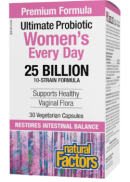
- 25 billion* CFU
- Total bacterial culture
- 22.15 billion CFU
- Lacto-probiotic blend (Lacticaseibacillus paracasei (R0215), Lacticaseibacillus rhamnosus (GG), Lactiplantibacillus plantarum ROSELLA (P17630®) Lactiplantibacillus plantarum (R1012), Lactobacillus acidophilus (R0418), Lactobacillus helveticus (R0052), Lacticaseibacillus rhamnosus (R0011))
- 2.85 billion CFU
- Bifido-probiotic blend (Bifidobacterium animalis subsp. lactis (LAFTIB94), Bifidobacterium longum subsp. longum (HA-135), Bifidobacterium bifidum (R0071))
- 12mg
- Vitamin C (ascorbic acid)
Non-Medicinal Ingredients:
Vegetarian capsule (carbohydrate gum [cellulose], purified water), potato starch, vegetable grade magnesium stearate (lubricant).
Consult a health care practitioner prior to use if you have fever, vomiting, bloody diarrhea, or severe abdominal pain. Stop use and consult a health care practitioner if symptoms of digestive upset (e.g., diarrhea) occur, worsen, and/or persist beyond 3 days. Do not use this product if you have an immunecompromised condition (e.g., AIDS, lymphoma, patients undergoing long-term corticosteroid treatment). Keep out of the reach of children.
 Veggie Caps
30 V-caps
Recommended adult dose: 1 capsule daily or as directed by a health care practitioner. Take at least 2–3 hours before or after antibiotics.
- Clinically tested strains to help maintain a healthy vaginal microbiome
- Support gastrointestinal health and immune function
- Helps promote favourable gut flora
- One per day
- Free from dairy, sugar, wheat, gluten, soy, corn, egg, fish, shellfish, animal products and GMOs

Trusted Wellness For 60 Years, Sold at National Nutrition.
Based in British Columbia, Natural Factors Canada is one of the largest manufacturers of nutritional products in North America. Natural Factor Supplements origins reach back to the 1950s, & right from day one, they've been fully committed to making products right. Today, Natural Factors vitamins brings you tested and true products like Acidophilus and Bifidus, Ultimate Multi Probiotics, RX Omega-3, Theracurmin, PGX Daily, Whey Factors Protein and Oil of Oregano all of which you can BUY right here at National Nutrition.ca. Read more >- Reviews
- POST A NEW REVIEW
THE ROLE OF PROBIOTICS IN DIGESTIVE WELLNESS
Did you know that diet, environment, stress, medication use, and genetics all affect the quality of our gut microbiome? Indeed, the microbiome refers to the collective community of microorganisms, including bacteria, viruses, fungi, and other microbes, that live in and on the human body. These microorganisms inhabit different parts of the body, such as the skin, mouth, gut, and reproductive organs. Probiotics are critical to the health and diversity of our gut microbiome.
Our microbiome is incredibly diverse and complex, comprising trillions of microorganisms and thousands of species. The human microbiome is crucial to maintaining our health and performing various functions. It interacts with our body's immune, digestive, and metabolic systems and helps synthesize specific vitamins and nutrients. It also aids in developing the immune system, protects against pathogens, and assists in the digestion of certain foods that our body cannot break down on its own. The largest and most diverse population of microbes exists in the gastrointestinal tract, primarily in the colon.
The World Health Organization (WHO) defines probiotics as “living bacteria that are beneficial to the host's health when consumed in adequate amounts.” They are also often called "good” or “friendly” bacteria because they help maintain a healthy balance of microorganisms in our digestive tract and provide several critical health benefits.
Unlocking Probiotics’ Digestive Benefits
Probiotics work by colonizing the gastrointestinal tract and interacting with the existing bacteria in our gut. They help support digestion and also offer numerous other health benefits, including:
Enhancing Gut Health – Probiotics promote a healthy balance of beneficial bacteria in the gut. They can help restore the natural balance of microorganisms that may be disrupted by factors such as antibiotics, poor diet, or stress. This balance is crucial for optimal digestion and absorption of nutrients.
Alleviating Diarrhea – Certain strains of probiotics, such as Lactobacillus rhamnosus GG and Saccharomyces boulardii, have been shown to reduce the duration and severity of infectious diarrhea and antibiotic-associated diarrhea. They can help restore intestinal barrier function.
Managing Irritable Bowel Syndrome (IBS) – Probiotics can heal and alleviate symptoms like abdominal pain, bloating, and altered bowel habits. Some probiotic strains, particularly Bifidobacterium and Lactobacillus species, have shown promise in relieving IBS symptoms and improving bowel function.
Preventing and Treating Antibiotic-Associated GI Issues – Antibiotics kill harmful bacteria and disrupt the beneficial bacteria in the gut, leading to issues like antibiotic-associated diarrhea or C. difficile infections. Taking probiotics alongside antibiotics can help maintain a healthier gut microbiota and reduce the risk of such complications.
Managing Digestive Disorders – Probiotics can help manage all sorts of digestive disorders, including inflammatory bowel disease (such as Crohn's disease and ulcerative colitis) and gastroenteritis.
Enhancing Immune Function – A healthy gut promotes optimal immune function helps modulate immune responses, reduces inflammation, and enhances the body's defences against harmful pathogens.
Choosing the Right Probiotic Supplement for You
Various probiotic supplements are available, each containing different strains and/or combinations of bacteria. Some of the most common include:
- Lactobacillus acidophilus
- Bifidobacterium bifidum
- Lactobacillus rhamnosus
- Saccharomyces boulardii
- Streptococcus thermophilus
- Multi-strain probiotics
It’s important to note that while probiotic strains are not inherently organ-specific, certain strains have a decided preference for or exhibit significantly more robust benefits in specific organs or body systems. This is why selecting a probiotic supplement best matches your health status, and needs is essential.
Enhance Your Health with Probiotics: Closing Insights
Probiotics are generally considered safe for most people and do not have any contraindications to speak of. However, certain individuals, such as those with weakened immune systems or serious underlying health conditions, should consult with a healthcare practitioner before starting supplementation.
Always follow the specific dosing instructions on the product you select. Some probiotics may have specific guidelines, such as taking them on an empty stomach or with a particular type of food for optimal efficacy.
Back to Top ↑
-

Unisex Left Hip Brace (Grey, SM) - 1 Brace
Sale: $101.99
Reg.: $119.99 (Save $18.00)
-

Unisex Shoulder Brace (Grey, SM) - 1 Brace
Sale: $101.99
Reg.: $119.99 (Save $18.00)












