

Free of:sugar, salt, yeast, wheat, corn, soy, egg, milk
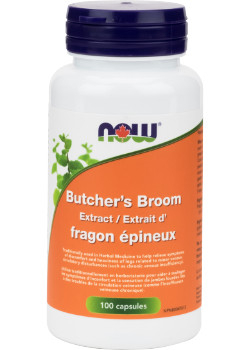
Butchers Broom 100mg - 100 Caps - Now
We're sorry, we no longer carry this item.
Check These out
Suggested, Similar, & Related Products:
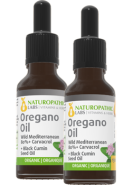
WILD OREGANO ORGANIC FROM NATUROPATHIC LABS.Oregano oil is used for the management of many ailments including fighting off various colds, flus, bacteria, and viruses. Naturopathic Labs Oregano Oil uses a specific species (origanum minutiforum) of wild oregano found only in the highest altitudes of the Mediterranean mountains. It is col...
WILD OREGANO ORGANIC FROM NATUROPATHIC LABS.Oregano oil is used for the management of many ailments including fighting off various colds, flus, bacteria, and viruses. Naturopathic Labs Oregano Oil uses a specific species (origanum minutiforum) of wild oregano found only in the highest altitudes of the Mediterranean mountains. It is cold pressed, steam distilled, chemical free and assayed to contain a minimum of 80% carvacrol content. Now in convenient 15ml travel size! [LIQUID]
+ Earn
14
Reward Points
Sale: $14.99
Reg.: $24.99 (Save $10.00)
In Stock
(Click Add to Select Bonus)
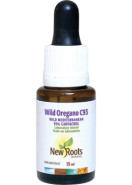
WILD OREGANO C 93 FROM NEW ROOTS HERBAL.C93 Oregano Oil uses a specific species (origanum minutiforum) of wild oregano found only in the highest altitudes of the Mediterranean mountains. It is cold pressed, steam distilled, chemical free and assayed to contain a minimum of 91-95% carvacrol content. Oregano oil is used for the managemen...
WILD OREGANO C 93 FROM NEW ROOTS HERBAL.C93 Oregano Oil uses a specific species (origanum minutiforum) of wild oregano found only in the highest altitudes of the Mediterranean mountains. It is cold pressed, steam distilled, chemical free and assayed to contain a minimum of 91-95% carvacrol content. Oregano oil is used for the management of many ailments including fighting off various colds, flus, bacteria, viruses, parasites and fungus.
+ Earn
26
Reward Points
Sale: $13.69
Reg.: $15.50 (Save $1.81)
In Stock
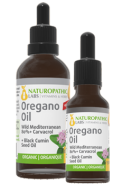
WILD OREGANO ORGANIC FROM NATUROPATHIC LABS.Naturopathic Labs Oregano Oil uses a specific species (origanum minutiforum) of wild oregano found only in the highest altitudes of the Mediterranean mountains. It is cold pressed, steam distilled, chemical free and assayed to contain a minimum of 80% carvacrol content. Oregano oil is used fo...
WILD OREGANO ORGANIC FROM NATUROPATHIC LABS.Naturopathic Labs Oregano Oil uses a specific species (origanum minutiforum) of wild oregano found only in the highest altitudes of the Mediterranean mountains. It is cold pressed, steam distilled, chemical free and assayed to contain a minimum of 80% carvacrol content. Oregano oil is used for the management of many ailments including fighting off various colds, flus, bacteria, and viruses. [LIQUID]
+ Earn
29
Reward Points
Sale: $29.99
Reg.: $39.99 (Save $10.00)
In Stock
(Click Add to Select Bonus)
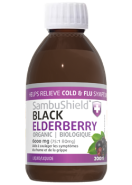
Sambu Shield Black Elderberry Syrup from Naturopathic Labs is an organic elderberry supplement used to help relieve symptoms caused by colds and flus including cough and sore throat. Used for centuries, Elderberries are known to have excellent antioxidant and anti viral properties that can help stimulate and support a healthy immune re...
Sambu Shield Black Elderberry Syrup from Naturopathic Labs is an organic elderberry supplement used to help relieve symptoms caused by colds and flus including cough and sore throat. Used for centuries, Elderberries are known to have excellent antioxidant and anti viral properties that can help stimulate and support a healthy immune response to infections. [LIQUID]
+ Earn
19
Reward Points
Sale: $19.99
Reg.: $29.99 (Save $10.00)
In Stock
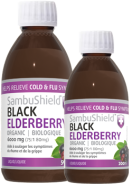
Sambu Shield Black Elderberry Syrup from Naturopathic Labs is an organic elderberry supplement used to help relieve symptoms caused by colds and flus including cough and sore throat. Used for centuries, Elderberries are known to have excellent antioxidant and anti viral properties that can help stimulate and support a healthy immune re...
Sambu Shield Black Elderberry Syrup from Naturopathic Labs is an organic elderberry supplement used to help relieve symptoms caused by colds and flus including cough and sore throat. Used for centuries, Elderberries are known to have excellent antioxidant and anti viral properties that can help stimulate and support a healthy immune response to infections. [LIQUID]
+ Earn
39
Reward Points
Sale: $39.99
Reg.: $69.99 (Save $30.00)
In Stock
(Click Add to Select Bonus)
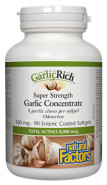
LOWER YOUR BLOOD PRESSURE WITH GARLIC RICH FROM NATURAL FACTORS. GARLIC RICH (formerly GARLIC FACTORS) FROM NATURAL FACTORS. Offering 100% pure garlic, enteric coated to ensure high bioavailability. Garlic Rich contains 8000 mcg of allicin, alliin, gamma-glutamylcysteines per softgel and is equivalent to 8 whole cloves of fresh garlic....
LOWER YOUR BLOOD PRESSURE WITH GARLIC RICH FROM NATURAL FACTORS. GARLIC RICH (formerly GARLIC FACTORS) FROM NATURAL FACTORS. Offering 100% pure garlic, enteric coated to ensure high bioavailability. Garlic Rich contains 8000 mcg of allicin, alliin, gamma-glutamylcysteines per softgel and is equivalent to 8 whole cloves of fresh garlic. The unique proprieties of garlic have been known for centuries, often helping to effectively lower cholesterol and blood pressure. [SOFTGEL]
+ Earn
12
Reward Points
In Stock
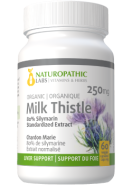
Formulated by Naturopathic Labs, Milk Thislte is 80% Silymarin & is standardized to provide an optimal supplement to support detoxification. Naturopathic Labs Milk Thistle is organic and is an herbal remedy that supports liver function, digestive disturbances and overall detoxification. [VCAPS]
Formulated by Naturopathic Labs, Milk Thislte is 80% Silymarin & is standardized to provide an optimal supplement to support detoxification. Naturopathic Labs Milk Thistle is organic and is an herbal remedy that supports liver function, digestive disturbances and overall detoxification. [VCAPS]
+ Earn
14
Reward Points
Sale: $14.99
Reg.: $17.99 (Save $3.00)
In Stock
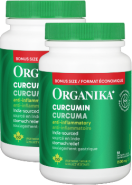
500 MG CURCUMIN FROM ORGANIKA.Containing 95% active ingredient (turmeric root), Organika's Curcumin is derived from quality turmeric powder from India. Noted for its bright colour, Curcumin contains potent antioxidants & anti-inflammatory phyto nutrients. [CAPSULE]
500 MG CURCUMIN FROM ORGANIKA.Containing 95% active ingredient (turmeric root), Organika's Curcumin is derived from quality turmeric powder from India. Noted for its bright colour, Curcumin contains potent antioxidants & anti-inflammatory phyto nutrients. [CAPSULE]
+ Earn
148
Reward Points
Sale: $49.99
Reg.: $99.99 (Save $50.00)
In Stock
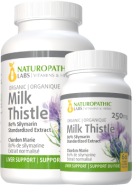
Formulated by Naturopathic Labs, Milk Thistle is 80% Silymarin & is standardized to provide an optimal supplement to support detoxification. Naturopathic Labs Milk Thistle is organic and is an herbal remedy that supports liver function, digestive disturbances and overall detoxification. [VCAPS]
Formulated by Naturopathic Labs, Milk Thistle is 80% Silymarin & is standardized to provide an optimal supplement to support detoxification. Naturopathic Labs Milk Thistle is organic and is an herbal remedy that supports liver function, digestive disturbances and overall detoxification. [VCAPS]
+ Earn
34
Reward Points
Sale: $34.99
Reg.: $41.99 (Save $7.00)
In Stock
(Click Add to Select Bonus)
Or, Shop our Latest Deals:
Shop Now >
product description:
BUTCHERS BROOM FROM NOW FOODSNOW Butchers Broom 100 mg works to improve inflammatory conditions, swelling, varicose veins, hemorrhoids, carpal tunnel syndrome, bladder and kidney problems. Butcher's Broom is a member of the lily family that grows in the Mediterranean. [CAPS]
Provide
- 200mg
- Butcher's Broom
Other ingredients:
Rice Flour
Rice Flour
Important Information:
Format
 Capsules
100caps
Dosage
As a dietary supplement, take 2 capsules 1-3 times daily
Product Information:
- Decreases swelling
- Helps with Varicose veins
- Supports bladder & kidney health
- From the Lily family
- Easy to take capsule form

Since 1968 NOW has been a leader in the natural products industry. NOW Foods is an award-winning and highly respected manufacturer of vitamins, minerals, dietary supplements and natural foods. Now Foods brings you over 1600 Natural Foods, Supplements, Sports Nutrition and Personal Care Products. NOW supplements are high quality products at affordable prices. Read more >
What Customers Are Saying:
- Reviews
- POST A NEW REVIEW
More Info
Bladder & Kidney Health
Infections of the urinary tract are quite common, especially in women. Infections usually begin when bacteria colonize the bladder lining and cause inflammation (cystitis). The infection may spread up into the kidney causing nephritis or to the prostate causing prostatitis.
Interstitial cystitis is a chronic infection between the bladder lining and muscular layer. Its exact cause is unknown but it is usually non-infectious and occurs subsequent to several cystitis episodes.
Factors that predispose an individual to bladder infections are poor hygiene, the use of perfumed of coloured hygiene products, antibiotic use, oral contraceptive use, catheter use, sexually transmitted diseases, stress and poor nutrition.
Symptoms of cystitis are urinary frequency and urgency with burning pain on urination. Emptying the bladder may not relieve the symptoms. The urine may be cloudy or "coke coloured", due to the presence of blood. Lab testing of the urine reveals the presence of bacteria. Symptoms can be mild, with gradual onset or severe, with a quick onset. Fever and lower back pain signal that the kidney is affected. The symptoms of interstitial cystitis are the same but are usually recurring and lab testing is negative for bacteria.
Conventional treatment of cystitis involves the use of antibiotics to clear up the current infection. However, the body becomes susceptible to subsequent infections if friendly bacteria are not replaced. The overuse of antibiotics has also lead to antibiotic resistant strains of urinary tract pathogens. Individuals can help to minimize resistance by using antibiotics sparingly and always taking recommendations until they are finished.
Varicose Veins
Varicose veins are swollen, enlarged veins occurring on the lower leg and occasionally the abdomen. They may start as small "spider" veins, and then gradually become larger over time, often becoming progressively painful. Several factors contribute to the development of varicose veins: weakening of the vessel walls, faulty valves and added pressure in the area.
Vein walls may become weak due to deficiencies in important nutrients such as bioflavanoids and vitamin C. When the vein wall weakens, the blood inside presses against it, and causes it to balloon out, becoming varicose because of the loss in elasticity.
Valves can become faulty primarily due to poor circulation from a lack of exercise. However, they also need bioflavanoids to function effectively and to maintain their shape and when you do not ingest enough, the flow of blood is affected, causing further ballooning of the vein wall.
Increased pressure in the affected are can be caused by prolonged periods of sitting or standing with the accompanying impairment in circulation and pooling of blood.
Other factors can include: obesity, genetics, hormonal changes like pregnancy, constipation, and hot weather.
When a vein is varicose, it will usually appear purple or blue underneath the skin. They are often raised up from the surface of the skin, creating a bumpy texture. They can ache dully, but if knocked against something hard can hurt quite a lot.
Heavy, tired and aching legs are the most common symptoms of varicose veins. Swelling, leg cramps, itchy and thin skin, ulcers and blood clots may also occur as the condition worsens. The symptoms are improved when walking and by elevating the legs.
Back to Top ↑








