

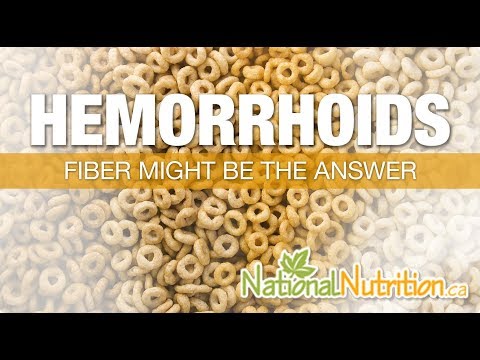
Hemorrhoids
Updated Jun. 25th, 2026 | Read Time: 4 Minutes | What You Will Learn:
- Symptoms & Signs of Hemorrhoids
- Treatment Options For Hemorrhoids
- Lifestyle Changes
- Topical Treatments For Hemorrhoids
- Dietary Changes
- Supplements for Hemorrhoids
- Hemorrhoid Prevention Tips
- Nutritional Information
- Reader Comments (7)
Hemorrhoids are swollen and distended veins occurring in the rectal and anal area. They are caused by increased pressure in the area and a weakening of the vessel walls. These effects can be caused by constipation, poor diet, obesity, hormonal changes (like those in pregnancy) and prolonged periods of sitting or standing.
What Are Symptoms & Signs of Hemorrhoids?
Hemorrhoids can be asymptomatic, only symptomatic during flare-ups or constantly bothersome. Pain and itching are the most common symptoms. These are usually worse during and after a bowel movement. Bleeding and burning can also occur. In more severe cases, the hemorrhoid may protrude externally and can look like a hanging “bunch of grapes”.
What Are Treatment Options For Hemorrhoids?
Conventional treatments for hemorrhoids include both medication and/or surgery. Topical treatments may contain heavy metals and anesthetics. The medication in suppositories can be easily absorbed into the body through the colonic mucosa; pregnant women should proceed with caution. Pain medications like aspirin and ibuprofen might cause more harm than good since they are blood thinners and can increase bleeding. If taking painkillers for hemorrhoids, the best option is acetaminophen. Surgical interventions, which are aimed at reducing or removing hemorrhoids, can be successful but must be followed with appropriate diet and lifestyle changes to prevent recurrence.
Lifestyle Changes
Hemorrhoids are benefited by regular exercise and reducing stress. Be sure to never suppress the urge to defecate. Do not strain to pass stool because it can contribute to hemorrhoid formation. Minimize straining by ensuring that your thighs are parallel to the floor, or with your knees higher than your thighs, when sitting on the toilet. Use a footstool if necessary. Avoid strong laxatives, because they also increase internal straining.
Topical Treatments For Hemorrhoids
Topically apply Aloe Vera gel to the anus to relieve pain and soothe the burning sensation. Witch Hazel is an astringent that tightens the blood vessels and stops bleeding. It can be applied several times daily with a cotton pad as needed. It is important to keep the area clean to prevent infection in the irritated mucous membrane. There are numerous herbs that can be steeped into teas and used as a poultice. These can often be as effective as conventional creams and ointments (think Preparation-H). You can try Bayberry, Calendula, Chamomile, Goldenseal, Elderberry, Slippery Elm and Yarrow. Using teas made from one or any combination of these herbs may also be used as a wash after bowel movements. There are a number of homeopathic preparations that can also be used topically to help relieve the symptoms of hemorrhoids.
Dietary Changes
One of the most important dietary changes involves a high fibre diet. Fibre adds bulk to the stool and maintains regularity. Eat whole grain products, fruits and vegetables. Eat at least one salad of raw vegetables daily. Consume dark green, leafy vegetables as a source of Vitamin K to help blood clotting. Eat citrus fruits and berries for bioflavonoids, which strengthen capillaries. Be sure to drink 2L of filtered water daily to soften stools and maintain regularity. You can also use 1 tbsp of flax seed oil, or other healthful Omega 3 oils with each meal to combat constipation. Avoid constipating and irritating foods such as dairy products, spicy food, fats, processed foods, salt, alcohol, coffee, chocolate, cocoa, cola and black tea.
Supplements for Hemorrhoids
Internally, there are a number of supplements that can be used to support vein health. Bioflavonoids can be combined with vitamin C to help strengthen the vein walls and prevent bulging. For more information, please see our Vitamin C and Bioflavonoid articles. Some particular bioflavonoid supplements are Diosmin, Hesperidin, Rutin, Quercetin, and Pycnogenol. Some homeopathics may also help to treat and prevent hemorrhoids, especially combination formulas targeted to that effect. Herbs that can be taken internally to help with hemorrhoids include: Butcher’s Broom, Horse Chestnut, and Bilberry. Often, vein health formulas can be used to prevent the formation of hemorrhoids. These formulas contain a combination of the above-listed substances.
Hemorrhoid Prevention Tips
Avoid remaining stationary for long periods of time, as it can stagnate the circulation. Instead, practice pelvic rocking and pelvic circling to increase circulation to the area. Sit on soft surfaces, but do not use a donut-shaped pillow. Those pillows actually increase pressure on the vessels and can worsen hemorrhoids. Performing Kegel exercises can also help to strengthen the pelvic floor and prevent backflow and pooling of venous blood in the area.













Hemorrhoids are not an easy thing to live with. Diet and lifestyle can affect them positively or negatively so the advice in this article is very useful. The part about ensuring that your thighs are parallel to the floor, or with your knees higher than your thighs, when sitting on the toilet is really useful. You can get just a cheap step stool or a specially made stool for in the bathroom. Either way, that's a very helpful tip when using the bathroom.
Hello Stephanie,
We're glad this article provided some insight and new knowledge. Eastern cultures have adapted some of these tips, such as squatting, and are healthier for it.
Have a healthy day!
Fiber is a key nutrient that one needs to take daily to avoid hemorrhoids and constipation. This article will give other essential info as well to keep hemorrhoids away. Aloe vera is great but keeping the intestines moving is the trick.
Symptoms of hemorrhoids may sometimes be brought on by activity. Vigorous exercise, such as heavy weight lifting, or any activity that causes exertion, straining or bearing down can cause hemorrhoids to swell.
So, exercise may make symptoms worse temporarily, but the hemorrhoids will not permanently worsen. There is no reason to avoid exercise because of hemorrhoids, unless it causes symptoms that you find unacceptable.
Hello Paul,
Indeed, exercise is not necessarily the enemy. In this case, some exercises may exacerbate the issue, but with modifications, exercise is still a healthy practice. We're glad you are enjoying and learning from our articles on health concerns!
Have a healthy day.
Hemorrhoids sound terrible. I have a friend who deals with them and they are clearly no fun. I thought that fiber might not be so good for increasing frequency of bowel movements potentially, but it makes sense that if things...ummmm...go more smoothly, that might be better from a hemorrhoid sense. Also, I did not think of consuming bioflavonoids to strengthen capillaries and thus help with hemorrhoids but that is such a cool healthy hack! I will definitely be sharing this one with my friend. Thank you for another interesting article, NN!: I'm sure this one will be helpful for quite a few people :)
Hello Rachel,
Ouch indeed! This ailment can be a tough one. Yes, nutrients such as fibre, which most North American's are low in, can help with issues like hemorrhoids and constipation. Thank you for sharing the highlights you learned from this article. You can learn more about the benefits of bioflavanoids here: https://www.nationalnutrition.ca/articles/supplements/bioflavonoids/