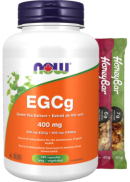
- 400mg
- Green Tea Extract (Camellia sinensis) (Leaf) (Standardized Extract) (Contains 4mg of Caffeine) [min. 98% Total Polyphenols, 80% Total Catechins, and 50% EGCg (Epigallocatechin Gallate) (200 mg)]
- 50mg
- Decaffeinated Green Tea (Camellia sinensis)
Cellulose (capsule), Silica and Magnesium Stearate (vegetable source)
Free of all common allergens, including: wheat, dairy, eggs, corn, and yeast.
 Veggie Caps
180 V-caps
As an herbal dietary supplement, take 1 Vcap 1-2 times daily, preferably with meals.
- Antioxidant Support
- Protective against chemical and environmental assault on tissues
- Helps to support healthy cell cycle regulation
- Green tea may correct cholesterol imbalances by raising HDL and lowering LDL cholesterol, while preventing LDL from oxidizing
- Green tea has been shown to help maintain levels of desirable intestinal bacteria
- 1 VCap provides the phytonutrient content equal to about 2-3 cups of green tea

- Reviews
- POST A NEW REVIEW
Reviews By Rating
helpful votes
1
1 customers found this product review helpful
One capsule of NOW Green Tea Extract with 200 mg EGCg posesses the phytonutrient content equal to about 2-3 cups of green tea.
Green Tea Extract contains numerous compounds, including Polyphenols and Catechins, that provide potent antioxidant benefits. One Catechin in particular, EGCg, has demonstrated extraordinary free radical quenching power in laboratory studies.
How much caffeine is in NOW Green Tea capsules, and what is the level of active components?
Less than 1% caffeine content, naturally occurring (versus one cup of green tea's roughly 40 mg. of caffeine). There should be only around 3 mg. of caffeine, per capsule.
Studies have identified a number of different components in Green Tea Extract that may be responsible for its benefits. The most prevalent compounds are polyphenols, of which catechins are the most important. NOW EGCg Green Tea caps contain an Total EGCg content: 50% (200 mg.) (Epigallocatechin gallate, a Catechin), Total Catechins content: 80% (Catechins are a form of Polyphenol) and Total Polyphenols content: 98%.
Green Tea & Heart Health
Green tea's polyphenols have been well studied for their pharmacological activity and have proven to have many benefits for cardiovascular health.
Green tea intake is shown to decrease levels of LDL cholesterol, the cholesterol responsible for cholesterol plaques and the storage of fat, and triglycerides. Green tea also increases levels of HDL cholesterol, which is responsible for moving stored fat to the liver for processing and excretion from the body. HDL cholesterol protects against plaque formation. It also improves blood circulation and decreases inflammation in vessels. Thus green tea can be used to prevent stroke and heart attack. The polyphenols are also antioxidants, protecting cells from oxidative damage. Free radicals are unstable molecules that in their bid to become more stable must bump into healthy cells and cause damage.
Green Tea & Weight Loss
Studies have shown Green Tea to have a significant effect on the body's ability to burn fat for energy. In particular a catechin called epigallocatechin gallate or EGCG has proven to safely enhance thermogenesis, resulting in weight loss.
The Importance of Antioxidants
Antioxidants are a class of nutrients that protect the body from damage caused by different factors, most importantly oxidative damage caused by substances called free radicals. Free radicals are known as "reactive oxygen species", or ROS. They are produced when your body uses oxygen for energy. Just as fire emits smoke as a by-product, ROS are emitted from the conversion of oxygen to energy in the human body, eventually causing oxidative damage to body systems. Free radicals are also created when the body is exposed to pollution, cigarette smoke, car exhaust and other harmful environmental toxins.
What makes a free radical a free radical? Free radical molecules are missing the electron in their atomic composition. They attack other molecules and attempt to steal their electrons, thus creating another free radical. This oxidation process continues until key biological molecules and even genes become permanently damaged from electron loss, lowering the immune system's response to disease and adversely affecting other body systems. Scientists now believe this process is also responsible for the body's decline as we age. This theory, known as "the free radical theory of aging", was first proposed by Dr. Denham Harman in 1954. Over time, if left unchecked, free radicals cause oxidative damage to a wide range of tissues, organs and body systems, slowly damaging more molecules and decreasing immune response. Theoretically, this is why the elderly are so much more fragile and susceptible to disease, much more so than their younger counterparts.
There are different types of antioxidants, and most work better when paired with other antioxidants. This is called synergism. Vitamins can be antioxidants, such as vitamins C and E. The tripeptide glutathione, loosely classified as an amino acid, acts as an antioxidant, along with other true amino acids such as methionine. The raw herbs and vegetables we consume contain natural antioxidants called bioflavonoids and carotenoids, which are effective antioxidants on their own, but are more effective when synergistically combined with other antioxidants. Together these nutrients protect your cells from electron robbery at the hands of larcenous free radicals, protecting the body from disease and slowing the inevitable signs of aging.
Back to Top ↑