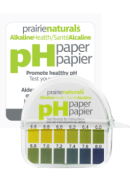
Do not place the paper directly in your mouth. For in-vitro use only. pH Strips can only measure saliva & urine
 Roll
Roll
1 Roll
Test your pH daily. Test your own urine first thing in the morning, compare it with the pH chart. Though the urine test will provide the most accurate results, you could perform a proper saliva test. First thing in the morning, rinse your mouth with clean water, then deposit a small amount of the saliva into a container. Place the edge of the strip of pH paper into the droplet of saliva, compare it with the pH chart.
- Measure your acid/alkaline balance
- Colour coded
- Scale of pH runs from zero (acidic) to 14 (alkaline)
- Ideal for monitoring healthy diet

- Reviews
- POST A NEW REVIEW
Reviews By Rating
helpful votes
6
6 customers found this product review helpful
WHAT DOES "PH" STAND FOR AND HOW IS IT MEASURED?
The term pH stands for "potential hydrogen" and measures hydrogen high in concentration of a solution. It is a measure of the relative acidity or alkalinity of a solution. the pH level indicates the body's acid/alkaline balance and tells the health of an individual.
The scale runs from zero to 14. Zero is totally acidic and 14 is totally alkaline. The middle of the scale, at 7, is neutral. Quality water has a pH of 7.
An ideal range for pH should be 6.2 to 7.4, typically fluctuating as follows:
6.2 to 7.0 at 7:00 a.m.
6.6 to 7.2 at 3:00 p.m.
7.0 to 7.4 at 9:00 p.m.
To get an accurate measure of your state of health, it is recommended that pH levels be recored three times a day - morning, afternoon and night- for 30 day. Any measurment of saliva or urine is acceptable, as long as you perform your pH test at the approximately same time each day.
Acidosis
If your pH level ranges between 4.5 and 5.5. In initial stages of acidosis, energy may still be excellent. However. over time, the body will go into "burn-out" mode as the aging process accelerates.
What Causes Excess Acid In The Body?
It could be:
Easting too many proteins, grains or dairy products
Strenuous exercise
Excess stress
Excess acid is excreted in urine, and is a signal that the body chemistry is not in balance. The acid level in the body may be a factor in determining an individuals health.
What Happens When The Body Is Too Acidic?
While there are varying views in the scientific community, some researchers believe that your health can be impaired as a result of the following effects:
- Free radical oxidation occurs with greater ease, while antioxidant activity is impaired.
- Vitamins and minerals from foods or supplements are not absorbed well.
- Friendly bacteria in the small intestine die and the immune system is impaired.
- Connective tissue becomes weakened causing skin and hair to lose their tone.
- Sleep patterns are disturbed.
- Cold, infections, headaches and flu become more common
- Physical and mental energy is depleted, affecting stamina and moods.
Alkalosis
If your pH ranges between 6.8 and 8.0. In this state, suggishness and lethargy are common - the "fires of life" are cooling down. If your pH is 7.5 to 8 or more each testing, this could be a sign that your kidneys are secreting ammonia into your system to try to counterbalance the effects of an acid-producing diet or situation. This situation is serious, and should be addressed immediately.
Can Someone Become Too Alkaline?
It is extremely rare, however it could occur for those whole consume little or no protein. For the vast majority of the population, the problem is too much acid.
A dramatically fluctuating pH level, from high acid to high alkaline could be responsible for mood swings and sudden energy drops.
Back to Top ↑