

- 1.2 billion
- Bifidobacterium breve HA129
- 0.3 billion
- Bifidobacterium longum HA135
- 0.3 billion
- Lactobacillus acidophilus HA122
- 0.9 billion
- Lactobacillus casei HA108
- 3.3 billion
- Lactobacillus rhamnosus HA111
Ascorbic acid, Pectin, Magnesium Stearate, Maltodextrin, Cellacefate, Diethyl Phthalate, Gelatin, Purified water.
This product contains no added: Artificial preservatives, Colour, Corn, Soya, Gluten, Wheat or Yeast.
 Capsules
60 Caps
Take one to three capsules daily on a full stomach or as directed by a health professional.
- Helps to promote overall intestinal health
- 5 active strains with a total of 6 billion active cells
- Enteric coated capsule
- Improves immune system
- Ideal for postantibiotic therapy

- Reviews
- POST A NEW REVIEW
Essential to the health of the intestinal tract, friendly bacteria exist in a delicate balance that can be easily overturned by improper diet; lifestyle factors; antibiotic use; yeast overgrowth; digestive disorders and more. Over 400 species of friendly bacteria populate the colon, some of which we know as acidophilus and bifidus. Supplementing with a good quality probiotic containing these and other strains helps to establish healthful intestinal flora and keep yeast and bacteria away.
The Importance of Probiotics
- Assists in maintaining normal intestinal flora.
- Helpful for digestive disorders including IBS, Heartburn, Gas, etc.
- Replenishes intestinal flora following antibiotic therapy.
- Helpful for lactose intolerance.
- Enhances digestion and assists the synthesis of B vitamins.
- Helps inhibit and reduce Candida (yeast overgrowth).
- Prevents and treats yeast infections, thrush and athlete's foot.
- Enhances nutrient absorption.
- Promotes immune function.
Healthy Intestinal Functions
Some of the most important players in intestinal health are not part of our own body. Friendly intestinal bacteria, often called probiotics, are an essential part of digestion. They break down food particles, manufacture vitamins and prevent the infection of the tract with other microbes. Each bowel movement actually contains millions of these friendly bacteria; they are in a constant state of renewal. Many concerns likeindigestion, gas, bloating andconstipationcan be due to an imbalance of the intestinal bacteria. It is easy to upset this balance by improper diet or taking medications like antibiotics.
Many foods that we eat, other substances we consume and our lifestyles contribute to intestinal disorders. Highly processed foods, alcohol, medications and tobacco are difficult for our body to break down and may also physically damage the digestive lining. Processed foods are also deficient in nutrients so not only does the body have to work extra hard to digest the food, but it also gets depleted of the things it needs to do its work. Water and fibre intake is important to have proper moisture and bulk in the stool and make bowel movements regular.
Stress, anxiety and other emotional concerns put our nervous system in an excited state. Our digestive processes are only fully functional when our nervous system is relaxed. Sedentary lifestyles decrease movement throughout the digestive tract. As our transit time slows there is more opportunity for the re-absorption of processed toxins and greater chance of microbial overgrowth. Slow transit time also dries the stool and makes it more difficult to pass. Our body is designed so that each time we eat a meal we have a bowel movement. Many individuals can be considered constipated and have bowel movements less than once daily. One can eat the most nutritious food but if the intestinal membrane is not in good working order the body will not be able to absorb the nutrients.
Back to Top ↑

-

Beauty Collagen Powder (Bovine) - 300g
Sale: $37.99
Reg.: $46.80 (Save $8.81)
-

Vegessential All In One (Natural Vanilla) - 360g - Progressive Nutr...
Sale: $29.99
Reg.: $34.99 (Save $5.00)
-
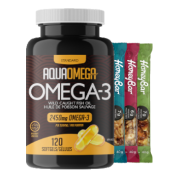
Standard Omega-3 2450mg - 120 Softgels + BONUS
Sale: $31.20
Reg.: $39.00 (Save $7.80)












