

Black Tea
WHAT IS BLACK TEA? Black tea is by far the most popular of teas and is consumed daily in most Western and South Asian countries. Black tea is also extremely popular in our neck of the woods, though it isn’t commonly known as “black tea, but rather as “Earl Grey” – black tea infused with bergamot essential oil, or chai tea – black tea blended with a number of different spices (typically cardamom, cinnamon, ginger, star anise, cloves, pepper, coriander, nutmeg, and fennel). There exist a range of other black tea blends including gunfire tea, English breakfast, Irish breakfast, Assam tea, and others. Read more >
-
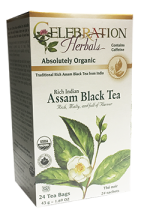
Rich Indian Assam Black Tea from Celebration Herbals is a full bodied black tea that brews up a burgundy-red cup with rich aromas and an uncomplicated, malty flavour. Assam Black Tea contains fresh-picked tea leaves that are gently rolled to break them and left to oxidize, or "ferment." Then they are roasted to seal in the flavours, creating its unique malty characteristic. Enjoy it hot with a ...
+ Earn 5 Reward PointsSale: $5.49
Reg.: $6.84 (Save $1.35)
In Stock -
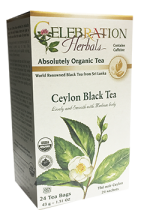
Celebration Herbals Ceylon Black Tea is considered by many tea connoisseur to be the best tea in the world. Originating in Sri Lanka, it has a refreshing, distinctive, medium body and smooth aroma and flavour. With high antioxidant content, Ceylon Black Tea brews to a rich golden colour and can be enjoyed on its own or combined with other herbs and teas. If looking for a milder flavour, simply ...
+ Earn 4 Reward PointsSale: $4.99
Reg.: $6.08 (Save $1.09)
In Stock -
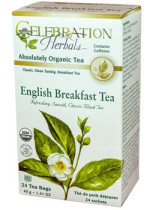
English Breakfast Black Tea from Celebration Herbals is a medium bodied black tea that is low in tannins and brews to a rich red colour. A refreshing, smooth classic, English Breakfast Black Tea is truly a flavourful beverage with a rich aroma that makes an excellent addition to any breakfast, or whenever you feel the need for a relaxing cup of tea. Add a drop of milk and sugar to bring out its...
+ Earn 5 Reward PointsSale: $5.49
Reg.: $6.84 (Save $1.35)
In Stock -
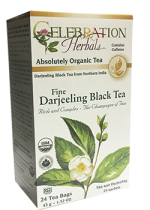
Fine Darjeeling Black Tea from Celebration Herbals is a complex, full-bodied tea that brews to a rich, dark colour and has a delightful fruity/grapey taste and aroma reminiscent of muscat grapes. With a smooth start and clean finish, Darjeeling Black Tea is perfect for any time of day, and is best taken without milk or sugar so all its subtle complexness can be appreciated. Sourced from Norther...
+ Earn 5 Reward PointsSale: $5.49
Reg.: $6.65 (Save $1.16)
Out of Stock
Get Notified When in Stock
-
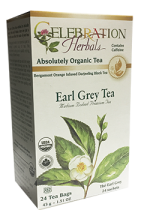
Celebration Herbals Earl Grey Black Tea is a blend of darjeeling black tea that is infused with the natural essential oil of Bergamot Orange, resulting in a mildly tart and refreshing taste. Brewing to a rich red colour, Earl Grey Black Tea has a wonderful citrus perfume and fruity flavour that will allow you to appreciate its smoky undertone. As a medium body tea with low tannins, Earl Grey Bl...
+ Earn 5 Reward PointsSale: $5.79
Reg.: $7.32 (Save $1.53)
Out of Stock
Get Notified When in Stock
-
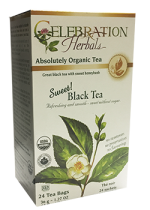
Celebration Herbals Sweet Black Tea is just as the name implies - sweet without added sugar. Classic, smooth, and refined, Sweet Black Tea has all the characteristics you would expect of a traditional American Sweet Tea. Starting with one of the most popular black teas on the market today - Ceylon black tea with the added naturally sweet South African herb Honeybush and a twist of Lemongrass, S...
+ Earn 5 Reward PointsSale: $5.49
Reg.: $6.46 (Save $0.97)
Out of Stock
Get Notified When in Stock
What Makes a Great Black Tea?
Black tea is by far the most popular of teas and is consumed daily in most Western and South Asian countries. Black tea is also extremely popular in our neck of the woods, though it isn’t commonly known as “black tea, but rather as “Earl Grey” – black tea infused with bergamot essential oil, or chai tea – black tea blended with a number of different spices (typically cardamom, cinnamon, ginger, star anise, cloves, pepper, coriander, nutmeg, and fennel). There exist a range of other black tea blends including gunfire tea, English breakfast, Irish breakfast, Assam tea, and others.
Black tea comes from the young leaves and buds of the tea plant, Camellia sinensis. A little-known fact is that black, white, and green tea all come from the very same plant – Camellia sinensis. However, the way the leaves are treated post-harvesting is what determines the tea’s flavour profile. Just as interestingly, while black tea has the highest caffeine count of all the tea varieties – averaging around 42 mg of caffeine per cup (roughly the same as a regular cup of coffee), it is also loaded with antioxidants (polyphenols) that protect our cells and tissues against free radical damage.
Black tea is attributed a grade based on the quality and condition of the tea leaves that have been used to make it. In essence, the size of the tea leaves after harvesting is in large part, what determines its quality. Tea grades vary – the highest being “orange pekoe” and the lowest being “fannings” or “dust”. Indeed, the whole leaves are known to impart more aromatic flavours, while buds and tips provide a stronger aroma, the broken leaves and fannings, on the other hand, impart strength to the brew.
Black Tea - taste, texture, aroma
Black tea consists of the withered, fully oxidized (fermented) green leaves of Camellia sinensis. The oxidation process allows the leaves to develop a richer and more complex flavour. When selecting your black tea remember that many other factors will impart the tea with its own distinct flavour profile, including where it was grown, if it grew near other crops that can affect its flavour, the climate it grew in, if it was fertilized naturally or with chemicals, how long the leaves were allowed to oxidize when processed, what kind of heat treatment the leaves received, etc.
The above being said, black tea is generally stronger, bolder, and richer than green tea, and its flavour profile can range from savoury to sweet, and is also more astringent and bitter than green tea, though when brewed correctly it should be smooth, bold, and flavourful.
Brewing a perfect cup of black tea
When brewing (or liquoring) black tea you should measure out roughly 2 to 3 g (or 1 rounded teaspoon) of tea leaves per 6 ounces of water. Unlike green teas, which turn bitter when brewed at higher temperatures, black tea should be steeped in hot water (190° to 212°F).
Heating the water to this temperature range ensures that you bring out just the right balance of tannins, and the full flavour profile (lower temperatures do not yield as full a flavour, and too high a temperature provides an overly tannic and bitter flavour). The right temperature also results in the highest amounts of antioxidants and the most health benefits.
If your black tea is of high quality, it may be brewed several times by progressively adding 10 sec. to the brew time – i.e. the first brew should be 60 sec., the second brew 40 sec., and the third brew 60 sec.
Active Compounds in Black Tea
- Caffeine – The caffeine content in tea can affect characteristics such as taste, acidity, astringency, and bitterness. The more caffeine a tea has, the more bitter it will be. Caffeine has health benefits and overall supports mood, attention, performance, alertness, processing speed and reaction time.
- Flavonoids – Antioxidant compounds which are largely responsible for tea’s orange-red colour, texture, and mouthfeel sensation, as well as its creaminess. Flavonoids can help with weight loss, and blood sugar balance, as well as promote heart health.
- Gallic acid – One of the main phenolic components of tea. Possesses natural antioxidant, anti-inflammatory, and antimicrobial properties. Helps promote healthy digestion, and supports healthy cognition and heart health.
- Phenolic acids – Potent antioxidants which can help reduce inflammation, promote blood sugar balance, as well as support healthy cell function which has been associated with healthy aging.
- Tannins – A group of powerful antioxidant bioflavonoids present in black tea and are responsible for the astringent, slightly bitter and dry flavours that we enjoy in most types of tea. Our bodies can use tannins to make ellagic acid, which supports healthy cell growth.
- Theanine – An amino acid which has been shown to optimize mental alertness by increasing alpha activity in the brain. It can also help relax the body and soothe symptoms of stress and anxiety as it is also used to support neurotransmitter production. Having a slightly savoury flavour, L-Theanine is responsible for the slightly umami flavour we can recognize in black tea.
Back to Top ↑








