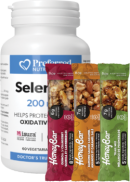
Each capsule contains:
- 200mcg
- L-selenomethione
Non-medicinal Ingredients:
Gelatin capsule (gelatine, purified water), rice starch, vegetable grade magnesium stearate (lubricant).
Gelatin capsule (gelatine, purified water), rice starch, vegetable grade magnesium stearate (lubricant).
Important Information:
There are no known drug interactions with selenomethionine.
Format
 Capsules
60 Caps
Dosage
1 capsule, 2 times daily with meals. During seasonal discomfort, 2 capsules, 2 times daily with meals or as directed by a health practitioner.
Product Information:
- Protects against viruses and bacteria.
- Protects against abnormal cell growth.
- May protect against asthma.
- May reduce the risk of miscarriage.
- Effective in the correction of male infertility.

Wellness made simple with Preferred Nutrition at National Nutrition
Preferred Nutrition makes quality natural health supplements to support your overall health needs. Top products include: MagSense for muscle pain, NEM for joint health, Saw Palmetto Plus Vitex to support hormone balance, Stress B to naturally support stress and UTI drops to help infections naturally. Read more >What People Are Saying:
- Reviews
- POST A NEW REVIEW
Reviews for:
Selenomethionine 200mcg - 60 Caps + BONUS
(1 review)
Reviews By Rating
helpful votes
0
0 customers found this product review helpful
More Info
Selenomethionine Immune Support
Back in the 1950s selenium was established as an essential trace element in the diet for the prevention of disease. Foods that contain selenium include meat, seafood, dairy foods, whole grains, nuts (particularly Brazil nuts in the shell), red Swiss chard, turnips, garlic and orange juice. Since selenium is unevenly distributed in the earth's crust, the amount of selenium in the soil varies around the globe, which makes our reliance on food sources difficult if not impossible to measure. Selenium levels in the body are largely dependent on the amount of the mineral in the diet.
The form of selenium within the diet has an important influence on absorption. L-selenomethionine is readily absorbed from the gastrointestinal tract and is significantly better absorbed and retained in the body than inorganic selenium in the form of selenite or selenate. Organic forms of selenium, such as selenomethionine, are selenium bound to methionine, an essential amino acid.
In one study, blood levels of selenium were studied in four groups of men and women taking Selenate, Selenite, L-Selenomethionine and High Selenium Yeast. During the three months' duration of the study, glutathione peroxidase activity was also recorded. All forms of selenium gave rise to steady levels of glutathione peroxidase, when measured after one month. However, the selenium levels in the groups receiving L-Selenomethionine and high selenium yeast, showed a steady rise during the whole period, whereas those receiving the other forms levelled off after a period of one to three months.
In another study, conducted in New Zealand, the urinary excretion of women taking either selenate or selenomethionine was studied over the long term. The results showed that considerably more selenate was excreted than selenomethionine.
Those persons with low nutritional selenium status have an increased risk of cardiovascular disease and high rates of cell growths of the liver, breast, esophagus, stomach, colon, rectum, lung, urinary tract, prostate, female reproductive organs, thyroid, blood, oral, and skin.
Selenium and Heart Disease
Where the intake of dietary selenium is lowest, so the incidence of cardiovascular disease is highest. Significantly, it has been shown that supplementation with selenium increases the ratio of HDL (good) cholesterol to LDL (bad) cholesterol and inhibits platelet aggregation.
Selenium and Immune Function
The body's natural antioxidant enzyme, Glutathione peroxidase, is dependent on the presence of selenium. Therefore, when selenium levels are low, this enzyme is severely compromised. This, in turn, results in suppression of the immune system, including arrested development of important white blood cells. Adding selenium to the diet results in restoration and/or increased immune function
Hepatitis/Liver Disease
Selenium levels appear to be severely depleted in individuals suffering from liver disease, specifically cirrhosis and hepatitis. Low selenium levels are also found in those with high total cholesterol levels.
Rheumatoid Arthritis
A double-blind study found supplementing 200 mcg per day of selenium for three months significantly reduced painful joint involvement in those people with rheumatoid arthritis.
Asthma
Reduced blood selenium levels have consistently been found in adults with Asthma. The International Study of Asthma and Allergies in Childhood (ISAAC) found evidence that selenium-rich foods, such as fish and cereals/whole grains, may protect against asthma in children.
Male Infertility
Selenium has been long recognized as essential for successful human reproduction as it is required for sperm maturation and motility, and may reduce the risk of miscarriage. Human studies have shown low dose selenium supplementation to be effective in the correction of male infertility.
Heavy Metal Toxicity
Selenium may have a protective effect against mercury and other heavy metal toxicities. Experimental findings have shown that selenium-deficient rodents are more susceptible to the prenatal toxicity of methylmercury. Selenium is an antagonist to cadmium, especially in acute exposures.
Hypothyroidism
In a randomized, prospective, blinded study in 36 patients with autoimmune thyroiditis, selenium supplementation of 200 mcg per day for three months decreased thyroid specific antibodies from 100 percent to 63.6 percent. Even more importantly, nine of 36 patients had complete normalization of thyroid antibody concentrations.
Back in the 1950s selenium was established as an essential trace element in the diet for the prevention of disease. Foods that contain selenium include meat, seafood, dairy foods, whole grains, nuts (particularly Brazil nuts in the shell), red Swiss chard, turnips, garlic and orange juice. Since selenium is unevenly distributed in the earth's crust, the amount of selenium in the soil varies around the globe, which makes our reliance on food sources difficult if not impossible to measure. Selenium levels in the body are largely dependent on the amount of the mineral in the diet.
The form of selenium within the diet has an important influence on absorption. L-selenomethionine is readily absorbed from the gastrointestinal tract and is significantly better absorbed and retained in the body than inorganic selenium in the form of selenite or selenate. Organic forms of selenium, such as selenomethionine, are selenium bound to methionine, an essential amino acid.
In one study, blood levels of selenium were studied in four groups of men and women taking Selenate, Selenite, L-Selenomethionine and High Selenium Yeast. During the three months' duration of the study, glutathione peroxidase activity was also recorded. All forms of selenium gave rise to steady levels of glutathione peroxidase, when measured after one month. However, the selenium levels in the groups receiving L-Selenomethionine and high selenium yeast, showed a steady rise during the whole period, whereas those receiving the other forms levelled off after a period of one to three months.
In another study, conducted in New Zealand, the urinary excretion of women taking either selenate or selenomethionine was studied over the long term. The results showed that considerably more selenate was excreted than selenomethionine.
Those persons with low nutritional selenium status have an increased risk of cardiovascular disease and high rates of cell growths of the liver, breast, esophagus, stomach, colon, rectum, lung, urinary tract, prostate, female reproductive organs, thyroid, blood, oral, and skin.
Selenium and Heart Disease
Where the intake of dietary selenium is lowest, so the incidence of cardiovascular disease is highest. Significantly, it has been shown that supplementation with selenium increases the ratio of HDL (good) cholesterol to LDL (bad) cholesterol and inhibits platelet aggregation.
Selenium and Immune Function
The body's natural antioxidant enzyme, Glutathione peroxidase, is dependent on the presence of selenium. Therefore, when selenium levels are low, this enzyme is severely compromised. This, in turn, results in suppression of the immune system, including arrested development of important white blood cells. Adding selenium to the diet results in restoration and/or increased immune function
Hepatitis/Liver Disease
Selenium levels appear to be severely depleted in individuals suffering from liver disease, specifically cirrhosis and hepatitis. Low selenium levels are also found in those with high total cholesterol levels.
Rheumatoid Arthritis
A double-blind study found supplementing 200 mcg per day of selenium for three months significantly reduced painful joint involvement in those people with rheumatoid arthritis.
Asthma
Reduced blood selenium levels have consistently been found in adults with Asthma. The International Study of Asthma and Allergies in Childhood (ISAAC) found evidence that selenium-rich foods, such as fish and cereals/whole grains, may protect against asthma in children.
Male Infertility
Selenium has been long recognized as essential for successful human reproduction as it is required for sperm maturation and motility, and may reduce the risk of miscarriage. Human studies have shown low dose selenium supplementation to be effective in the correction of male infertility.
Heavy Metal Toxicity
Selenium may have a protective effect against mercury and other heavy metal toxicities. Experimental findings have shown that selenium-deficient rodents are more susceptible to the prenatal toxicity of methylmercury. Selenium is an antagonist to cadmium, especially in acute exposures.
Hypothyroidism
In a randomized, prospective, blinded study in 36 patients with autoimmune thyroiditis, selenium supplementation of 200 mcg per day for three months decreased thyroid specific antibodies from 100 percent to 63.6 percent. Even more importantly, nine of 36 patients had complete normalization of thyroid antibody concentrations.
Back to Top ↑