

- 250mg
- Emblica officinalis (Amla)
- 250mg
- Terminalia belerica (Bahara)
- 250mg
- Terminalia chebula (Beceras chebula)
Sodium benzoate. Capsule: hypromellose.
Contains no wheat, gluten, corn, nuts, peanuts, sesame seeds, sulphites, mustard, soy, dairy, eggs, fish, shellfish or any animal byproduct. See Below For Cautions
 Veggie Caps
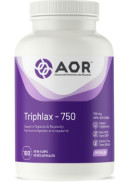
100 V-caps
Take two capsules twice daily with/without food, a few hours before or after taking other medications or health products, or as directed by a qualified health care practitioner. Allow at least six to 12 hours for laxative effect to occur.
- Improves digestion & elimination process
- Regulates liver function
- Detoxifying agent
- Helps to improve proper circulation
- Beneficial for liver function

Innovative Formulas by AOR Canada found at National Nutrition
AOR Canada is the innovative formulators of Canada’s best-selling antioxidant support, AOR Advanced B Complex and AOR Tri-B12. They are also known for their top bone health supplements, Ortho Adapt and Bone Basics. You can also SHOP AOR's Nattokinase, and trusted Curcumin Ultra, Curcumin Active and Curcumin95 inflammation support at National Nutrition.ca. AOR are leaders in natural health with innovative product development. Read more >- Reviews
- POST A NEW REVIEW
Reviews By Rating
helpful votes
0
0 customers found this product review helpful
Do not take if pregnant or breastfeeding, if you have GI tract constrictions, colon blockage, atonic bowel, appendicitis, IBD, abdominal pain of unknown origin, rectal bleeding, severe dehydration or diarrhea. Consult a health care practitioner prior to use if you are taking thiazide diuretics, corticosteroids, licorice root, products which may aggravate electrolyte imbalance, cardiac glycosides or antiarrhythmic medications, if you have a kidney disorder, fecal impaction or abdominal pain, nausea, vomiting or fever. Reduce dose or discontinue use if you experience abdominal pain, cramps, spasms or diarrhea. Consult a health care practitioner for use beyond seven days or if symptoms persist or worsen.
No Ayurvedic botanical is so often recommended in the Ayurvedic medical texts as triphala, a cleansing and detoxification formula dating back to the Charak and Sushrut Samhitas. "Triphala" literally means "three fruits," and is a balanced mixture of concentrates from the fruits of Emblica officinalis ("Amalaki" in Hindi), Terminalia belerica ("Bihara"), and Terminalia chebula ("Harada"). The same formula is revered in Tibetan traditional medicine as "Bras-Gsum," also meaning "three fruits." These fruits correspond to the three doshas, the elementary constituents of Ayurvedic metaphysiology:
Vata, which is wind, and corresponds with the mind and nervous system; Pitta, which is fire or bile, and whose main responsibility is metabolic transformations, such as the digestion and assimilation of foods, as well as clarity of thought and understanding; and Kapha, which is water or mucus, that is responsible for all anabolic functions, building up and strengthening the body. According to this system, the health of the human body is determined by the balance of these doshas.
Triphala is unique in that it combines tonifying, cleaning and nutritional properties. Each of the three fruits contributes to the beneficial properties of the formulation. Among the known properties of the herbs:
1. Harada (Terminalia chebula) is the small fruit held in the hands of the "medicine Buddha" in Tibetan Buddhist tankas. The fruit possesses a laxative, astringent, lubricant, antiparasitical, antispasmodic and nerve calming properties. It contains anthroquinones similar to those found in rhubarb, which provide part of the reason for its ability to treat acute and chronic constipation; but the herb's traditional uses also include support for nervousness, anxiety and feelings of physical heaviness. Harada also proves to have anti-Vata or antispasmodic properties, such as the reduction of abnormal blood pressure. Chebulin, an active constituent of Harada, has antispasmodic action similar to the drug papaverine.
2. Amalaki (Emblica officinalis) has traditionally been used to treat ulcers, inflammation of the stomach and intestines, constipation, diarrhea, and liver congestion. Amalaki is the best natural source of vitamin C. It has 20 times more vitamin C by weight than do oranges; moreover, unlike synthetic Vitamin C, the C in Amalaki is accompanied by regenerating bioflavonoids. One study found that Amalaki is as effective as antacids in treating dyspepsia (epigastric discomfort) , but slightly superior in supporting the healing of those ulcers.
3. Bihara (Terminalia bellerica) targets imbalances associated with the kapha dosha, corresponding to the earth and water elements in Ayurvedic medicine; it purifies and balances excess mucus, providing support in asthma, bronchial conditions, and allergies. The fruit contains high concentrations of linoleic acid and also helps to bind bile acids. In vitro, bihara has antihelminthic properties, destroying intestinal worm parasites.
One of the most common health complaints facing people as we grow older is occasional bowel irregularity. And in our modern, toxic environment, the importance of keeping the colon clear of residual putrefactive material through regular detoxification has come to the forefront. Ayurveda, the traditional medicine of the Vedic sages, has for centuries offered triphala as a safe, healthy, natural solution to the cleansing of the colon.
But Ayurvedic physicians do not regard triphala as a mere laxative. Rather, it is an effective blood purifier, stimulates bile secretion, detoxifies the liver and other organs, helps digestion and assimilation, stimulates the peristaltic action of the intestinal lining (due to its anthroquinones and other bitters), is tonifying (due to the presence of high vitamin C content and essential fatty acids), supports other organs, and helps in the elimination of toxins. In vitro have also shown that triphala is lethal to a variety of gastrointestinal pathogens, including bacteria such as Salmonella typhii, Shigella, Klebsiella and Pseudomonas, and fungi like Candida albicans. Triphala is useful for all kinds of colonic cleansing and to open blockages from many causes.
Triphala is also one of two Ayurved formulations that are specific in lowering cholesterol and in eliminating lipid deposits from the liver and other organs, as well as reducing blood pressure and treating spastic colon and other intestinal disorders.
One recent molecular finding may explain triphala's traditional use in treating obesity. CCK, or cholecystokinin, is a satiety hormone, released to tell you that you're full, and is especially responsive to fat. Synthetic analogs of CCK are under development by pharmaceutical companies to help people realize that they're full, thereby controlling appetite and supporting healthy weight. Researchers at the BRA Centre for Biomedical Research found that active molecules in triphala bind to the cellular receptor for CCK. The last point is important, since both overeating and obesity disrupt digestion and overburden the gastrointestinal tract, including the liver and bowel. As a result, digestion is compromised, leading to poor nutrient assimilation, imbalances and overgrowth in the intestinal microflora, and putrefaction of ill-digested food. For such conditions, triphala can be highly effective in removing stagnation of both the liver and intestines.
Triphala is a uniquely cleansing tonic that aids in digestion, elimination, and ultimately cleansing and whole-body health.
Back to Top ↑
-
Sale: $23.65
Reg.: $29.99 (Save $6.34)
-

Nocturna (Cherry-Mint) - 500ml
Sale: $26.49
Reg.: $29.14 (Save $2.65)
-

Wobenzym N - 800 Tabs - Wobenzym
Sale: $204.95
Reg.: $307.49 (Save $102.54)












