

Calendula Benefits, Uses & Products
Updated Jun. 21st, 2024 | Read Time: 2 Minutes | What You Will Learn:
- What Is Calendula?
- Health Benefits of Calendula
- Calendula Supplements & Products
- Calendula Cautions & Considerations
- Nutritional Information
- Reader Comments (6)
What Is Calendula?
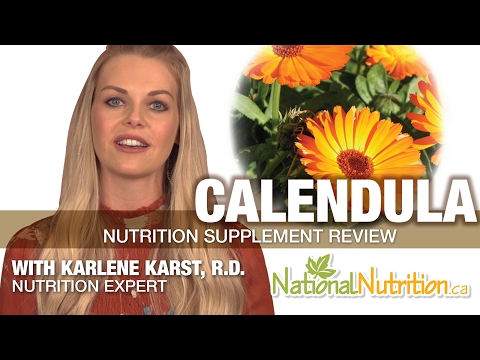
Due to its bright colour, the beautiful Marigold flower was historically thought to elevate people's moods and encourage cheerfulness. Medicinally, calendula is used for its benefits that decrease inflammation and stimulate the growth of skin and mucus membranes.
Extracts of calendula have also been shown to inhibit the growth of bacteria and viruses. All of these medicinal properties make calendula excellent for wound healing and a good addition to your first aid kit.
Health Benefits of Calendula
Calendula is an herb that's been used for many years for its multiple healing benefits. Due to its antibacterial and anti-inflammatory properties, Calendula is commonly used as a topical remedy for burns, cuts, rashes, acne, eczema, psoriasis and any other skin conditions. Some calendula products that are formulated for internal use can be gargled to heal sores, and abrasions in the mouth or stop toothaches.
Other internal benefits of ingestible calendula include soothing the stomach lining and it is often recommended for gastritis and stomach ulcers.
Calendula Supplements & Products
Given the different applications for calendula, topical or internal, it is available in a range of formats. For external use, calendula can be found in many herbal salves and creams. Dried flowers can also be used as a wash or soaked into a poultice.
For internal consumption, dried calendula can also be made into tea or can be found as a supplement in capsule or tincture formats.
Calendula Cautions & Considerations
Calendula should not be used internally in pregnancy because it may lead to miscarriage. Calendula is a member of the ragweed family and should be used with caution by sensitive individuals.













I'm able to buy calendula petals in bulk in my area, and I first tried using them 2 years ago at the suggestion of my natural health practitioner.
I had recently had teeth extracted, and made strong calendula tea to gently swish around my mouth a number of times a day.
I'm not sure if it did anything, but since then I've had it help with irritated areas of my gums that are under my partial dentures. I place some petals inside the dentures, dampen then, and then put the dentures in and leave it for a few hours. It's very soothing. They don't taste bad. :-)
Hello Lily,
That's wonderful you were able to learn from our articles and find a supplement to help with what you needed. Using natural health supplements for their antimicrobial properties is nicer than alternatives and better on your overall health.
Keep healthy & carry on!
I LOVE the benefits of Calendula for skin irritations, helping to heal cuts and general skin care. I haven't tried internally before, but know that it is a powerhouse for aiding skin conditions. I've used it to treat acne, help with my rosacea (helps with inflammation and reduces bacterial growth), sun burns and for helping to heal cuts quickly. It really is a beautiful flower with so many healing benefits. Use with caution as needed, like the article says.
Hello Nicole,
Thank you for sharing! Calendula is great for its healing properties and can help regenerate the skin. It's generally pretty gentle on skin, but should be used on a small test patch first. Glad you enjoyed the read and information about your go-to skin aide.
Stay healthy & well!
I didn't know that Marigold could be used for the skin: how bright and wonderful, especially with the folower and petals being used!! I didn't know that calendula, medicinally, can be used used for its benefits that decrease inflammation and stimulate the growth of skin and mucus membranes. And that calendula is antiviral and antibacterial, though I'm not surprised with what I've learned about amazing herbs and plants from you
Hello Rachel,
We’re glad you enjoyed this article and could learn about its skin benefits.
Since you liked this read, we think you’ll love this one too: https://www.nationalnutrition.ca/articles/health-concerns/skin-health/
Stay healthy & well!