

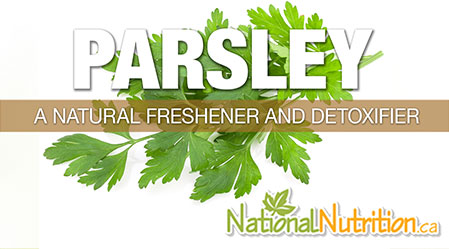
Parsley is a natural freshener and detoxifier
Parsley
Updated Nov. 06th, 2024 | Read Time: 2 Minutes | What You Will Learn:
- Key Uses & Medicinal Benefits of Parsley
- Tips For Using Parsley For Good Health
- Cautions & Considerations
- Nutritional Information
- Reader Comments (2)
Parsley is known as a popular herb and garnish that's been used for centuries. Firstly, it has a pleasant taste and aroma. Secondly, the oils contained in parsley are antibacterial and antifungal, which was important in the days prior to the advent of refrigeration. Thirdly, when chewed after a meal, parsley sprigs decrease bad breath. These realizations are the basis for the popular use of parsley today as a medicinal agent.
Key Uses & Medicinal Benefits of Parsley
Parsley is recommended for fungal infections (like thrush in adults), bacterial infections (especially in the digestive, urinary and respiratory tract) and bad breath. Additionally, parsley contains many different nutrients including chlorophyll (an internal deodorizer), vitamin C and vitamin K.
Tips For Using Parsley For Good Health
Parsley can be used as raw leaves, dried herbs, encapsulated oil or liquid oil. Fresh parsley can be added to dishes or chewed after a meal. The oil contains volatile compounds that can be toxic in high doses and should be used cautiously. A popular way to use parsley oil is as a gargle. Parsley may be found in formulas for urinary tract or respiratory tract health.
Cautions & Considerations
Parsley, when used as a food, has very few side effects. Most side effects and cautions are relevant only when parsley supplements are used. Parsley contains volatile oils (apiole and myristicin) that are toxic in high doses. Parsley supplements should be used with caution by those with impaired liver and kidney function, individuals taking MAO inhibitors or warfarin and individuals with blood disorders.












