

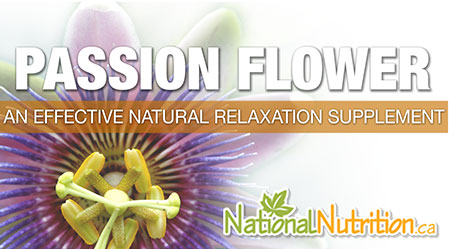
Passion Flower is an effective natural relaxation supplement
Passion Flower
Updated Nov. 06th, 2024 | Read Time: 2 Minutes | What You Will Learn:
- Top Health Benefits & Uses For Passion Flower
- Sedative
- Mood Support
- Main Constituents of Passion Flower
- Chrysin
- Taking Passion Flower Supplements
- Nutritional Information
- Reader Comments (2)
Passion Flower is a vine found along the roadside across North America. It has been used traditionally as a sedative, reducing hyperactivity and anxiety. Passion flower’s chemical components, maltol and ethylmaltol relax areas of the brain and reduce muscle tension. They bind to the same receptors used by sedative medications. Passion flower can be used for stress, anxiety, insomnia, hyperactivity and nervousness.
Top Health Benefits & Uses For Passion Flower
Sedative
Passion flower’s chemical components, maltol and ethylmaltol relax certain areas of the brain and reduce muscle tension.Although the exact mechanism isn’t yet known, it is believed that the passion flower helps to boost GABA levels in the brain, thus promoting relaxation. This allows Passion Flower to benefit anxiety and to help promote sleep in those with insomnia.
Mood Support
Interestingly, in addition to its sedating abilities, some species of passion flower have been found to contain constituents that act as MAO inhibitors, thus providing them with antidepressant properties much like pharmaceutical medications with the same action (eg. Marplan, Nardil, and Parnate).
Main Constituents of Passion Flower
Chrysin
One particular species of passion flower, called Blue passion flower (Passiflora caerulea) is the main source of a substance called chrysin. Chrysin has long been favoured as an estrogen inhibitor in body-building circles, while more recent research has found it to be effective against cardiovascular disease.
Taking Passion Flower Supplements
Dried passion flower plants can be made into tea. Passion flower can also be purchased in capsules or as a tincture. Passion flowers may be found in formulas for relaxing the mind and body and for promoting sleep. The dose of passion flower varies depending on whether it is alone or in a combination formula, with doses ranging from 50-500mg daily in divided doses. It seems to work well when taken with other sedating herbs like valerian.














I didn't know that passion flower had relaxation effects and had never heard of maltol and ethylmaltol before: are these chmical components unique to the passion flower or are they found in other plants too? Anyway, it is cool that the relaxation properties of passion flower can make it a good choice for those suffering insomnia: this condition runs in my family so I definitely will be reading more about passion flower. I find it even more interesting that passion flower can also alleviate depressive symptoms: looks like a flower which really does a lot for the brain!!
Hello Rachel,
Excellent, happy you were able to stumble upon an herbal remedy that offers insomnia support for you and your family. If you'd like to find more natural remedies for insomnia, check out this article: https://www.nationalnutrition.ca/articles/health-concerns/insomnia/
Happy sleeping