

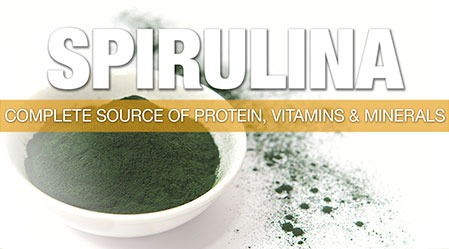
Spirulina is a great source of complete protein, vitamins and minerals.
Spirulina: Uses, Health Benefits, Supplements, Dosage
Updated Feb. 17th, 2026 | Read Time: 4 Minutes | What You Will Learn:
- What is Spirulina?
- Spirulina Health Benefits & Nutritional Profile
- Protein Content in Spirulina
- Healthy Fat Content
- B vitamins in Spirulina
- Carotenoids
- Chlorophyll
- Phycocyanin
- Other Vitamins and Minerals
- How Can I Get More Spirulina?
- Contamination Fears
- Nutritional Information
- Reader Comments (10)
What is Spirulina?
Spirulina is an edible, water-grown cyanobacterium (Arthrospira species) that is often hailed as a complete superfood. Packed with a rich array of vitamins, minerals, and antioxidants, it is also a source of complete protein, making it a staple for vegetarians and vegans. Natural health practitioners recommend spirulina for a broad range of conditions, such as aiding in recovery after illness, managing hypoglycemias, lowering high cholesterol, detoxifying from chemicals or heavy metals, addressing malnutrition, and supporting healthy cell growth and nutrient absorption. Because spirulina is so easy to cultivate and harvest, whether in freshwater ponds or commercial facilities, it's regarded as an incredibly sustainable food resource, offering a low environmental footprint while delivering potent nutritional benefits.
Spirulina Health Benefits & Nutritional Profile
Protein Content in Spirulina
By weight, it contains 60-70% protein. It is a source of complete protein because it contains all of the essential amino acids. It is actually superior to typical plant protein sources, such as legumes, and because of this, it is a great addition to any vegetarian diet. Also, these proportionately high levels of protein can actually help to stabilize blood sugar when spirulina is supplemented between meals. This can help to reduce sugar fluctuations in diabetics and those with hypoglycemia.
Healthy Fat Content
By weight, it is approximately 7% fat, which is almost entirely healthy omega-3 and 6 fats. It is a rich source of GLA, ALA, and linoleic acid. It also contains EPA and DHA, the omega-3 fatty acids also found in fish oil. These healthy fats can help to regulate cholesterol levels and stimulate healthy steroid hormone synthesis, including sex hormones. EPA acts as an anti-inflammatory in the body, and DHA helps to promote proper brain health.
B vitamins in Spirulina
It contains a few different B vitamins, including: B1 (thiamine), B2 (riboflavin), B3 (niacin), B6 (pyridoxine), and B9 (folic acid). Although many companies claim that spirulina is a source of vitamin B12, the kind found in it is not active in humans, so alternative sources of vitamin B12 are still required.
Carotenoids
Some of the nutrients found in spirulina are carotenoids such as: beta-carotene and zeaxanthin. These are strong antioxidants that can help to protect the body against free radicals.
Chlorophyll
Part of the green colour of it is created by the presence of chlorophyll. This nutrient is a potent detoxifier that can help to speed the release of toxins from the bloodstream by binding them in the intestines. Chlorophyll can also help to increase the oxygenation of tissues by nourishing red blood cells. Interestingly, it has also been shown to do the work of hemoglobin in the blood, which is thought to be due to it resembling the human hemoglobin (oxygen-carrying) molecule.
Phycocyanin
Spirulina also contains phycocyanin, a blue-green pigment that has been shown in animal models to increase the survival rate in unhealthy liver cells. Further research is required to establish this effect.
Other Vitamins and Minerals
In addition to the B vitamins, spirulina also contains vitamin C, vitamin A, vitamin E and vitamin D. These are strong antioxidants that perform a number of different functions in the body. It is also a source of important electrolytes and minerals such as potassium, calcium, copper, iron, magnesium, manganese, phosphorus, selenium, sodium, chromium, and zinc. Each of these is essential to the maintenance of health.
How Can I Get More Spirulina?
As a supplement, spirulina is found in tablets, liquid, and powder. Some commercial “green food” smoothies and “energy” drinks contain spirulina. Greens powders also often contain this nutrient due to its rich nutritional benefits. You can take spirulina supplements or make some dishes at home to get more spirulina. Here is the recipe for Spirulina Chocolate Dough Bites.
Contamination Fears
It has been declared safe by the US National Institute of Health. Unfortunately, certain strains of cyanobacteria produce small amounts of toxins, and if these are inadvertently mixed with the spirulina during improper culturing, it can cause small levels of contamination. There is also the potential for heavy metal contamination, depending on the water source from which it is grown. Be sure to use a trusted source for your spirulina to ensure you get all of the health benefits without any potential detriments.













This product was of interest to me as a diabetic who sometimes has difficulty to get my blood sugars as they should. It indicates that spirulina is high in protein and if taken between meals helps to reduce the sugar fluctuation that diabetics sometimes experience. Due to having fibromyalgia, it's interesting to read that the healthy fats in spirulina act as an anti-inflammatory. At my age I do worry about my brain health and again, spirulina is supposed to promote proper brain health.
Hello ynal48,
Spirulina has many great benefits and is a bit of an underrated supplement. It's an excellent source of protein as it contains all the essential amino acids and is made up of 60-70% of protein material. It's a great source of health fat and a slew of other minerals as you've read. Glad you have found a supplement to help regulate your blood sugar levels and keep you satiated between meals. If you'd like to learn more about supplements of interest for those with diabetes, have a read through this article as well:
https://www.nationalnutrition.ca/articles/health-concerns/diabetes/
Stay healthy & well.
I tried this product a few times when I would go to get smoothies and they would add it in, I love the health benefits too, but it makes me nervous reading about the possibility of contamination. I guess that is with anything though and that is why its so important to buy from a trusted source. I recently have been thinking about taking spirulina again so this article was very helpful! Thanks for sharing!
Hello,
Spirulina has so many benefits and nutrients. It's always best to look for organic, clean spirulina and you can add it to so many recipes like baked goods or smoothies!
Enjoy!
I would like to see more info for purposes of keto macros... like are there any carbs or natural sugars to account for. If there is a nutritional info panel on the bottle it would be good to show this... otherwise I have to research/look it up. Otherwise thanks for the great info!
Hello A Liera,
Thank you for your comment, we love hearing from you. You can find more information on Spirulina by manufacturer since they're all formulated differently. Check out the different ones we carry for the info you're looking for. We also think you will enjoy this article too:
https://www.nationalnutrition.ca/articles/supplements/top-8-keto-supplements/
https://www.nationalnutrition.ca/greens/spirulina.html
Have a healthy day!
I would like to take Spirulina but have no idea what dose to uses. I have used it before for healthy weight control.
Hello Eileen,
Thank you for enjoying our articles and for your question. As you've read, Spirulina is packed with many nutrients and minerals to improve your health. As for dose, you should follow the dosing directions on the product label of your supplement of choice. Here are some quality supplement brands to choose from, https://www.nationalnutrition.ca/greens/spirulina.html
Stay healthy & well
Seaweeds are the dark leafy greens of the ocean offering a myraid of health benefits, many of which are in need of more research. Fish get a large sum of their health promoting properties from the algae & microalgae that they consume: so in fact, it is seaweed and not salmon that is the real star. I didn't know that spirulina, specifically, contained EPA and DHA, the omega 3 fatty acids also found in fish oil, but I am definitely not surprised! I also knew that spirulina was rich in protein but find the 60-70% stat that you share quite remarkable. Thank you for this great article!
Hello Rachel,
Thank you for sharing your love for seaweed, it's a remarkable nutrient. Spirulina is a star algae that offers many health benefits, including its EPA & DHA content that can support cognitive functioning. Love that you're enjoying and engaging with our articles. Here, you can learn more about seaweed in general: https://www.nationalnutrition.ca/articles/supplements/seaweed/