

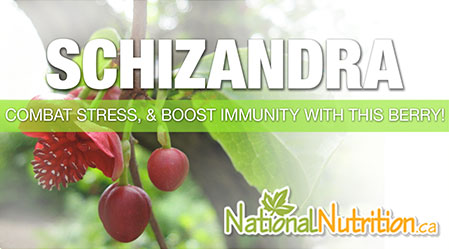
Combat stress, plus boost your immune with this berry!
Schisandra
Updated Feb. 09th, 2026 | Read Time: 3 Minutes | What You Will Learn:
- What is Schisandra?
- Key Health Benefits of Schisandra
- Stress Support
- Menopausal Mental Health/em>
- Antioxidant Ability
- Taking Schisandra Supplements
- Important Information
- Nutritional Information
- Reader Comments (4)
What is Schisandra?
The deciduous creeping vine called magnolia (Schisandra chinensis) that is native to China and Japan. It is also commonly known as Schisandra or Schizandra. The berries of this vine have been used in traditional Chinese medicine for centuries. Its Chinese name is wu wei zi meaning five taste fruit/seed. It is called this because the berry possesses sweet, salty, bitter, hot and sour tastes all in the same bite.
This balance of flavours is often sought after in Asian cuisine. The Chinese have been using it for centuries as an adaptogen, to increase stamina /fight fatigue, optimize mental functioning, support the health of the sex organs and revitalize skin.
Key Health Benefits of Schisandra
Stress Support
Schisandra is primarily used for its adaptogenic and calming effects and has the rare characteristic of providing these benefits without sedating the taker. For this reason, it can be used at the start of your day to regulate stress by supporting the adrenal gland and balancing cortisol levels, without making you drowsy. At the same time, it is equally effective when used before bed, for calming and anxiety-induced sleep problems. Schisandra can be used to treat stress-induced palpitations and dyspnea, which are common symptoms of a panic attack.
Menopausal Mental Health
Schisandra has been shown to have mild phytoestrogenic effects, meaning that it may help to treat menopausal symptoms in women. Because this herb is also renowned for its adaptogenic and calming effects, it can further benefit menopausal women, particularly in instances of insomnia and/or depression. It would likely also benefit mood swings, anxiety, and other menopause-related mental health symptoms.
Antioxidant Ability
Schisandra is well known for its antioxidant and immune modulating effects. Research has recently demonstrated that it may be of great benefit to the liver as it may be involved in activating the production of glutathione. Glutathione is an incredibly strong antioxidant molecule in the body responsible for helping to protect our bodies against free radical damage. This effect is particularly noticeable in the liver where Schisandra has been shown to be protective against liver damage. There is also some preliminary evidence for its use in unhealthy cell prevention, particularly in the colon, but further research is required.
Taking Schisandra Supplements
Schisandra may be found in capsule, tincture (liquid extract), syrup, juice or infused to make tea. In capsule form, the typical dosage ranges from 1.5 – 6g/day. Although it is considered and safe herb, there have been a few reports of cases of photosensitivity, stomach pain, as well as drowsiness.
Important Information
Discontinue use if these side effects develop. Individuals taking blood sugar or anticoagulant medication may want to consult a physician before taking Schisandra. There is also a lack of evidence in terms of safety during pregnancy and breastfeeding. For this reason, it is recommended that you avoid using Schisandra at these times.













Really enjoyed learning about Schizandra. Thank you for this article and all your other information on natural health, it's great to get everything I need in one place. I learned that this is a calming adaptogen and I can start adding it to my stress-free routine.
Hello Mark,
Happy to hear you found a new supplement to support your health and all of its benefits. This is a great antioxidant that also supports feelings of relaxation and stress management as you mentioned. We hope it helps you!
Have a healthy day.
This natural rememby sounds beautiful and I love that its Chinese name is wu wei zi meaning five taste fruit/seed. It strikes me as poetic that it is called this because the berry possesses sweet, salty, bitter, hot and sour tastes all in the same bite. There seems to be something to back up the traditional use of this medicine too with Schiandra's potent antioxidant activity, which could play a role in its potential to aid in both stress management and menopausal mental health. Thank you for, yet again, teaching me about something new with this article!
Hello Rachel,
Thank you for your comment, Schizandra is a great antioxidant and offers many health benefits, including skin health to get a glowing complexion. If you'd like to learn more about antioxidants, have a read through this article, https://www.nationalnutrition.ca/articles/supplements/antioxidants/
Have a healthy day!